Apple's Secret Weapon: Why the iPhone Duo is Poised to Conquer the Foldable Market
- Nishadil
- September 29, 2026
- 0 Comments
- 6 minutes read
- 1 Views
- Save
- Follow Topic
The Real Reason Apple's iPhone Duo Will Eclipse Android Foldables
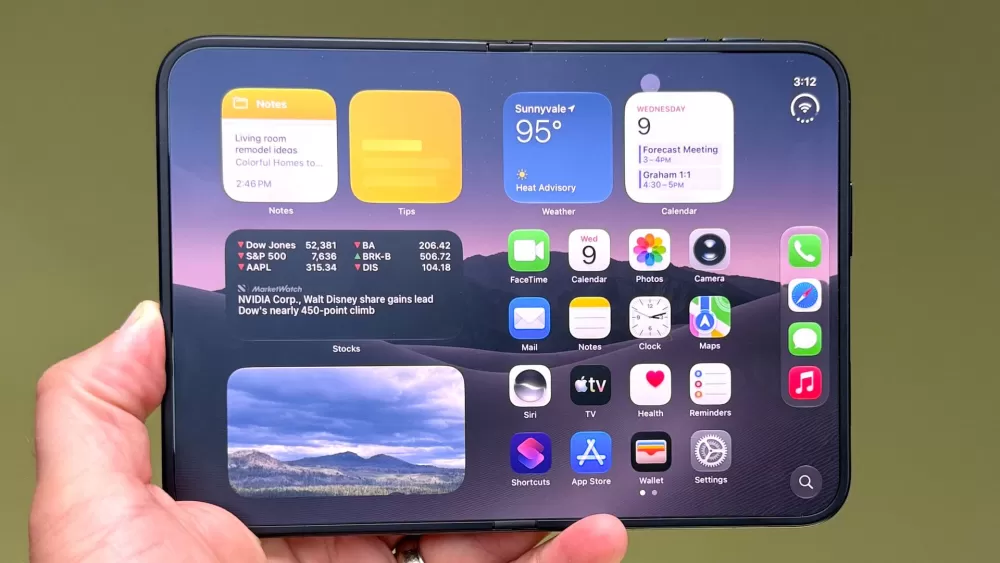
Apple's iPhone Duo arrives with a powerful combination of robust hardware and unparalleled software optimization, positioning it to dominate the nascent foldable phone market, despite existing Android competition.
For what feels like ages, we've watched Android phone makers bravely venture into the foldable phone frontier, delivering some truly innovative, if sometimes clunky, devices. But let's be honest, the moment Apple finally steps into any product category, the game changes. And with the impending arrival of the iPhone Duo, it really feels like the entire foldable landscape is about to get a major shake-up. The buzz isn't just about a new Apple gadget; it's about a fundamentally different approach that could very well leave existing Android foldables playing catch-up.
So, what’s the real secret sauce here? It’s not just about a pretty screen or a fancy hinge – though those are certainly part of it. The overwhelming consensus, echoed by experts like Avi Greengart, founder and lead analyst at Techsponential, points to one undeniable truth: Apple's masterful command over software. Imagine an operating system, iOS 27 in this case, that isn't just slapped onto a foldable screen, but has been meticulously reimagined from the ground up to understand and react to the device's physical form. We’re talking about app controls and even the dock gracefully shifting depending on whether your phone is in "book mode," "table mode," or even "tent mode." It’s a level of seamless integration that, frankly, most Android experiences on foldables have struggled to achieve, often feeling like a standard OS awkwardly stretched and contorted.
This isn’t just theory, mind you. Apple has clearly put in the legwork. We've heard about an API that allows developers to precisely read the hinge angle – though most will likely focus on those intuitive "pose states." Craig Federighi himself, with his signature flair, confirmed the hinge angle accuracy down to a mere five degrees. That kind of precision allows for incredibly thoughtful adaptations, like an alarm clock app perfectly presenting itself when the Duo is in tent mode on your nightstand, or a Safari keyboard neatly splitting when you half-fold it. It's these tiny, intelligent touches that accumulate into a truly fluid user experience, something that often feels like an afterthought on many Android rivals.
Of course, hardware plays a massive role too, and Apple hasn’t skimped here either. The iPhone Duo boasts a robust titanium frame, which immediately sounds more reassuring than the aluminum we see on some competitors. Crucially, it comes with an IP68 rating for water and dust resistance, a feature still surprisingly absent from some high-profile foldables like the base Samsung Galaxy Z Fold 8 (though the Fold 8 Ultra does have it, and props to Motorola and Pixel for including it on their devices). And let’s talk about the display: Apple's nano-texture screen technology is designed to significantly reduce the visibility of that notorious crease, a persistent bugbear for foldable users. While it might be a bit thicker and noticeably heavier than, say, the Galaxy Z Fold 8 – 8.96 ounces versus 7.09 ounces – as Greengart wisely notes, this heft isn't just a disadvantage; it’s a deliberate choice for enhanced durability.
When you stack it up against something like the Xiaomi 18 Fold, which on paper might seem superior with its lighter build, thinner profile, better camera, and faster charging, the real-world picture often tells a different story. Mrwhosetheboss, the well-known tech reviewer, pointed out critical flaws in the Xiaomi: an aluminum frame that screams less durable, no IP68 rating, a very prominent crease, and even unsettling clicking sounds from the hinge. The software, he noted, felt like a standard OS simply forced onto a foldable screen, leading to awkward and frankly, ugly interfaces. That stark contrast truly highlights Apple's meticulous design philosophy.
Even against the Samsung Galaxy Z Fold 8, which has its own strengths like superior multitasking (allowing three apps plus floating windows) and clever software tricks for suggesting multi-window setups, the iPhone Duo carves out its niche. Interestingly, Samsung actually pulled back on its own "Flex Mode" for the base Fold 8, reserving it for the Ultra model. This suggests that some of the hinge-angle-aware features Apple is now championing are ideas Samsung itself explored and perhaps couldn’t fully integrate across its lineup, a point Greengart also highlighted, noting that Apple is revisiting choices Samsung previously tried.
Now, it’s true that the iPhone Duo will likely stick to a more limited multitasking approach – think two apps side-by-side in a "Split View," making them feel like independent desktops. This might seem less versatile than the eight apps the Xiaomi can supposedly juggle or Samsung's three-plus-floating-windows setup. However, Apple's strength lies in making those two apps work flawlessly, with dedicated optimizations. We’re already seeing examples: Slack and Zoom have optimized versions ready, and Netflix will have a day-one optimized app. Plus, the independent developer community is already buzzing, with folks like Vidit Bhargava creating charming, retro-inspired apps like "Duo Man" that perfectly utilize the unique form factor. This incredible developer support is where Android often falls short on foldables, leaving many apps feeling unoptimized and awkward.
Ultimately, while the iPhone Duo might arrive with a premium price tag of around $2,000 and perhaps even skip a telephoto zoom found on its iPhone 18 Pro siblings, its true competitive advantage isn’t just about spec sheets. It’s about a cohesive, deeply integrated experience where hardware and software dance together in perfect harmony. Apple’s track record for polish, robust build quality, and an ecosystem that gets developers on board faster and more effectively is precisely why the iPhone Duo is poised not just to enter the foldable market, but to fundamentally redefine what we expect from it, giving it a significant edge over the current crop of Android contenders.
Editorial note: Nishadil may use AI assistance for news drafting and formatting. Readers can report issues from this page, and material corrections are reviewed under our editorial standards.