IBM’s Quantum System Two Powers Up at Chicago’s New Quantum Hub
- Nishadil
- November 07, 2026
- 0 Comments
- 3 minutes read
- 8 Views
- Save
- Follow Topic
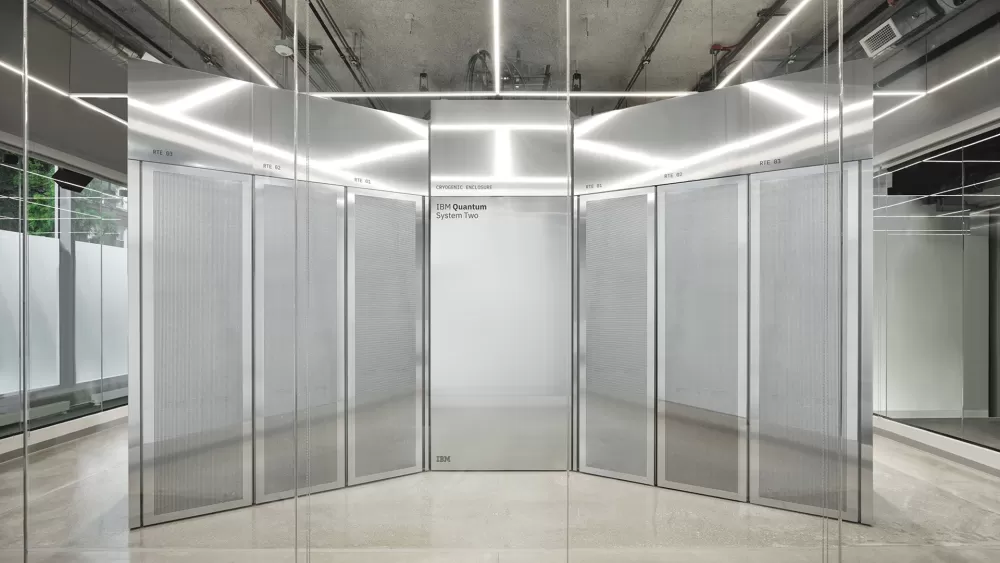
IBM’s most advanced quantum computer goes live in Chicago, anchoring the state’s quantum research push
IBM has installed its flagship Quantum System Two at the University of Chicago’s Hyde Park Labs. The Nighthawk processor will fuel projects ranging from drug discovery to power‑grid optimization as Illinois builds a national‑scale quantum hub.
On November 6, IBM quietly switched on its newest quantum machine in the Windy City, turning a university lab in Hyde Park into the home of what the company calls its most powerful processor yet – the Nighthawk. It may sound like another headline about cutting‑edge hardware, but for researchers across Illinois this is a pretty big deal.
The system, officially dubbed Quantum System Two, lives at the University of Chicago’s Hyde Park Labs for now, but the plan is to move it later into the Illinois Quantum and Microelectronics Park (IQMP), a sprawling campus that’s still under construction. Think of it as a stepping‑stone: the machine gets up and running today, while the park gets finished tomorrow.
Why all the fanfare? Because the Nighthawk chip packs more qubits and better error rates than anything IBM has fielded before. In plain English, it means the computer can explore a larger slice of the quantum‑mechanical solution space before the inevitable noise derails the calculation. That extra mileage is what researchers hope will translate into real‑world breakthroughs.
One of the first projects already humming along involves drug discovery. Deloitte, pharma giant AbbVie, and Northwestern University have teamed up with IBM through the National Quantum Algorithm Center (NQAC) Grand Challenges program. Their goal? To simulate complex molecular interactions that are currently out of reach for classical supercomputers, potentially shaving years off the timeline for new medicines.
At the same time, the Electric Power Research Institute (EPRI) and the University of Illinois at Urbana‑Champaign are poking around the quantum optimizer to see if it can untangle the knotty problem of balancing supply and demand on a modern electricity grid. If successful, the technology could make our power system greener and more resilient.
High‑energy physics isn’t being left out either. Fermilab is collaborating with IBM to probe whether distributed quantum computing can help model particle collisions in ways that traditional clusters simply can’t handle. It’s a classic example of “science meets industry” – but with a quantum twist.
The deployment also ties into a broader state‑level ambition. Illinois Governor J.B. Pritzker launched the National Quantum Algorithm Center in 2024, positioning the state as a national leader in quantum algorithm development. IBM sits on the center’s steering committee, providing hardware and expertise while local universities and startups bring fresh ideas to the table.
Beyond the science, there’s a workforce angle. IBM has announced a FutureNow Chicago training hub at IQMP, in partnership with City Colleges of Chicago. The plan calls for roughly 750 new jobs in quantum computing, cybersecurity, data science, and related fields – a modest boost for the regional economy.
Of course, quantum computers are still far from replacing your laptop. Qubits behave according to the odd rules of quantum mechanics, which makes them amazing for some tasks but also fragile. The Chicago machine isn’t a magic bullet, but it does give scientists a tangible platform to test where quantum advantage truly exists.
All told, the arrival of IBM’s Quantum System Two is a signal that Illinois is serious about staking a claim in the emerging quantum landscape. Whether it ends up cracking a new drug molecule, tightening the nation’s power grid, or shedding light on fundamental physics, the next few years should be fascinating to watch.
Editorial note: Nishadil may use AI assistance for news drafting and formatting. Readers can report issues from this page, and material corrections are reviewed under our editorial standards.