The Curious Case of CNG Motorcycles: Why India's 'Game-Changer' is Struggling
- Nishadil
- November 27, 2026
- 0 Comments
- 5 minutes read
- 1 Views
- Save
- Follow Topic
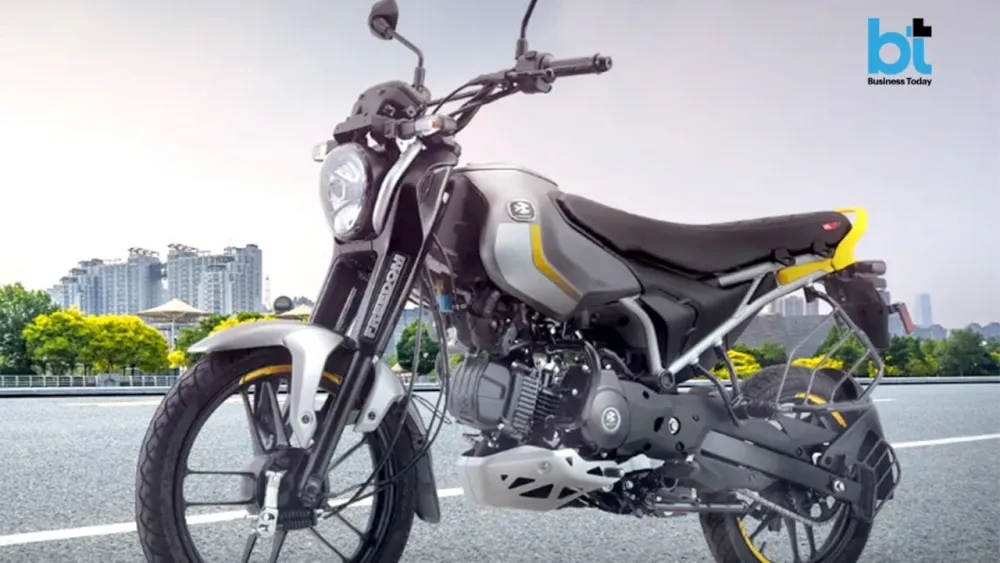
Bajaj's CNG Motorcycle Faces Uphill Battle as EVs and Flex-Fuel Gain Traction
Despite being hailed as a 'game-changer,' Bajaj Auto's Freedom 125 CNG motorcycle is seeing declining sales, struggling to find its footing amidst rising competition from electric and flex-fuel two-wheelers in India.
Remember the buzz? Back in July 2024, Bajaj Auto, a titan in the Indian two-wheeler market, proudly unveiled what they called the 'world's first CNG motorcycle,' the Freedom 125. Managing Director Rajiv Bajaj himself hailed it as a 'game-changing product,' a truly innovative step forward for greener, more economical commuting. Fast forward to today, however, and the picture seems a little less rosy, with this supposed revolution hitting some rather significant roadblocks.
A quick glance at the VAHAN vehicle registration data paints a rather stark picture. The Bajaj Freedom 125, which remains the sole commercially available CNG motorcycle in India, has seen its sales plummet by a staggering 61.9% year-on-year, dropping to just 14,435 units from January to October 2026, compared to a respectable 37,873 units during the same period last year. October 2026, in particular, witnessed the steepest monthly decline, a rather disheartening 69.3%. In essence, the market penetration for CNG two-wheelers has dwindled from 0.12% in October 2025 to a mere 0.05% a year later. It makes you wonder, doesn't it?
So, what exactly is holding back this 'game-changer'? Well, several factors seem to be at play, each contributing to a scenario where consumers are simply not biting. Let's talk about the most obvious one: cost. While CNG can be cheaper than petrol, the initial price point of the Freedom 125 itself is a deterrent. The base model, for instance, costs around Rs 1.04 lakh (ex-showroom Delhi), with the top trim touching Rs 1.19 lakh. Compare that to an entry-level petrol motorcycle like the ever-popular Hero Splendor, which hovers around Rs 75,000. As Hemal Thakkar, Director at Crisil Intelligence, succinctly puts it, "The cost arbitrage is not really compelling." Especially when you consider that CNG prices, which once promised significant savings, have crept up to nearly Rs 90/kg in Delhi, from what could have been a more appealing Rs 60/kg, as noted by Puneet Gupta from Mobility Global. That initial appeal, you see, has somewhat evaporated.
Then there's the sheer inconvenience. Imagine pulling up to a CNG station, only to find yourself waiting in a queue behind cars and commercial vehicles for what feels like an eternity, just to fill a tiny 2 kg tank. This small tank capacity necessitates frequent refuels, turning a supposedly economical choice into a logistical headache. "It doesn't make sense for two-wheeler customers to stand in a queue at a CNG station for such a small tank," Mr. Gupta rightly observes. The infrastructure simply isn't geared towards two-wheelers, lacking dedicated dispensing points, which adds a layer of friction that most riders would rather avoid.
And honestly, most petrol bikes today are already quite frugal. The mileage offered by conventional petrol motorcycles is often so compelling that the incremental savings from CNG, especially with its associated inconveniences, become almost negligible. "The mileage from petrol is so compelling in motorcycles that the differential CNG mileage is very minuscule," adds Crisil's Thakkar. For scooters, which might benefit more from CNG's lower running costs, the packaging problem rears its head. Stowing a CNG cylinder often means sacrificing precious under-seat storage, a practical compromise few scooter owners are willing to make, especially when electric scooters offer a superior total cost of ownership without such trade-offs.
And here's where the plot thickens: the rise of alternatives. While CNG motorcycles falter, the electric vehicle (EV) two-wheeler market is soaring, with its penetration jumping from 5% to a significant 10% in October 2026, largely driven by scooters. EVs also enjoy tax benefits and registration fee waivers in several states – perks completely absent for CNG vehicles. Moreover, flex-fuel options are rapidly emerging. Hero MotoCorp, for instance, launched its HF Deluxe Flex Fuel and Splendor Plus Flex Fuel in June 2026, which can run on E85 fuel (a blend of 85% ethanol and 15% petrol), priced attractively at around Rs 82/litre in Delhi. In just the first 24 days of November 2026, Hero sold over 6,000 of these flex-fuel motorcycles! The petroleum ministry's ambitious goal of making E85 available at 500 pumps by December 2026 and 5,000 outlets by late 2027 clearly shows the direction the wind is blowing. Even TVS Motor Company showcased a CNG-powered scooter, the TVS Jupiter CNG, at the Bharat Mobility Global Expo 2025, but the market's response to CNG in the two-wheeler segment remains tepid at best.
So, what does this all mean for the future of CNG motorcycles? Despite Bajaj Auto CFO Dinesh Thapar's assertion in November 2025 that the company had no plans to discontinue the Freedom 125, the radio silence from Bajaj Auto regarding its future, following a query from the original article's author, doesn't exactly inspire confidence. While flex-fuel vehicles show promise, it's still early days, and as Crisil's Thakkar cautions, we've seen initial good sales for CNG motorcycles only to witness a subsequent decline. It seems, for now, the 'game-changing' CNG motorcycle is still looking for its winning strategy.
Editorial note: Nishadil may use AI assistance for news drafting and formatting. Readers can report issues from this page, and material corrections are reviewed under our editorial standards.