Rjukan's Radiant Secret: How Giant Mirrors Bring Sunshine to a Norwegian Valley Town
- Nishadil
- November 28, 2026
- 0 Comments
- 3 minutes read
- 1 Views
- Save
- Follow Topic
Beaming Brilliantly: The Incredible Story of Rjukan's Sun-Catching Mirrors
Tucked deep in a Norwegian valley, the town of Rjukan spent winters in perpetual shadow. Discover the century-old dream that became a shining reality: colossal mirrors now beam sunlight into its heart, transforming life for its residents.
Imagine living in a place so deeply nestled within towering mountains that for half the year, the sun is little more than a distant, unattainable memory. That's precisely the reality for the charming town of Rjukan, Norway. From September all the way through March, its approximately 3,000 residents traditionally knew only ambient light, the kind that hints at day without offering any of the warmth or visual crispness of direct sunlight. It sounds rather melancholic, doesn't it?
But Rjukan isn't just any town; it's a testament to human ingenuity and, frankly, a bit of stubbornness in the face of nature's formidable embrace. The idea to conquer this persistent winter gloom isn't new, not by a long shot. Way back in 1913, Sam Eyde, the visionary founder of this very industrial town, first proposed a seemingly fantastical solution: giant mirrors to reflect the sun's rays down into the valley. A century later, his audacious dream would finally become a dazzling reality.
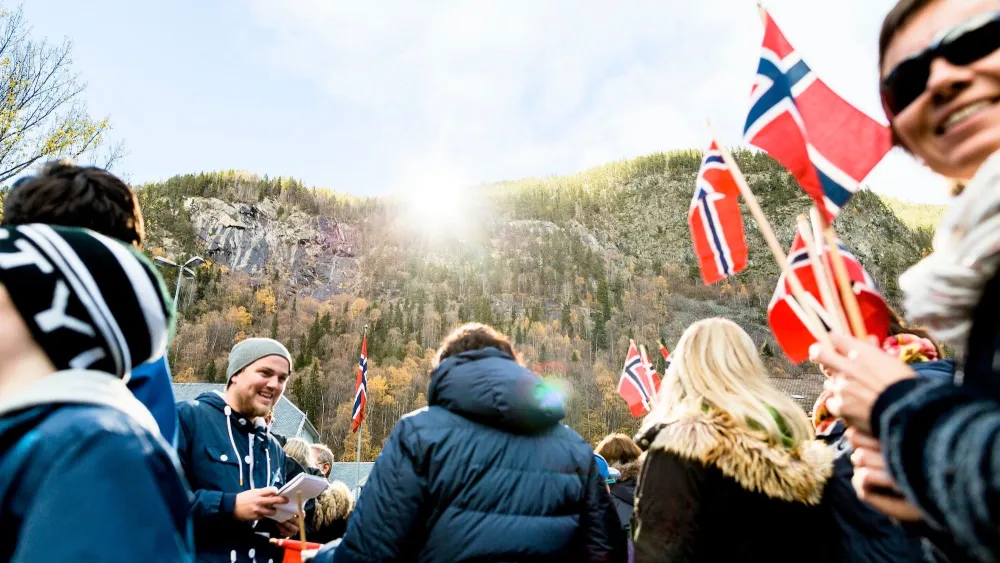
And what a reality it is! On a crisp October 30, 2013, a truly remarkable event unfolded in Rjukan. Three colossal mirrors, each a generous 17 square meters (that’s about 183 square feet, mind you), officially began their work. Perched an impressive 450 meters (nearly 1,500 feet) above the town, these reflective behemoths were the brainchild of local artist Martin Andersen, who championed and brought this grand project to life.
These aren't just static, ordinary mirrors either. Oh no. They're part of a sophisticated, computerized system that constantly tracks the sun's arc. With incredible precision, the mirrors angle themselves just so, directing a vibrant, glorious patch of sunlight—a radiant pool roughly the size of three tennis courts—straight onto Rjukan's town square. It's truly like a scene out of a sci-fi novel, but it’s pure, brilliant engineering working its magic.
Now, you might think such an innovative solution would be universally cheered from the get-go. But, as with many bold civic projects, there was some initial skepticism. More than a thousand residents actually signed a petition against the mirrors' construction! However, over time, and with the undeniable benefits—especially a noticeable boost in tourism—the opposition largely subsided. The mirrors have since become a beloved symbol, a beacon of hope and a fascinating tourist attraction.
Interestingly, before these modern marvels, residents had their own, more strenuous way of catching some rays. A gondola, built way back in 1928, would ferry them up the hillside simply to experience the sun's warmth. It speaks volumes, doesn't it, about how deeply they craved that precious light. And even these cutting-edge mirrors require a bit of TLC. The system experienced a significant breakdown in 2022, needing a complete overhaul. But by 2023, after a substantial investment of 3 million kroner (that’s over $310,000, if you’re curious), the entire system was replaced and upgraded. Now, boasting a stable power line and an internet-based remote control, they can even redirect that invaluable sunshine to other areas, like the town's skating rink. How incredibly cool is that for a community?
Rjukan’s sun mirrors are far more than just a technological curiosity. They embody a remarkable story of human spirit, demonstrating how a community, armed with a century-old dream and modern ingenuity, refused to be limited by its natural surroundings. It's a gleaming example of literally bringing light into the darkest corners, a narrative, I believe, that truly shines.
Editorial note: Nishadil may use AI assistance for news drafting and formatting. Readers can report issues from this page, and material corrections are reviewed under our editorial standards.