
A Call for Collaborative Intelligence: Xi Jinping's Vision for US-China AI Partnership
- Nishadil
- September 25, 2026
- 0 Comments
- 3 minutes read
- 7 Views
- Save
- Follow Topic
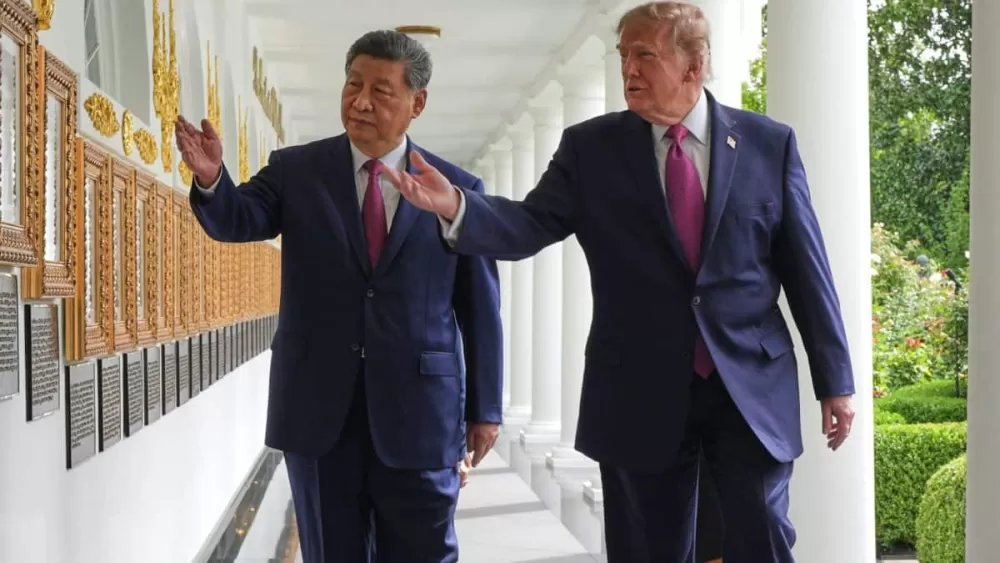
Chinese President Xi Jinping Urges US-China Cooperation on AI at White House Summit, Emphasizing Shared Future
During a pivotal meeting in Washington D.C., Chinese President Xi Jinping proposed a bold vision for US-China collaboration on artificial intelligence, advocating for shared strengths over competition and echoing a need for human-centered AI development, a sentiment met with agreement by US President Donald Trump.
The stakes were undeniably high when Chinese President Xi Jinping met with US President Donald Trump at the White House. Amidst a backdrop of complex global dynamics, a particularly urgent topic took center stage: the future of artificial intelligence. It's not every day you hear a leader explicitly call for collaboration over competition, but that's precisely what President Xi did, urging both technological powerhouses to unite their efforts in this rapidly evolving field.
Think about it for a moment: two of the world's most influential nations, both at the absolute forefront of AI development, standing at a crossroads. President Xi articulated this eloquently, stressing that while competition is inevitable in some areas, the imperative for cooperation in AI is far greater. His message was clear: instead of jealously guarding their individual advancements, the United States and China should, in his words, "draw on each other's strengths." It's a pragmatic viewpoint, really, acknowledging the immense potential and inherent risks of such powerful technology.
Beyond just pooling resources, the Chinese President also delved into the profound ethical dimensions of AI. He underscored the critical importance of maintaining human control over these burgeoning technologies, advocating for a truly "people-centered approach." This isn't just about technical prowess; it's about ensuring AI ultimately serves human progress and, crucially, preventing its misuse or abuse. Regular, open dialogue between the two nations, he suggested, is vital for openly exchanging views on both the dazzling benefits and the lurking dangers.
President Trump, for his part, seemed to fully grasp the gravity of the discussion. He acknowledged that AI's trajectory will profoundly affect the entire future of humanity. It’s a pretty sobering thought, isn't it? And in a show of agreement, he concurred with the necessity for both the US and China to sustain a robust dialogue and indeed, to strengthen their cooperation on this pivotal issue. This shared understanding, despite myriad other disagreements, felt like a crucial point of consensus.
Of course, a meeting of this magnitude rarely focuses solely on one subject. The leaders also touched upon a range of other pressing international and regional concerns, including the ever-volatile situation in the Middle East, the ongoing complexities of the Ukraine crisis, and the delicate stability of the Korean Peninsula. It really puts into perspective the sheer breadth of responsibilities these leaders carry, doesn't it? Yet, the prominence given to AI collaboration certainly highlighted its escalating significance on the global stage.
Ultimately, these discussions underscore a vital truth: in an interconnected world, the path forward often lies in finding common ground, even among rivals. The call for US-China cooperation on AI isn't just a diplomatic nicety; it’s a recognition of a shared responsibility to steer a technology with unimaginable power toward a future that benefits everyone. Let's hope this dialogue continues, because the stakes, for all of us, couldn't be higher.
Editorial note: Nishadil may use AI assistance for news drafting and formatting. Readers can report issues from this page, and material corrections are reviewed under our editorial standards.










