When Technology Gives Back a Lost Voice: Monica O'Callaghan’s Journey with AI Voice Cloning
- Nishadil
- October 22, 2026
- 0 Comments
- 5 minutes read
- 6 Views
- Save
- Follow Topic
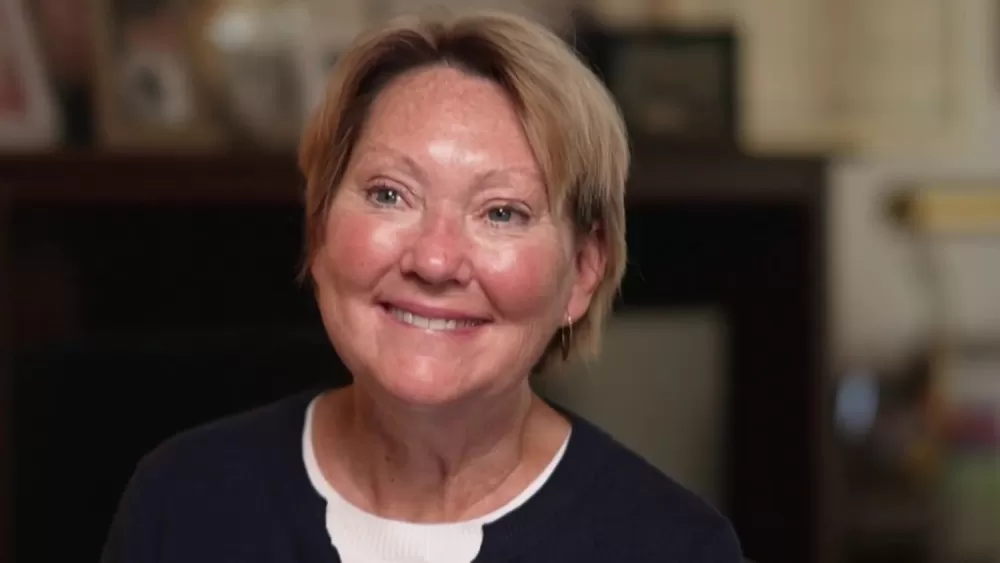
AI voice‑cloning helps ALS patient speak again – the story behind the technology
Monica O'Callaghan, diagnosed with ALS, turned to AI voice‑cloning to preserve her speech, allowing her to deliver a wedding toast in her own voice and reclaim part of her identity.
When Monica O'Callaghan was diagnosed with amyotrophic lateral sclerosis (ALS) three years ago, the doctors gave her the grim prognosis that, eventually, she would lose the ability to speak. It felt like the world was stealing something deeply personal – the unique cadence, the slight laugh that followed her words, the way she emphasized “yes.”
At first, Monica tried the usual speech‑generating devices, the kind that let you type a sentence and have a synthetic voice read it aloud. Those tools are useful, but they sound, well, synthetic. They stripped away the intimacy of hearing your own voice, the one you grew up hearing in family gatherings and on the phone. “It was like listening to a stranger who happened to be me,” Monica later recalled.
Enter AI voice‑cloning. A small startup that specializes in creating digital replicas of human speech offered to “bank” Monica’s voice while she still could speak. The process was surprisingly simple: a technician recorded her reading a list of about 300 sentences over the course of a single afternoon. The AI then learned the nuances of her pitch, rhythm, and the little quirks that made her voice unmistakably hers.
Weeks later, a new software generated a voice model that sounded almost exactly like Monica – the same slight lilt at the end of her sentences, the familiar breathy quality when she laughed. The result wasn’t a perfect copy, but it was close enough that when she heard it, she felt a surge of emotion. “I heard my own voice again,” she said, her eyes welling up. “It was like getting a piece of myself back.”
That same voice model became the centerpiece of her wedding speech. On a sunny afternoon, surrounded by friends and family, Monica stood at the podium. The microphone was hooked up to the AI system, and when she pressed “play,” the room filled with the familiar timbre of her own voice delivering a heartfelt toast. Guests were moved, some wiping tears, and Monica herself laughed through the moment, knowing the technology had given her a gift she never imagined possible.
Beyond the wedding, the voice clone has become a daily companion. Monica now uses it to leave voicemail messages, record video greetings for grandchildren, and even to dictate text messages that sound as if she wrote them herself. “It’s more than a tool; it’s an extension of my identity,” she explains.
The technology behind the cloning is based on deep learning models that analyze thousands of audio samples to capture the statistical patterns of a person’s speech. By feeding the AI a diverse set of phrases – ranging from short greetings to longer narratives – the system learns to generate new sentences that retain the speaker’s characteristic tone. While the underlying math is sophisticated, the user experience is intentionally low‑tech: a simple app interface, a few clicks, and the voice is ready to use.
Experts caution that voice‑cloning raises ethical questions, especially around consent and potential misuse. For patients like Monica, however, the benefits are immediate and tangible. “I’m aware of the broader debate,” she acknowledges, “but right now, this is about me keeping a part of who I am alive.”
Monica’s story is already sparking interest among other ALS patients and individuals with progressive speech disorders. Clinics are beginning to explore partnerships with AI firms to offer voice‑banking as a standard part of care, turning what once felt like a futuristic fantasy into a practical, compassionate solution.
In a world where technology often feels distant, Monica’s experience reminds us that, sometimes, the most profound innovations are the ones that help us hear ourselves again.
Editorial note: Nishadil may use AI assistance for news drafting and formatting. Readers can report issues from this page, and material corrections are reviewed under our editorial standards.