When Brain Science Meets the Classroom: A Blind Date Story
- Nishadil
- November 07, 2026
- 0 Comments
- 3 minutes read
- 9 Views
- Save
- Follow Topic
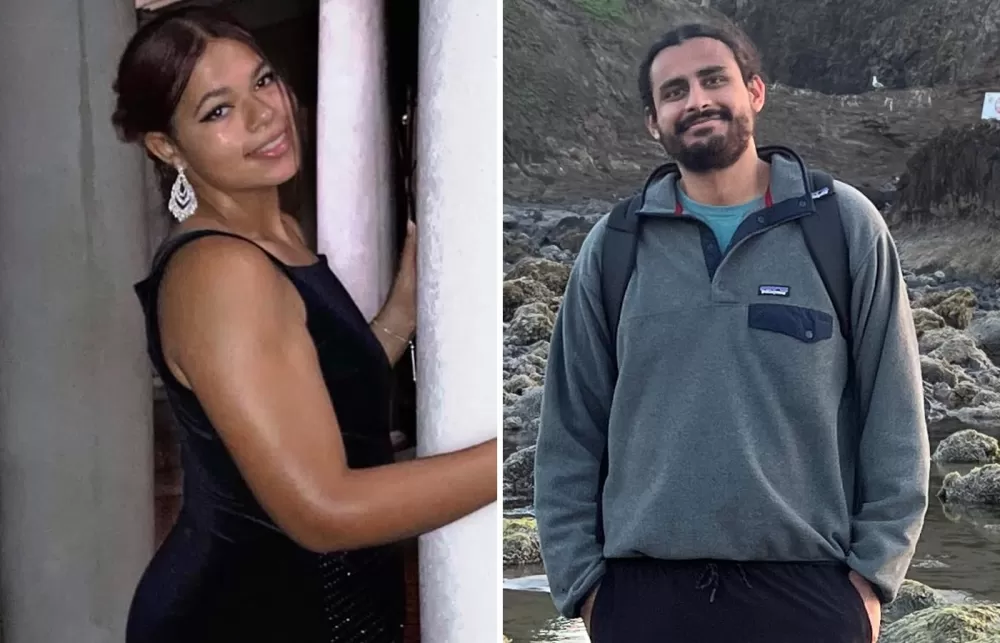
A medical student and a high‑school teacher discover chemistry beyond equations on a blind date
Two Boston‑area daters, both steeped in neuroscience and math, meet through a friend‑arranged blind date. Their conversation drifts from cortical pathways to classroom anecdotes, sparking a surprising connection.
It started like any other Thursday night in Cambridge: a group of friends crowded around a battered table at a downtown coffee shop, half‑laughing, half‑complaining about how impossible it was to meet someone who could keep up with their endless list of electives. Maya Patel, a second‑year medical student at Harvard Medical School, was the first to speak up.
“I’m tired of people asking if I’m ‘just a doctor in the making,’” she said, stirring her chai latte. “I want someone who actually understands the weird way my brain works.”
Across the table, Alex Rivera, a 34‑year‑old math teacher at a Boston public high school, nodded. He’d been the one to suggest the blind‑date experiment, after a friend confessed, “You’re both neuroscientists at heart, why not try it?”
The plan was simple: meet at the little Italian place down the street, no phones, no résumés—just conversation. When Maya arrived, she found Alex already seated, a stack of graded quizzes in front of him, a half‑eaten slice of pizza on his plate.
“Sorry I look like I’ve been grading papers all night,” he joked, pushing the pizza aside. “But I promise I’m not here to give you a pop‑quiz.”
They ordered pasta and began talking about the day’s oddities. Maya talked about the day’s anatomy lab, describing how the hippocampus glows under a fluorescent microscope. Alex countered with a story about his students trying to prove the Pythagorean theorem using only household items.
“It’s funny,” Maya mused, “how both of us spend hours dissecting something invisible—whether it’s a brain circuit or a proof.”
Alex laughed, “Exactly. And both of us get that ‘aha!’ moment when the pattern finally clicks.”
As the night wore on, the conversation drifted from neural pathways to favorite pizza toppings, from the challenges of a COVID‑era classroom to the stress of board exams. There were pauses—moments when they both seemed to collect their thoughts, a brief hesitation before Maya asked about Alex’s sister, who had recently moved to Portland.
Those tiny silences felt natural, like the breath between notes in a jazz solo. They weren’t trying to impress each other; they were simply being themselves, quirks and all.
By the time the dessert cart arrived—gelato with a drizzle of honey—both admitted that the date had turned into something unexpectedly comfortable. “I never thought I’d enjoy talking about synaptic plasticity over tiramisu,” Alex confessed, a grin spreading across his face.
Maya replied, “Me too. I think we just proved that two people who love brain science and math can actually have chemistry.”
They left the restaurant walking side‑by‑side, the Boston night crisp but warm with possibility. Whether they become a long‑term partnership or simply a memorable footnote in each other’s busy lives, the night reminded them that the most rewarding equations are often the ones you solve together.
Editorial note: Nishadil may use AI assistance for news drafting and formatting. Readers can report issues from this page, and material corrections are reviewed under our editorial standards.