What Accumulates? Lessons on Materiality, Memory, and Public Space from Amman Design Week 2026
- Nishadil
- October 22, 2026
- 0 Comments
- 6 minutes read
- 11 Views
- Save
- Follow Topic
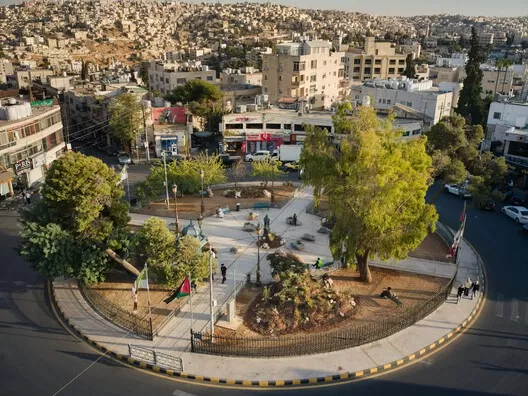
Amman Design Week 2026 turned the city into a living museum of layers and stories
After a seven‑year hiatus, Amman Design Week returned with the theme “Accumulations,” exploring how material, memory and public life pile up across the Jordanian capital and beyond.
When Amman Design Week finally resurfaced in October 2026, it felt less like a brand‑new festival and more like a long‑overdue conversation with the city itself. The biennial’s fourth edition arrived after a seven‑year pause, under the banner “Accumulations.” The premise was simple, yet resonant: nothing in Amman is ever truly new – everything is a layer built on what came before.
The event gathered over 220 architects, designers, makers and collectives for two weeks of exhibitions, public interventions, talks, workshops and performances. From the historic streets of Ras El Ain to the waterfront of Aqaba, the program spread across neighborhoods that themselves embody the idea of accumulation – Jabal Al‑Lweibdeh, Jabal Amman, Iraq Al‑Amir, and beyond.
Founded in 2016 by Queen Rania Al‑Abdullah, Amman Design Week has steadily grown into a platform where design meets Jordan’s cultural and urban fabric. This year, the reins were handed to architects Sarah Hejazin and Bisher Tabbaa, co‑founders of the research‑driven practice FADAA. Their appointment isn’t just a change of leadership; it signals a deeper engagement with the country’s material history, because FADAA’s work constantly interrogates Jordan’s built environment, its resources and its stories.
Curatorial responsibilities were split between two thoughtful minds. Faysal Tabbarah, an architect‑educator behind Architecture + Other Things (A+OT), shaped the exhibition program with a keen eye on regional building practices and the narratives they carry. Khaled Al‑Bashir, architect‑curator and Arts & Culture Director at Darat al‑Funun, assembled the public programme, probing spatial, cultural and political questions that echo throughout the city.
The word “accumulations” was deliberately expansive. It refers not only to piles of concrete, stone or clay, but also to the accumulation of labor, knowledge, rituals, memories and social ties. The curators asked visitors to consider how everyday practices, material environments and collective memory stack up to influence what we build, value and inhabit.
One of the most striking moments came at Qasr Al‑Abd in Iraq Al‑Amir, where Dima Srouji’s project “Natural Residents” invoked the district’s historic water abundance, weaving old photographs with contemporary soundscapes. Meanwhile, Kais Al‑Rawi and Julia Koerner presented the “Lamella Series in Clay,” a hybrid of locally sourced clay and cutting‑edge 3‑D printing – a literal dialogue between tradition and technology.
The event’s reach extended south to Aqaba through a partnership with the WUJŨD Art Foundation. Here, a collective of artists – the Bahrain‑Danish duo NEW SOUTH, Tasneem Zraikat, and Yazeed Khaldoun Balqar – offered site‑specific installations that referenced the Red Sea’s shifting tides and the city’s own layers of trade, migration and industry.
But perhaps the most poetic expression of accumulation was the Hangar itself, the main exhibition venue perched in Ras El Ain. Built in the 1930s as a generator house, the industrial shell has since been rescued by TURATH Architecture & Urban Design and the Greater Amman Municipality. Its very walls echo the story of the city: a structure that has lived through multiple economic, infrastructural and cultural phases before becoming a canvas for new ideas.
Inside, two installations spoke directly to the theme of open‑ended use. Laith Matarweh Studio’s “Al‑Mastaba” combined stone and concrete to imagine a “future ruin,” intentionally leaving gaps that invite vegetation and weather to take over. DA+SA’s “Common Ground” used modular blocks on a grid, encouraging people to rearrange and re‑interpret the space as they please. Both works resisted the urge to dictate a finished form, instead allowing time, ecology and community to write the final chapter.
Praxis’s “Infusing Green Infrastructure in Amman” turned ordinary urban elements – a staircase, a small park, an empty lot – into experiments in site‑specific greening. The project highlighted how even modest interventions can layer ecological benefits onto existing infrastructure.
Abeer Seikaly’s “Uyun” shifted the focus from built material to cultural material. She gathered wool spun by women from the Badia desert, crocheted it in Amman, and paired it with recycled glass beads from Damascus. The resulting textile pieces mapped the movement of craft, trade and memory across borders and generations.
Beyond the Hangar, designers engaged directly with the city’s pressing challenges. In a region grappling with water scarcity, construction waste and rapid urban growth, the interventions highlighted sustainable practices rooted in local knowledge. For example, the “Darat Abu Adnan” project repurposed abandoned stone blocks from demolition sites, turning them into communal seating that both reduces waste and references the vernacular building language.
What emerged from Amman Design Week 2026 was less a catalogue of finished objects and more an invitation to read the city as a palimpsest. Visitors were encouraged to wander, to notice the cracks in old walls, the layers of graffiti, the way a new café sits atop a former water cistern. Each site became a page in a larger story of accumulation – a story still being written by architects, makers and everyday residents.
In the end, the biennial reminded us that design is never a one‑off act. It is an ongoing conversation with the past, a negotiation with the present, and a hypothesis for the future. Amman, with its tangled histories and ever‑shifting skyline, proved to be the perfect interlocutor, offering endless material, memory and public‑space accumulations for us to contemplate.
- UnitedStatesOfAmerica
- News
- Technology
- Australia
- UnitedKingdom
- TechnologyNews
- China
- France
- Japan
- Denmark
- Memory
- Architecture
- Germany
- Spain
- Brazil
- CulturalHeritage
- PublicSpace
- Chile
- SustainableDesign
- AdaptiveReuse
- Left
- Materiality
- Amman
- Accumulations
- MaterialReuse
- CivilArchitecture
- MohamadNahleh
- ZiadJamaleddine
- LEFtArchitects
- AmmanDesignWeek
- Praxis
- FaysalTabbarah
- UrbanInterventions
- Turath
- DaSa
- Fadaa
- KhaledAlBashir
- AdArticle
- DimaSrouji
- JordanArchitecture
Editorial note: Nishadil may use AI assistance for news drafting and formatting. Readers can report issues from this page, and material corrections are reviewed under our editorial standards.