Uttarakhand Himalayas Storing Energy for a Potential Magnitude 8.1 Quake
- Nishadil
- October 22, 2026
- 0 Comments
- 2 minutes read
- 6 Views
- Save
- Follow Topic
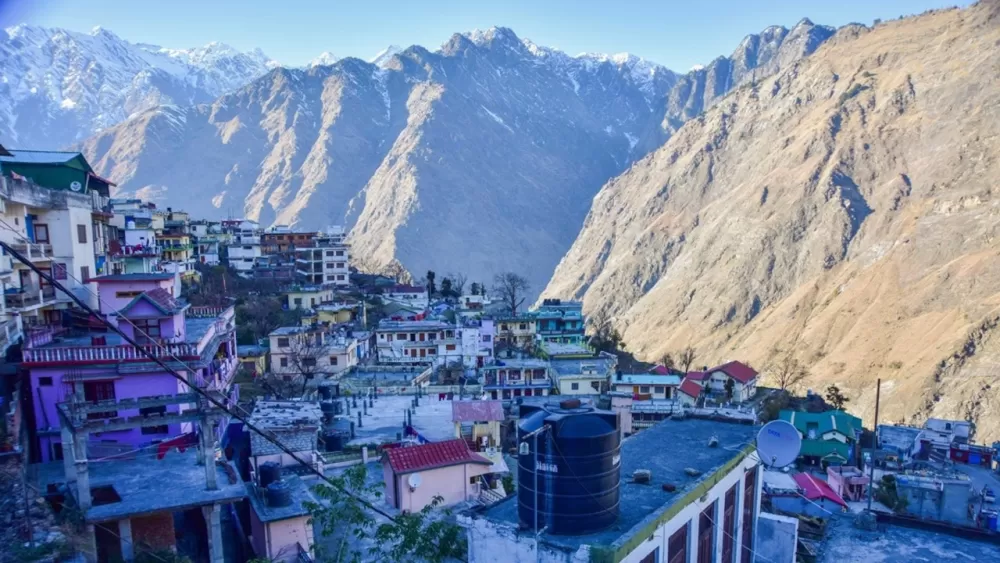
Study Finds Central Himalayan Fault Locked, Building Up Strain Equivalent to an 8.1‑Magnitude Earthquake Every Century
New research using GNSS and Japanese ALOS‑2 radar shows the Main Himalayan Thrust beneath Uttarakhand is strongly coupled, accumulating strain that could unleash a major quake.
The quiet slopes of Uttarakhand hide a restless story. Beneath the snow‑capped peaks, the Main Himalayan Thrust (MHT) – the giant fault that stitches the Indian and Eurasian plates together – is essentially “locked”, holding back motion that would otherwise be released as a steady creep.
Scientists from the Central University of Tamil Nadu set out to measure just how much energy is being stored. By marrying data from a network of Global Navigation Satellite System (GNSS) stations with high‑resolution radar images from Japan’s ALOS‑2 satellite, they painted a surprisingly vivid picture of a fault that’s refusing to slip.
The numbers tell a clear tale: the fault is lagging behind the expected plate motion by roughly 18 mm each year. In plain language, the Indian plate keeps pushing north, but the rocks above the MHT are stuck, flexing like a stretched rubber band.
That flexing shows up as gentle uplift of the surface – about 4‑6 mm per year – captured neatly in the Interferometric Synthetic Aperture Radar (InSAR) maps. When the researchers fed these observations into an Elastic Subducting Plate Model (ESPM), the model reproduced both the horizontal and vertical motions without any fudging, reinforcing the idea that the fault is indeed tightly coupled over a stretch of about 115 km.
Why does this matter? The central Himalayas, which include Uttarakhand, sit in a notorious seismic gap. Large portions of the megathrust haven’t ruptured in a major quake for more than two centuries. The study estimates that the strain energy locked in the fault is comparable to what would be released in a magnitude 8.1 megathrust earthquake, and that such an energy build‑up could happen roughly once every hundred years.
That’s not a timetable for when the next quake will strike – the authors are careful to say it’s an estimate of accumulated strain, not a prediction. Still, the implication is sobering for the densely populated Indo‑Gangetic plains that lie just south of the mountains.
Understanding the degree of plate coupling helps refine seismic hazard maps and, ultimately, preparedness plans for millions of people living in the shadow of the Himalayas. As the earth continues its slow, inexorable push, the locked fault beneath Uttarakhand reminds us that nature’s pressure cooker is still heating up.
Editorial note: Nishadil may use AI assistance for news drafting and formatting. Readers can report issues from this page, and material corrections are reviewed under our editorial standards.