Unlocking Cosmic Secrets: First-Ever Radio Signals Directly Detected from an Exoplanet!
- Nishadil
- September 25, 2026
- 0 Comments
- 4 minutes read
- 5 Views
- Save
- Follow Topic
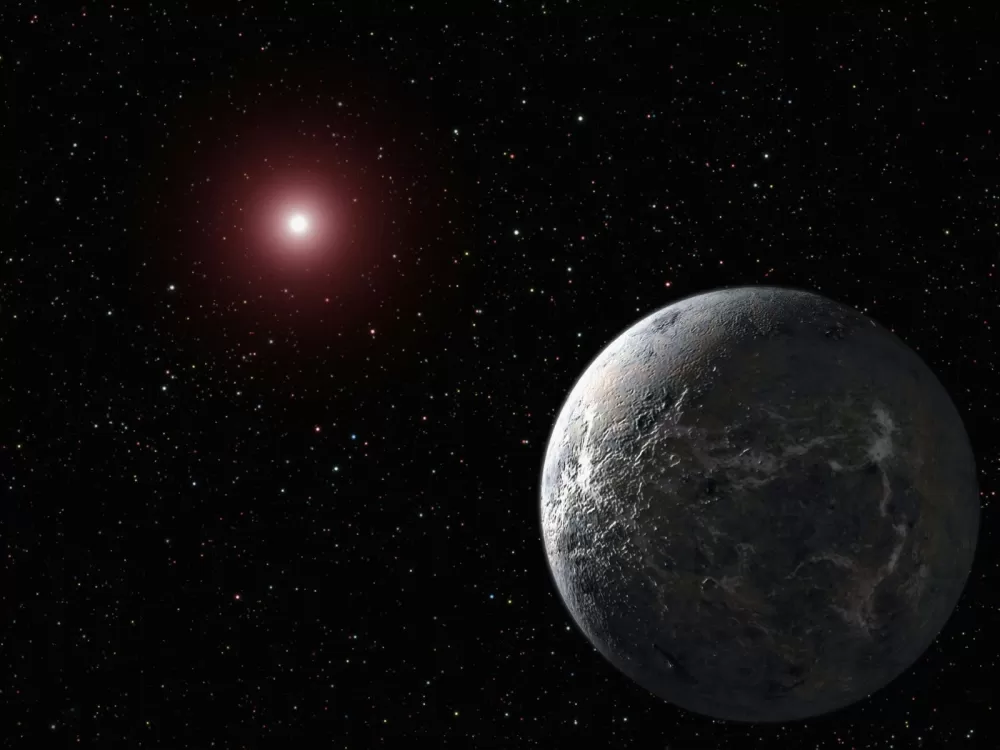
Astronomers Tune In: First Direct Radio Waves Heard from an Exoplanet, Revealing a Mighty Magnetic Field
For the first time, scientists have directly detected auroral radio signals emanating from an exoplanet, Beta Pictoris b. This groundbreaking discovery confirms the gas giant possesses an incredibly powerful magnetic field, a key insight into planetary formation and evolution.
Imagine, for a moment, peering into the vastness of space and not just seeing, but actually listening to a world light-years away. Well, that's precisely what astronomers have accomplished in a truly monumental moment for space exploration. For the very first time, we've directly picked up radio signals from an exoplanet, a distant world orbiting another star!
This groundbreaking discovery centers around a gas giant named β Pictoris b. This isn't just any exoplanet, mind you; it's a colossal world, estimated to be a staggering 9 to 13 times the mass of our own Jupiter. It orbits a relatively young star, β Pictoris, which itself is only about 23 million years old – a mere infant in cosmic terms. What makes this detection even more remarkable is the host star's magnetic quietness, which allowed researchers to unambiguously pinpoint the radio emission as coming directly from the planet, rather than its blazing sun.
So, what exactly are these signals? Before your imagination runs wild with visions of alien civilizations, let's clarify: these aren't intelligent communications. Instead, they're attributed to something called auroral radio emission, a natural phenomenon strikingly similar to the beautiful auroras we witness on Earth, or the even grander ones swirling around Jupiter. It's all thanks to a process known as the electron cyclotron maser instability (ECMI), where energetic electrons interact with the planet's magnetic field, creating these distinctive radio waves.
And here's where it gets really exciting: detecting these signals provides direct observational proof of an immense planetary magnetic field surrounding β Pictoris b. Think about it – a magnetic field is absolutely crucial for a planet. It shields its atmosphere from stellar winds and radiation, playing a vital role in its potential habitability and evolution. The researchers, led by Kevin N. Ortiz Ceballos from the Center for Astrophysics | Harvard & Smithsonian, estimate the magnetic field strength at the emission site to be at least 1.25 kilogauss, which is considerably stronger than even Jupiter's formidable magnetic field. Talk about a cosmic powerhouse!
This incredible feat was made possible by the MeerKAT radio telescope array, nestled in the Karoo Desert of South Africa. Its sensitive instruments allowed the team, which also included senior co-author Edo Berger and co-author Yvette Cendes, to capture these faint whispers from β Pictoris b. The findings, detailed in a research paper titled "Discovery of radio emission from the exoplanet β Pictoris b" submitted to arXiv in September 2026, have since captivated the astronomy community.
This detection isn't just a one-off curiosity; it opens up an entirely new window into understanding exoplanets. Historically, studying planetary magnetic fields outside our solar system has been incredibly challenging. Now, with this pioneering technique, astronomers have a novel method to probe these vital planetary features, offering unprecedented insights into how planets form, evolve, and interact with their host stars. It's a truly thrilling development that promises to reshape our understanding of worlds far, far away.
Editorial note: Nishadil may use AI assistance for news drafting and formatting. Readers can report issues from this page, and material corrections are reviewed under our editorial standards.