The Great Mars Debate: Musk's Multiplanetary Mandate Meets Carmack's Septic Tank Solution
- Nishadil
- September 26, 2026
- 0 Comments
- 4 minutes read
- 4 Views
- Save
- Follow Topic
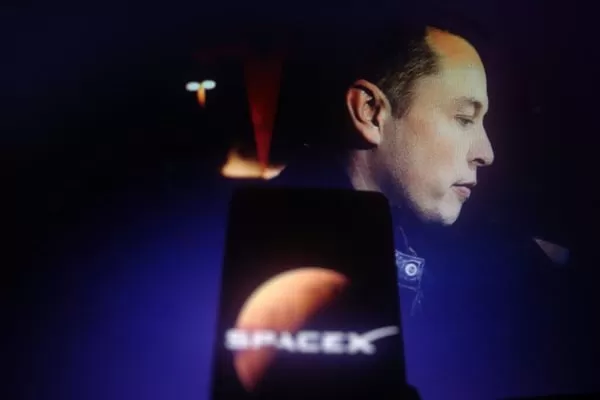
Elon Musk's Bold Vision for a Multiplanetary Future Collides with John Carmack's Provocative Take on Mars Protection
Elon Musk champions humanity's multiplanetary future on Mars, sparking a lively debate with programmer John Carmack over NASA's planetary protection rules, while innovative solutions like Pioneer Labs' engineered microbes emerge.
Elon Musk, a man rarely shy about his cosmic ambitions, recently doubled down on a core belief that underpins much of his life's work: humanity simply must become a multiplanetary species. It's not just a lofty dream for him; it's a matter of existential imperative. And, naturally, Mars stands squarely at the heart of this grand vision. But getting to Mars, and truly making it a second home, is far more complex than just building bigger rockets. There's a fascinating, often heated, debate brewing around how we manage humanity's impact on the Red Planet – a discussion brilliantly, and quite controversially, highlighted by veteran game developer John Carmack.
Carmack, known for his groundbreaking work in gaming and a sharp, often direct, intellect, isn't just watching from the sidelines. He recently poked at the considerable obstacles NASA's stringent planetary-protection rules create for aspiring Martian colonists. His suggestion? A tongue-in-cheek, yet undeniably provocative, proposal to "empty a septic tank on Mars" to effectively end the debate, humorously dubbing it "Project Vandalize Mars." It's a statement that, while certainly meant to provoke a reaction, really underscores the frustration many feel with the slow pace and perceived over-caution surrounding Mars settlement.
So, why all the fuss over a few microbes? Well, NASA’s planetary-protection program, rooted in the 1967 Outer Space Treaty, isn't just some arbitrary bureaucratic hurdle. It's a serious effort to limit biological contamination of other celestial bodies, especially Mars. The core idea is to preserve the pristine environment for scientific exploration – to search for indigenous life without accidentally introducing Earth microbes and confusing the results. Imagine discovering life, only to realize it hitched a ride on our spacecraft! It’s a profound scientific and ethical responsibility, one that NASA even reinforced recently by forming its M-FORCE tiger team to review contamination risks for future human missions.
Yet, the dream of Mars settlement isn't waiting for the debate to fully resolve itself. Enter Pioneer Labs, a group making fascinating strides towards bridging this gap. They've announced trials of an engineered microbe, charmingly named sPL.001, designed specifically to aid future Martian settlers. This little organism, they say, can grow on simulated Martian regolith, water, and even the atmosphere, producing bioplastic. Think about that: on-site construction materials for habitats, made from Martian resources! Crucially, sPL.001 is engineered not to grow without acetate, a compound derived from processed Martian air, and it's designed to rapidly sterilize under the planet's surface conditions. This could be a game-changer, offering a path to sustainable settlement that respects planetary protection concerns.
Musk, for his part, remains undeterred by the challenges. His vision for SpaceX, as outlined in his own compensation package, includes the monumental target of establishing a permanent human colony on Mars. With Starship cargo flights potentially kicking off as early as 2028, and talk of terraforming beginning even sooner in the 2030s, his conviction is clear: humanity's destiny is intertwined with the Red Planet. It’s almost as if Wernher von Braun’s 1949 sci-fi novel, where Mars was led by an elected official named “Elon,” was a strange kind of prophecy.
Ultimately, the discussion around planetary protection versus multiplanetary expansion highlights a fundamental tension: the cautious, scientific imperative to preserve versus the ambitious, human drive to explore and expand. While Carmack's 'septic tank' joke injects a dose of much-needed levity and bluntness, it also brings to the forefront the pressing need for innovative, practical solutions like those from Pioneer Labs. The future of humanity, after all, might just depend on finding a way to safely, and sustainably, make Mars our second home.
Editorial note: Nishadil may use AI assistance for news drafting and formatting. Readers can report issues from this page, and material corrections are reviewed under our editorial standards.