
The Alarming Truth: Wildfires Threaten to Nearly Triple U.S. Structure Losses by 2060
- Nishadil
- November 08, 2026
- 0 Comments
- 4 minutes read
- 18 Views
- Save
- Follow Topic
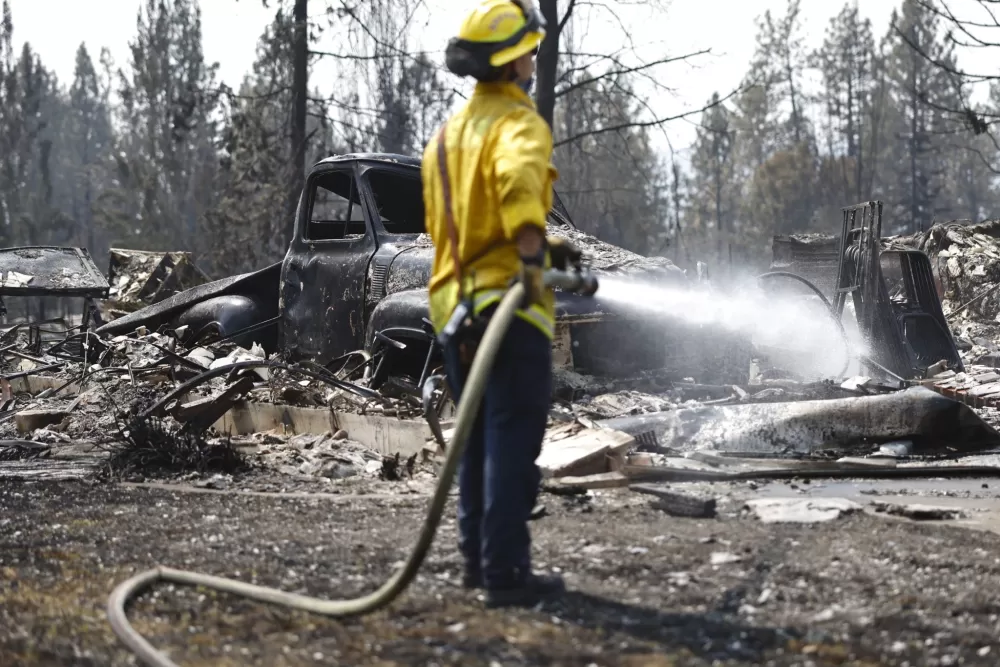
Future on Fire: New Research Projects a Staggering Increase in Wildfire Damage Across the U.S.
A recent study warns that without significant action, wildfires could destroy or damage up to 449,000 U.S. structures by 2060, a near-tripling of current estimates.
It’s a sobering thought, isn't it? Imagine a future where the devastating impact of wildfires, already a formidable force, spirals even further out of control. Well, according to a groundbreaking new peer-reviewed risk assessment, that very scenario might be on our doorstep. The research suggests that by the year 2060, between 133,000 and a staggering 449,000 structures across the United States could be damaged or completely destroyed by wildfires. That's a projection that nearly triples our current estimates, offering a stark wake-up call.
What's truly driving this alarming forecast? The study, published in Nature Communications, points squarely to what researchers are calling "fast fires." These aren't just any wildfires; they're the exceptionally rapid ones, those that devour more than 4,000 acres in a single day. Interestingly, these ferocious blazes accounted for a mere 2.7% of all U.S. wildfires between 2001 and 2020. Yet, their destructive power is undeniable, responsible for a shocking 78% of all documented structures lost and a hefty 61% of the reported firefighting costs. It's clear: a small percentage of fires are doing the vast majority of the damage.
Conducted by a dedicated team from the University of Colorado Boulder, this assessment wasn't simply a shot in the dark. The researchers meticulously reconstructed past fire risks using historical data on development patterns, wildfire areas, and the actual effects of these blazes. Then, they meticulously modeled future risks, weaving in crucial factors like evolving weather patterns, climate change projections, and anticipated housing density. It’s a comprehensive look at what’s ahead, assuming, of course, that we continue on our current path of development and maintain only limited wildfire adaptation measures.
While the western U.S. has long been, and is expected to remain, the epicenter for structural losses, the study reveals an important, somewhat unexpected shift. The central U.S. is poised to experience the largest increase in fire risk. We’re talking about regions rich in grasslands and prairies, places where fire activity is unfortunately on the rise. Moreover, and this adds a significant layer of concern, the highest levels of future fire risk are projected to hit socioeconomically vulnerable communities particularly hard. In the western U.S., for instance, a full 30% of census tracts expected to see the most substantial risk increases are already struggling with poverty and disproportionately high housing burdens. It’s a cruel irony, isn't it?
This isn't just about statistics; it's about homes, livelihoods, and entire communities. The implications are profound, suggesting that without immediate and robust action to reduce wildfire risk, the annual count of structures damaged or destroyed nationwide could indeed nearly triple by mid-century. The findings, while specific to the U.S. territory, serve as a potent reminder of the escalating challenge we face. It begs the question: What will we do now to safeguard our future?
Editorial note: Nishadil may use AI assistance for news drafting and formatting. Readers can report issues from this page, and material corrections are reviewed under our editorial standards.


