Tempestuous Fury: Deadly Deluge Batters Southern France and Corsica
- Nishadil
- October 21, 2026
- 0 Comments
- 3 minutes read
- 5 Views
- Save
- Follow Topic
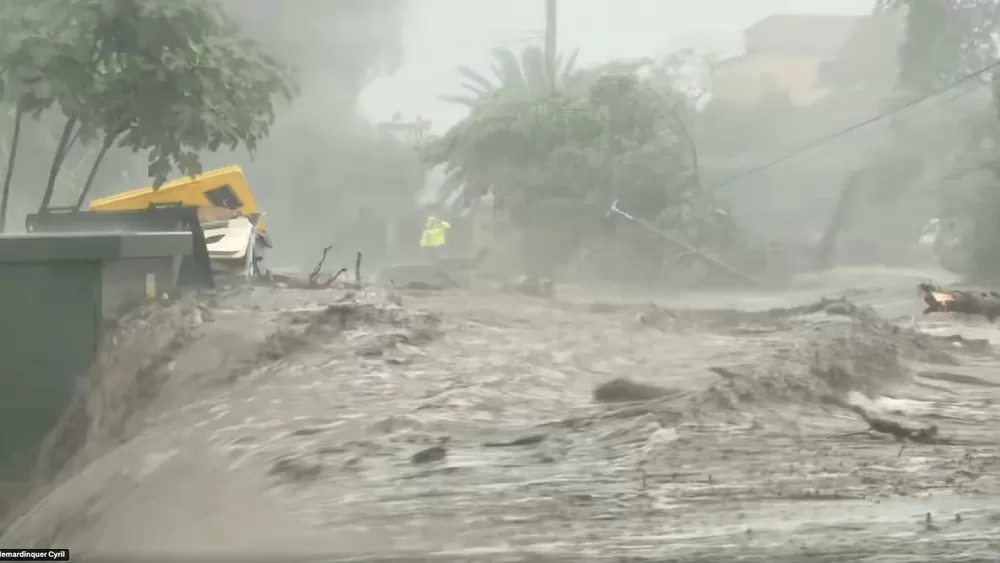
One Dead, One Missing as Cold Low-Pressure System Adam Unleashes Torrential Rains Across Southern France and Corsica
Southern France and Corsica grapple with the aftermath of severe weather system Adam, leaving one elderly man dead near Marseille and another person missing, amidst widespread flooding and infrastructure chaos.
The skies above Southern France and Corsica have wept a truly terrifying amount in the last 24 hours, unleashing a cold low-pressure system, rather starkly named Adam, that has brought absolute chaos and, tragically, claimed at least one life. It's a somber morning for the region, as communities grapple with the raw power of nature's fury, leaving behind a trail of destruction, displacement, and heartbreaking loss. One person is confirmed dead near Marseille, while another remains missing in the tempestuous embrace of Corsican floodwaters.
Imagine the fear. In the Bouches-du-Rhône department, specifically near Saint-Mitre-les-Remparts, an elderly 75-year-old individual met a tragic end. Swept away by the unforgiving floodwaters, their body was later discovered in Istres. It's a stark, painful reminder of how quickly seemingly benign landscapes can turn lethal when faced with such an overwhelming deluge. The sheer force of the water, it seems, left little chance for escape.
Meanwhile, across the Mediterranean, on the beautiful island of Corsica, a frantic search is underway. In Ghisonaccia, Haute-Corse, a person has been reported missing after their 4x4 vehicle was mercilessly carried away by the swollen Fium'orbu river. You can only imagine the desperate hope and crushing fear for their loved ones right now. And speaking of Corsica, the rainfall figures there are truly astounding, almost unbelievable: nearly 400 millimeters of rain have deluged the area north of Solenzara in Corse-du-Sud since this whole dreadful episode began. Incredibly, 191 millimeters of that fell in just a single hour at the local airport – a truly biblical downpour that few infrastructure systems could ever hope to withstand.
The mainland wasn't spared, not by a long shot. From Occitanie to Provence-Alpes-Côte d'Azur, the landscape transformed into a watery battlefield. Cars, once safely parked, were unceremoniously swept away, turning streets into raging rivers. Neighborhoods, familiar and comforting just days ago, now lie submerged, their homes filled with muddy water. Authorities had to act fast, evacuating residents to safer havens. In Istres, sports halls became temporary shelters, while in Lunel, Hérault, reception centers opened their doors to those displaced by the relentless onslaught.
And the disruption? Absolutely massive. For commuters and travelers, it was a nightmare. Sections of the crucial A9 motorway were closed, along with key slip roads around the bustling city of Marseille. Forget about getting around quickly there; tram services were severely disrupted. Even train services in Nîmes faced significant delays and cancellations. It just goes to show how profoundly such extreme weather can cripple the everyday rhythm of life.
This entire calamitous event, remember, is thanks to a potent cold low-pressure system meteorologists have christened "Adam." Its reach wasn't confined to France alone, with its turbulent tendrils extending across the border to impact parts of Spain too. It’s a testament to the widespread, destructive potential of such atmospheric phenomena.
As the immediate fury of Adam begins to subside, communities across Southern France and Corsica are now left to face the daunting task of assessing the damage, beginning the long process of recovery, and, most importantly, mourning their losses. Our thoughts are certainly with all those affected by this sudden, devastating turn of events.
- News
- UnitedKingdom
- Environment
- EnvironmentNews
- Flooding
- Ukraine
- France
- Russia
- Ireland
- Iceland
- Denmark
- Sweden
- Germany
- Switzerland
- Belgium
- Italy
- Spain
- Poland
- Romania
- Greece
- SevereWeather
- ExtremeWeather
- Slovenia
- Storm
- Montenegro
- BosniaAndHerzegovina
- Cyprus
- Albania
- Malta
- Macedonia
- Moldova
- SanMarino
- Netherland
- Hungary
- Austria
- Norway
- Portugal
- Serbia
- Bulgaria
- CzechRepublic
- Latvia
- Lithuania
- Slovakia
- Andorra
- Kosovo
- Liechtenstein
- Finland
- Monaco
- Vatican
- Belarus
- Estonia
- Luxembourg
- Croatia
- Floods
- Casualties
- Marseille
- WeatherDisaster
- Corsica
- SouthernFrance
- AdamStorm
- Istres
- Ghisonaccia
- Solenzara
Editorial note: Nishadil may use AI assistance for news drafting and formatting. Readers can report issues from this page, and material corrections are reviewed under our editorial standards.