Starry Night’s Secret: Astronomers Pinpoint Van Gogh’s Celestial Map
- Nishadil
- October 23, 2026
- 0 Comments
- 3 minutes read
- 9 Views
- Save
- Follow Topic
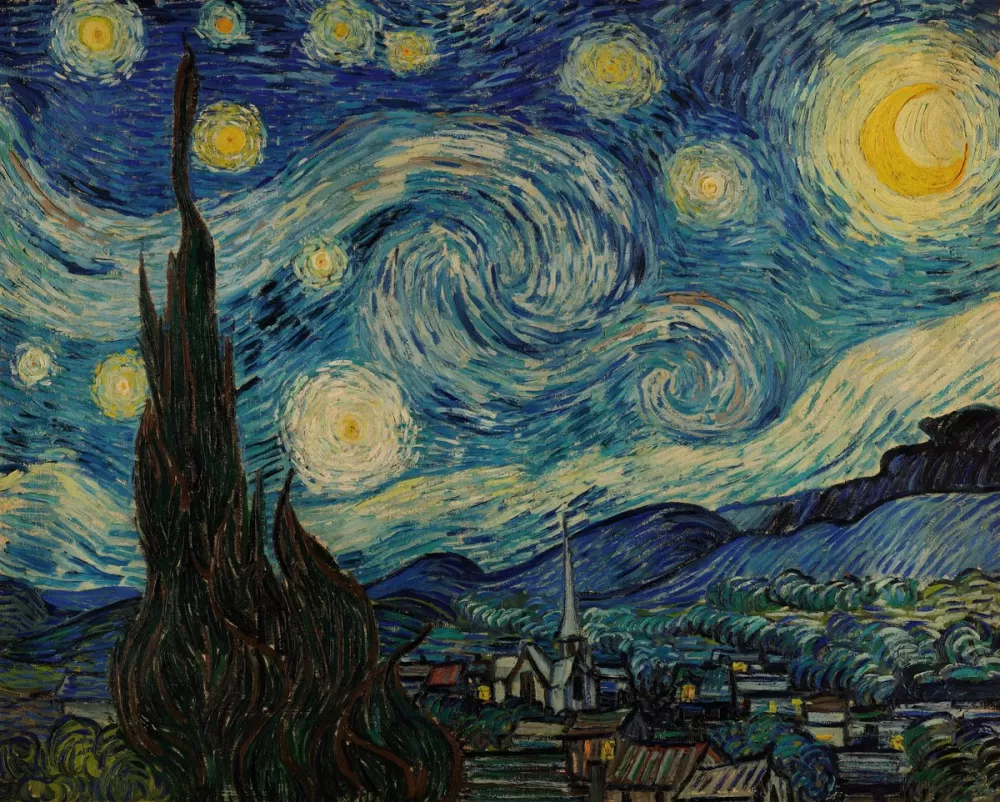
A fresh look at Van Gogh’s masterpiece links the swirling sky to the Hyades cluster, nudging the painting’s date into late July 1889
Astronomers have identified the star pattern in The Starry Night as the Hyades in Taurus, challenging the long‑held belief it depicts Aries and suggesting a later creation date.
When you stare at Vincent van Gogh’s The Starry Night, the swirling blues and the glittering dots feel almost alive. For more than a century, art lovers have wondered whether the central cluster of stars might be a real constellation—or simply the product of an exuberant imagination.
Now a team of astronomers thinks they’ve cracked the code. Using a computer‑driven shape‑matching program called Procrustes, they compared the relative positions of the painted dots to actual star fields. The best fit? The V‑shaped Hyades cluster tucked inside the Taurus constellation, as it would have appeared over Saint‑Rémy‑de‑Provence on July 22, 1889.
That finding nudges the painting’s timeline forward by a few weeks. Traditional scholarship placed The Starry Night in mid‑June 1889, based largely on a letter where Van Gogh wrote, “at last I have… a new study of a starry sky.” But the new analysis points out two problems with that date. First, the moon in the painting is a thin crescent, matching the sky in late July, not the waning gibbous that would have hung in June. Second, Van Gogh never mentioned Aries—an especially faint asterism—yet he frequently referenced Venus, which was near Aries at the time.
To double‑check their work, the researchers ran the same algorithm on another of Van Gogh’s night‑sky works, Starry Night over the Rhône, which famously contains the Big Dipper. The program correctly linked the painted stars to that real‑world asterism, bolstering confidence in the Hyades match.
Field trips helped, too. Lead author Elijah Jeong‑hyun Kim trekked to the exact window of the Saint‑Paul‑de‑Mausole asylum in 2019, recreating the view Van Gogh would have had. “From that spot the sky is pretty cramped,” says NASA Hubble fellow James Beattie. “If the Hyades identification holds, we could step outside today and point to the same stars.”
Not everyone is convinced. Don Olson, a self‑styled “celestial sleuth,” notes that the painted position of Venus doesn’t line up perfectly with the Hyades, and he argues the June 18 letter still carries weight. Still, the balance of evidence now tilts toward a late‑July creation, meaning Van Gogh may have worked on the canvas over several sessions rather than in a single burst.
Whether you see a scientific puzzle or just a beautiful night sky, the study adds another layer to the story behind one of art’s most iconic images. As Kim puts it, “The Starry Night spoke to an astronomer like me, and I finally listened.”
Editorial note: Nishadil may use AI assistance for news drafting and formatting. Readers can report issues from this page, and material corrections are reviewed under our editorial standards.