South Korean Scientists Unveil Ultra‑Cheap Nickel‑Cobalt Electrode to Power Green Hydrogen
- Nishadil
- October 21, 2026
- 0 Comments
- 2 minutes read
- 10 Views
- Save
- Follow Topic
Nickel‑Cobalt Catalyst Cuts Green Hydrogen Costs by Up to 99%
A team at Korea’s Institute of Energy Research has created a platinum‑free electrode that rivals the performance of precious‑metal catalysts, promising a dramatic drop in hydrogen production costs.
When you think of making hydrogen from water, the image that usually pops up involves pricey platinum plates and a hefty price tag. That’s about to change, thanks to a modest‑looking electrode born in a South Korean lab.
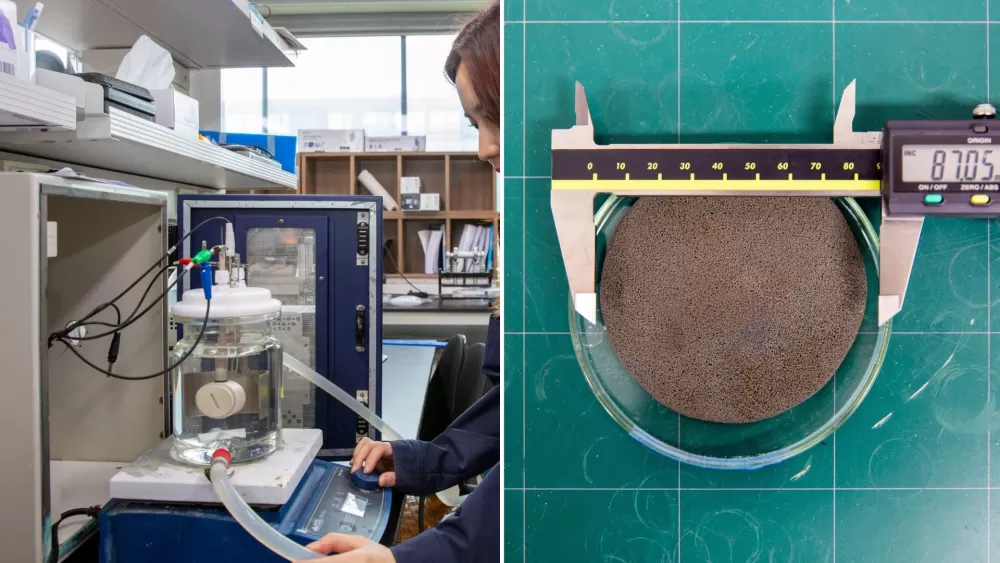
Researchers at the Korea Institute of Energy Research (KIER) have rolled out a nickel‑cobalt (Ni/Co) heterostructure that can run alkaline water electrolysis without any of the expensive noble metals. In plain English, they’ve swapped out a $58‑per‑gram metal for something that costs just a few cents per gram.
The breakthrough isn’t just about cheap materials; it’s about clever design. The new electrode layers nickel oxide on top of a nickel‑cobalt alloy, letting each component do what it does best. Nickel oxide tackles the sluggish first step – pulling water molecules apart – while the Ni‑Co alloy swoops in to stitch the freed hydrogen ions back together into usable gas.
Performance numbers back up the hype. The team measured an over‑potential of only 22.7 mV, roughly 40 % of what commercial platinum electrodes need (about 56.5 mV). In a real‑world‑size 8.7‑cm cell the voltage dropped 11 % compared with standard nickel cells, and the electrode survived 600 start‑stop cycles without a hint of degradation.
Why does this matter? Alkaline electrolysis, the workhorse of many industrial hydrogen plants, has long been hamstrung by the cost and scarcity of noble‑metal catalysts. Platinum and ruthenium, while excellent at speeding up the reaction, are pricey and their supply is limited. The Ni/Co electrode, priced at roughly $0.02 / g for nickel and $0.05 / g for cobalt, could shave up to 99 % off the material cost of green hydrogen production.
And the team isn’t stopping at the bench. They’ve already produced 40‑cm‑diameter electrodes and are refining the process to reach the massive 5,000 cm² surfaces needed for megawatt‑scale plants. If the scaling goes smoothly, we could finally see hydrogen’s “precious‑metal tax” evaporate.
Beyond the numbers, the design also feels built for the messy reality of renewable energy. Solar and wind don’t deliver a steady current; they flicker. The KIER electrode’s durability under repeated start‑stop cycles suggests it can weather those fluctuations without losing steam.
The findings were peer‑reviewed and published in Advanced Science, adding a solid scientific backbone to what could become a game‑changing commercial technology. As the world pushes harder for carbon‑free fuels, this nickel‑cobalt duo might just be the quiet hero that finally makes green hydrogen affordable at scale.
Editorial note: Nishadil may use AI assistance for news drafting and formatting. Readers can report issues from this page, and material corrections are reviewed under our editorial standards.