Solar Panels, Not Sirens: The Real Cost of Climate‑First Policies in Nepal
- Nishadil
- November 06, 2026
- 0 Comments
- 3 minutes read
- 3 Views
- Save
- Follow Topic
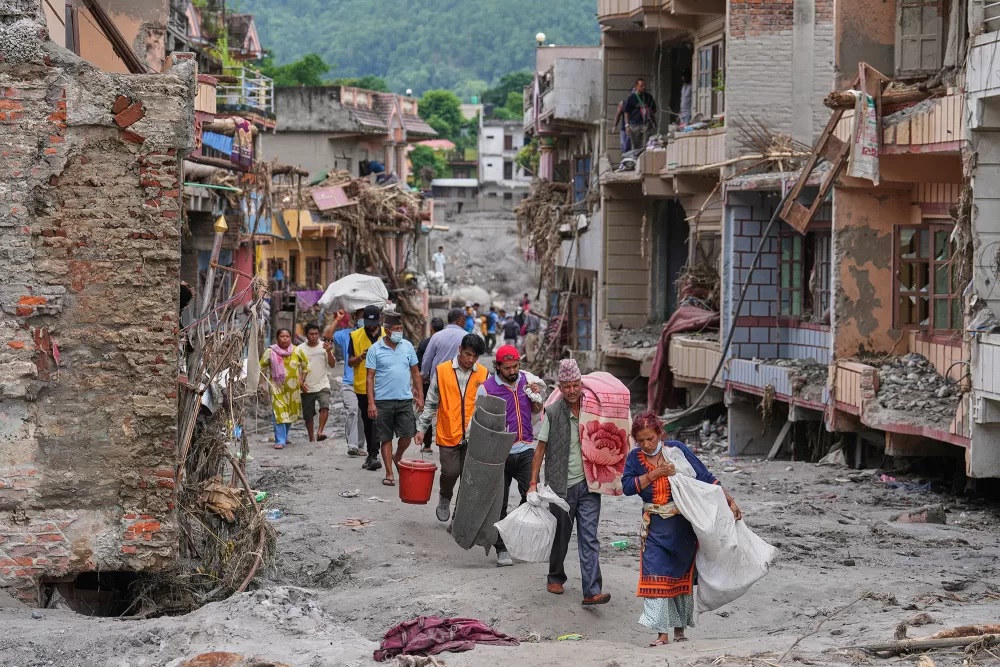
How a focus on green projects left Nepal without the warnings that could have saved thousands
An avalanche in Nepal’s Trishuli Valley killed over a thousand people. Mis‑directed climate aid, missing sirens and text alerts, and a lack of basic early‑warning infrastructure are examined.
When the ice‑and‑rock avalanche barreled through the Trishuli Valley in August, the sheer force of nature was undeniable. More than 1,400 people perished, about 5,000 are still missing, and the damage bill runs close to $5 billion – roughly one‑eighth of Nepal’s whole economy.
In the days that followed, the usual chorus rose at the United Nations: climate change, they said, made such disasters “more likely, more frequent, more severe.” Bill McKibben even blamed the world’s carbon‑guzzlers for the Nepali deaths. That rhetoric, while emotionally resonant, obscures a more mundane truth.
The World Weather Attribution group did note that human‑induced warming has nudged Himalayan summer temperatures up about 2.7 °F since pre‑industrial times. Yet they were careful to label climate change a “destabilising factor” on top of a pre‑existing geological risk, not the root cause of the avalanche itself. And a massive new study of 60 million high‑mountain avalanches across Asia found no long‑term increase in avalanche frequency for the bulk of the region.
So, what could have saved lives? Simple, low‑tech solutions. In parts of the valley, residents had as much as 40 minutes to evacuate, but no siren wailed, no text alert pinged. Downstream in Bidur, a school principal named Rajendra Dawadi managed to herd about 900 students to safety – not because a warning system told him to, but because a neighbour shouted, “The water’s coming!”
Nepal’s own damage assessment now calls for a network of river‑bank sirens, upgraded hydrological stations and a text‑message alert system. The total price tag? A modest $2.3 million – peanuts compared with the billions already spent on climate‑focused projects that never reached the people in need.
Take a look at where the money has gone: $500 million for smart meters and new power lines to replace fossil fuels in a country that already relies on hydropower for almost all its electricity; $6.7 million from Germany for solar panels in remote villages; a $150 million World Bank “disaster‑resilience” package that was largely redirected to drought‑ and wildfire‑related work; a $27.4 million Green Climate Fund grant that funded irrigation, farmer schools and gender programmes, but nothing for sirens.
Even the $50 million earmarked for sensors and sirens sat idle for seven years, only receiving approval in 2025 and slated to finish in 2033 – far too late for those who died in 2026. By contrast, the World Meteorological Organization says that $800 million spent on early‑warning systems in low‑income nations could prevent $3‑16 billion in losses each year.
Bangladesh offers a bright example. After a 1970 cyclone that killed over 300,000, the country invested in forecasts, shelters and regular drills. Since 2007, annual cyclone deaths have been kept under 200 – a reduction of more than 99 %.
Globally, deaths from climate‑related disasters have fallen by over 97 % in the past century. That decline hasn’t come from cutting emissions; it’s come from richer economies, better infrastructure and, most importantly, warnings that give people a chance to move.
Nepal’s per‑capita GDP is still just $1,548, one of the lowest on Earth. What it needs isn’t a parade of solar panels or fancy climate‑offset projects; it needs growth that funds sturdier bridges, reliable roads, functional monitoring stations and, yes, simple sirens. If the upcoming COP31 truly wants to honour the victims of the Trishuli Valley, the first thing the world should fund is the warning system they never got – and then step aside to let Nepal grow on its own terms.
Editorial note: Nishadil may use AI assistance for news drafting and formatting. Readers can report issues from this page, and material corrections are reviewed under our editorial standards.