
Satellite Data Uncovers a Troubling 'Boom-and-Bust' Cycle in Our Greening Drylands
- Nishadil
- September 25, 2026
- 0 Comments
- 3 minutes read
- 2 Views
- Save
- Follow Topic
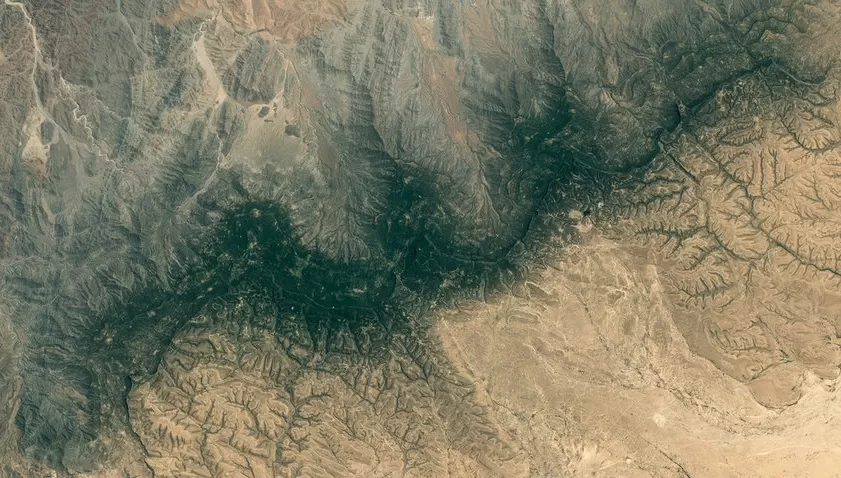
University of Arizona Study Reveals Escalating Instability in Global Drylands, Challenging Existing Climate Models
New research from the University of Arizona, leveraging 40 years of satellite data, shows that drylands worldwide are caught in an intensifying 'boom-and-bust' cycle, with periods of lush growth followed by increasingly severe droughts. This worrying trend, driven partly by rising CO2, poses significant challenges for agriculture and threatens ecosystem stability.
Imagine vast stretches of land, critical for feeding billions and supporting diverse life, suddenly swinging wildly between lush, green abundance and stark, parched vulnerability. This isn't a dystopian novel; it's the unsettling reality unfolding across nearly 80% of our planet's drylands, as revealed by groundbreaking new research.
A team from the University of Arizona, spearheaded by doctoral student Wen Zhang and senior author Associate Professor Bill Smith, alongside Professor David Moore, has been poring over four decades of satellite data. What they've uncovered, published in Nature Climate Change, is a stark "boom-and-bust" dynamic in these vital ecosystems. Essentially, during those precious wet years, vegetation activity truly thrives, reaching impressive highs. But here’s the kicker: when the dry spells hit, they hit harder, leaving plants more severely impacted than before. The extremes, both good and bad, are widening over time, creating a landscape of increasing instability.
You see, drylands are far from barren. They cover a whopping 40% of Earth’s land surface and sustain over two billion people. So, understanding their health isn't just an academic exercise; it's crucial for global food security, biodiversity, and human livelihoods. The study meticulously tracked changes in vegetation leaf area index, essentially how much green stuff is covering the ground, over these 40 years, providing an unprecedented long-term view.
What's driving this increasingly volatile pendulum swing? While the exact causes are complex and still being untangled, the researchers point to a potent combination of increasing atmospheric carbon dioxide and the inherent variability of rainfall in these regions. It’s a bit counterintuitive, perhaps: more CO2 can initially make plants grow larger. But here’s the rub – these bigger plants, grown in carbon-rich conditions, might actually become more demanding and, ironically, more sensitive to subsequent droughts. They simply need more resources, and when those resources aren't available, the crash is far more dramatic.
And the implications? Well, they’re far-reaching and rather worrying. For farmers who rely on rain-fed agriculture, this means an ever-increasing unpredictability, pushing them towards greater reliance on artificial irrigation, if that’s even an option. Livestock producers face a similar dilemma with erratic pasture forage production, making rangeland management a constant, stressful gamble. Beyond direct human impacts, this escalating instability could be an early, unmistakable warning sign of profound ecological shifts already underway – a shift that could reshape entire ecosystems.
Perhaps one of the most striking findings is how poorly our existing tools predict this. The research team evaluated thirteen leading global vegetation models, the very ones we often use to project future climate scenarios. Unfortunately, these models largely overestimate the stability of drylands and simply don't capture this observed increase in year-to-year variability. It means our current understanding, as reflected in these models, might be missing a critical piece of the puzzle, potentially leading to flawed projections and adaptation strategies.
So, as the University of Arizona researchers, like Bill Smith, continue their vital work in land, water, and climate change geospatial analysis, this study serves as a powerful wake-up call. Our drylands aren't just greening; they're becoming more temperamental, demanding a much deeper, more nuanced understanding if we hope to help them – and the billions who depend on them – adapt to a rapidly changing world.
Editorial note: Nishadil may use AI assistance for news drafting and formatting. Readers can report issues from this page, and material corrections are reviewed under our editorial standards.










