Priyanka Gandhi Decries ‘Not a Democracy’ as Son’s Protest Photos Pulled from Delhi Exhibit
- Nishadil
- October 22, 2026
- 0 Comments
- 3 minutes read
- 8 Views
- Save
- Follow Topic
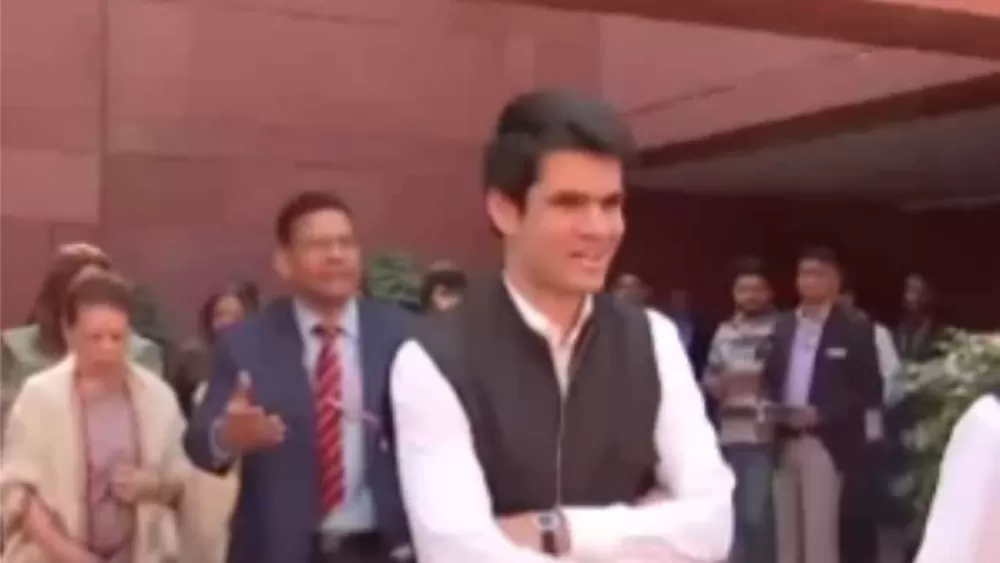
‘No longer a democracy’: Priyanka Gandhi reacts to removal of Raihan Vadra’s protest pictures
Artist Raihan Vadra’s solo show at Delhi’s Bikaner House saw more than 70 protest photographs taken down, prompting his mother Priyanka Gandhi to call the act censorship and a blow to democracy.
When Raihan Vadra, the young photographer and son of Congress stalwart Priyanka Gandhi Vadra, arrived at Bikaner House in Delhi on Wednesday, he expected a routine set‑up for his first solo exhibition, "No Idea is Final". What he got instead was a frantic phone call at 3.30 pm telling him the administration wanted the protest‑related pictures off the walls by 5 pm – or the entire show would be cancelled.
Raihan, who had submitted a detailed proposal and layout to Bikaner House weeks earlier, was left bewildered. "They said it wasn’t the right time for such photos," he told PTI. "I had 74 images documenting the Delhi protests of the last six months – none of them were political commentary, just visual records. Yet they pulled about 70 of them, even the one with the Indian flag."
The venue, a heritage building that hosts cultural events, reportedly removed the photographs from two large rooms on its first floor. The empty red walls, now bearing the Preamble of the Constitution, stood as a stark reminder of what was taken down.
Priyanka Gandhi, who was watching the drama unfold from the sidelines, expressed fury. "It’s ridiculous, it’s muzzling the voice of the youth across the nation," she said to reporters. "Today it’s him, tomorrow it could be another artist. This is not a democracy any more." Her remarks echoed a broader anxiety among Indian artists who feel the climate for political expression is tightening.
Raihan, for his part, tried to argue that art can’t be neatly separated from politics. "You can’t say ‘don’t show political art’ because every piece of art is political in some way," he said. He also highlighted that the photographs were merely documentation – no slogans, no insults – yet they were deemed too sensitive given the "current context and political climate".
The exhibition is scheduled to run through Sunday. Despite the removals, about 40 photographs remain on display, ranging from wildlife shots to abstract works and street photography that captures the energy of youth movements. The organizers have not issued a detailed public statement, and a Bikaner House spokesperson declined to comment further.
Critics argue that the move sets a troubling precedent. If a young artist can be censored for showing images of a protest that has already been widely covered in the media, what does that mean for future exhibitions? The debate has already sparked discussions on social media, with many users questioning whether cultural institutions are becoming extensions of political gatekeeping.
For Priyanka Gandhi, the incident is more than a family matter; it’s a symptom of a larger erosion of democratic space. "If we keep silencing the youth, we lose the very pulse of the nation," she warned. Whether the remaining works can still convey the intended narrative, or whether the empty walls will dominate the conversation, remains to be seen.
Editorial note: Nishadil may use AI assistance for news drafting and formatting. Readers can report issues from this page, and material corrections are reviewed under our editorial standards.