Noida’s Bisrakh Village Honors Ravan and Shuns the Traditional Dussehra Fire
- Nishadil
- October 21, 2026
- 0 Comments
- 4 minutes read
- 8 Views
- Save
- Follow Topic
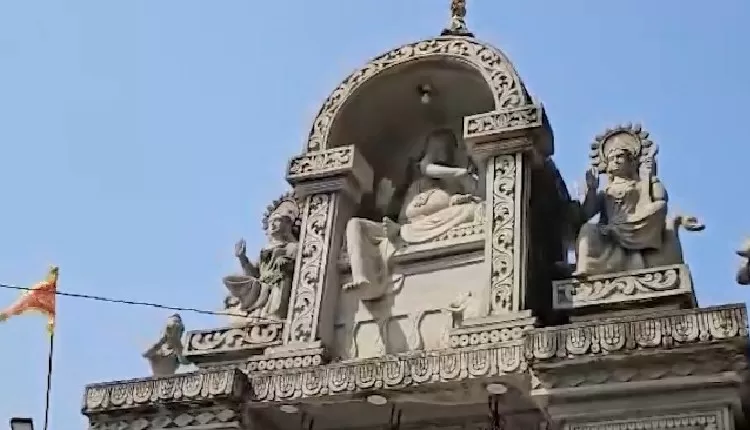
Bisrakh villagers worship Ravan as ‘son of the soil’ and refuse to burn his effigy on Vijayadashami
In Bisrakh, a hamlet near Greater Noida, locals venerate Ravan as a revered ancestor and conduct a peaceful Yagya on Dussehra, rejecting the usual effigy‑burning ritual.
When most of India lights up the night sky with the crackle of pyres on Vijayadashami, the small settlement of Bisrakh, just about 30 kilometres from the national capital, does something entirely different. Here, the folk believe they are standing on the very soil where the legendary king Ravan was born, and they treat him not as a villain to be torch‑lit, but as a beloved forefather worthy of prayer.
Bisrakh’s claim to fame rests on an old, almost whispered‑about tradition that calls the village the birthplace of Ravan, the ten‑headed demon king of the Ramayana. The name itself is said to have once been “Vishveshara,” a tribute to Ravan’s father, the sage Vishrava, who, according to local lore, set up a Shiva lingam here during the Treta Yuga. Over centuries, that story fused with the village’s identity, and today the shrine at the centre of Bisrakh is decked out in flowers, lamps and incense every single day.
On Dussehra, instead of preparing a towering effigy to be set ablaze, the villagers gather for a solemn Yagya. Mahant Ramdas Maharaj, who oversees the rites, explained to reporters that the day is marked by a series of havans, hymn chanting and offerings of sweets. “This is Ravan’s birthplace, once the ashram of Sage Brahma and Sage Pulastya,” he said. “We honour him throughout the year, and today we simply pray for his blessings, not his destruction.”
Visitors from nearby towns and even from Delhi flock to the temple, drawn by the spectacle of a beautifully adorned shrine rather than a smoldering pyre. They bring garlands, light diyas and sit quietly as priests recite verses from the Ramayana, not to condemn Ravan, but to acknowledge his learned nature and deep devotion to Lord Shiva.
The sentiment in Bisrakh mirrors a handful of other pockets across the country where Ravan is revered rather than reviled. In Kanpur’s Shiwala area, the Dashanan Temple – built in 1868 by Maharaj Guru Prasad Shukla – opens its doors only on Vijayadashami. On that single day, the ten‑headed idol is bathed in milk and holy water, and devotees perform aarti, seeking the king’s scholarly wisdom and his steadfast loyalty to Shiva.
“Ravan was not merely a demon; he was a great scholar, a ruler of intellect,” says Pandit Ram Bajpai, the temple priest. “Our rituals try to remind people of that balance – that good and evil are sometimes shades of the same coin.”
Further west, in Vidisha’s Nateran tehsil of Madhya Pradesh, the tiny hamlet called Ravan (sometimes affectionately called “Ravan Baba”) carries on a similar practice. The village shrine, believed to date back to the Parmar era, houses a twelve‑foot reclining statue of the king. Instead of igniting a mock‑Ravan, the community stages Ramayana recitations, devotional songs and a grand communal feast on Dussehra.
Priest Naresh Tiwari explains that the villagers view Ravan as their protector: “Before any auspicious event – a wedding, a new business, even a simple harvest ceremony – we seek Ravan Baba’s blessings. To ignore him is to invite obstacles.” The rituals here, too, are steeped in reverence, with offerings of flowers, oil lamps and heartfelt prayers.
These divergent customs may seem puzzling to many who grew up with the image of a burning effigy, but they underscore a larger truth about Indian festivals: they are not monolithic. Each region, each community, layers its own history, myths and values onto the calendar, producing a mosaic of celebrations that can be both fierce and gentle.
For the residents of Bisrakh, the decision to forgo the pyre is less a protest than a preservation of identity. “Our ancestors taught us to see Ravan as a son of the soil,” Mahant Ramdas adds. “On this day we honour that lineage, not erase it.” As social media amplifies the village’s unique observance, more curious travelers are arriving, turning what was once a quiet local rite into a modest pilgrimage of cultural reflection.
Editorial note: Nishadil may use AI assistance for news drafting and formatting. Readers can report issues from this page, and material corrections are reviewed under our editorial standards.