NASA’s Sun‑Powered CubeSat: The Rise and Fall of ACS3
- Nishadil
- October 21, 2026
- 0 Comments
- 3 minutes read
- 7 Views
- Save
- Follow Topic
NASA Tested a Spacecraft Pushed by Sunlight Instead of Rocket Fuel – What Happened?
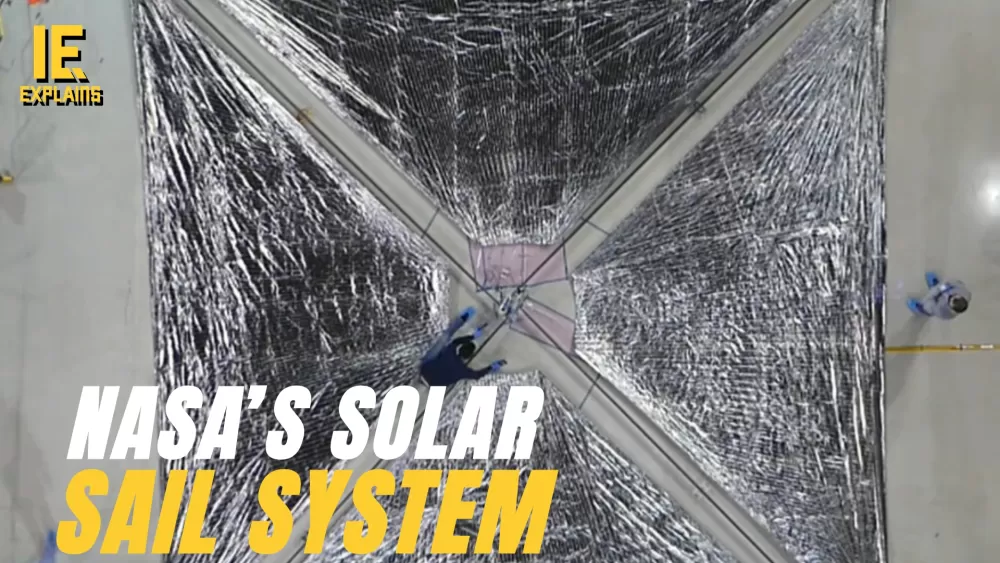
NASA’s ACS3 solar‑sail CubeSat spent almost two years proving carbon‑fiber booms can unfurl an 80‑m² sail, but a bent boom sent it spinning into early retirement.
When you picture a spacecraft, the first thing that usually comes to mind is a roaring engine spewing fiery plumes. NASA decided to flip that image on its head with ACS3 – the Advanced Composite Solar Sail System – a tiny CubeSat about the size of a kitchen microwave that never fires a single drop of rocket fuel.
Instead of chemical thrust, ACS3 leans on a simple, almost poetic principle: light carries momentum. Every photon that bounces off a reflective surface imparts a microscopic shove. Multiply that by a big, shiny sail – roughly the size of six parking spaces – and you get a continuous, fuel‑free nudge.
The heart of the experiment was the sail’s four 7‑meter booms. Think of them as ultra‑light carbon‑fiber tape measures that roll out to hold the sail taut. They’re about 75 % lighter than the metal booms used on older missions, a difference NASA hoped would make deployment smoother and reduce mass.
In August 2024, after a long climb to roughly 1 000 km altitude, ACS3 finally opened its sail. The moment the fabric unfurled, the mission’s primary goal was declared a success – the carbon‑fiber booms proved they could survive the harsh space environment and keep the sail spread.
Unfortunately, the story didn’t stay all sunshine. One of the booms flexed and snapped near its base, a problem that hadn’t shown up in ground tests. The broken boom threw the little satellite into a gentle, but persistent spin. NASA’s ground controllers tried to counteract it, but the spin kept the solar panels turned away from the Sun, starving the craft of power.
Even though sunlight still nudged the satellite’s orbit ever so slightly, the inability to point the panels meant ACS3 couldn’t communicate reliably. After months of attempting to regain control, the team made the tough call to de‑commission the mission in March 2026, well before they could command a deliberate “sail‑powered” maneuver.
What’s next? NASA isn’t throwing in the towel on solar sails. The agency has teamed up with Colorado‑based Opterus to design a deployment system for a sail that’s twenty times larger than ACS3’s – a true kilometer‑scale sail slated for a launch in early 2028. If it works, we could see space‑weather stations perched closer to the Sun, giving us earlier warnings of solar storms.
So, while ACS3’s spin‑out was a sobering reminder that space is unforgiving, the experiment still proved that sunlight can be a viable, propellant‑free way to move objects around Earth’s orbit. It’s a step forward, even if the first step tripped on a stray boom.
Editorial note: Nishadil may use AI assistance for news drafting and formatting. Readers can report issues from this page, and material corrections are reviewed under our editorial standards.