Morocco’s Beach Metal Detectorists: Treasure Hunting, History, and Clean‑up
- Nishadil
- November 08, 2026
- 0 Comments
- 4 minutes read
- 9 Views
- Save
- Follow Topic
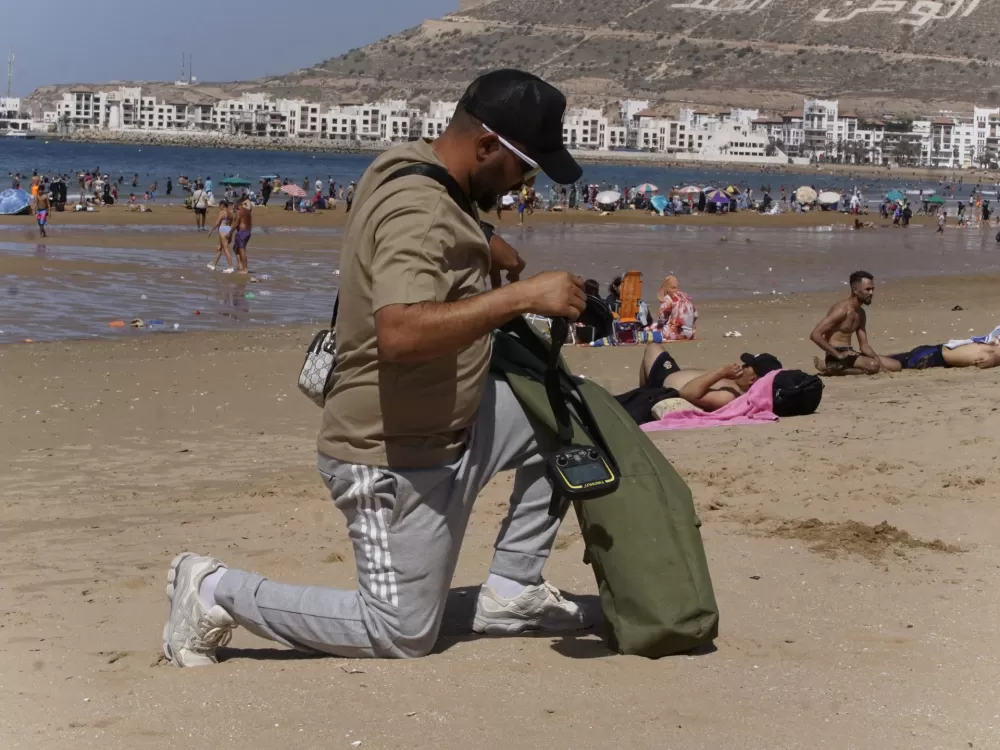
From beeps on the sand to forgotten coins – the human side of Morocco’s detector hobbyists
On Morocco’s sun‑kissed shores, locals swing metal detectors, chasing hidden coins, ancient relics and a simple thrill, all while keeping the beaches tidy and respecting the law.
When Mustapha Harmouch walks along Agadir’s Corniche, the world seems to shrink to the soft sweep of his detector’s coil and that occasional, unmistakable beep. The surf crashes, kids shout, families spread blankets, but his attention hones in on the faint whirr that hints something lies beneath the sand.
He bought a Tianxun TX‑850 online four years ago, not because he dreamed of striking gold, but because the unknown excites him. "The excitement comes partly from not knowing what’s under the sand," he told Al Jazeera. Each sweep could reveal a bronze coin, a stray fishing hook, or—if luck smiles—a piece of history.
Harmouch’s hobby has slipped onto his YouTube channel, Stofishing, where the 123,000‑strong audience watches him sift through sand, seaweed and occasional trash. The videos are not slick commercials; they feel like a friend sharing a weekend adventure, with a few extra pauses, a chuckle, and the occasional “oops, that’s just an old soda can”.
His most prized haul came near Sidi Ouassay, about 65 km south of Agadir: fourteen Moroccan falus, bronze‑copper coins dating back to 1289 AH (roughly 1872 CE). Some were so corroded the markings were fuzzy, yet Harmouch treasured them more for the story they whispered than for any market price. "I collect them as a memory," he says, eyes sparkling.
Not every find is a historic gem. Once he thought he’d uncovered a meteorite, only to learn it was a cheap, common mineral. He laughed, “Before asking, I thought I’d found the best discovery.” That humility, that willingness to be surprised, is what pulls him back to the shoreline week after week.
He’s not alone. Members of the Moroccan Association for Research and Exploration Enthusiasts— a loose‑knit group that meets for a few hours, carries ID cards, avoids private property and heritage sites—spread across Taghazout, Agadir’s Corniche and other quieter stretches. Their detections have yielded jewelry, French 20‑franc silver coins, and even a tiny gold ring that Harmouch returned to its owner.
The legal backdrop is clear: Morocco’s Law 22‑80 protects monuments, archaeological sites and antiquities. Unauthorized digs are prohibited, and any accidental find of historic significance must be reported and left in situ unless protection requires movement. Archaeologist Basma Oumaima stresses that context matters; a simple coin becomes priceless when its surrounding layers are documented.
For the hobbyists, though, most of what they pull up is modern: lost dirhams, stray fishing gear, rusted sardine‑can fragments, and the occasional watch. Jalal Zegnoune, a maintenance technician in Casablanca, sees his detector as a beach‑cleaning tool as much as a treasure‑hunting gadget. “Some objects can be dangerous to beachgoers,” he explains, “so I remove them.”
Mohamed Botaib, a former sports coach now job‑searching, sums it up simply: “Every person has their luck.” His finds are modest—coins, a ring, a pair of glasses—but each beep feels like a tiny victory, a reminder that the sea hides more than just shells.
Beyond personal thrill, there’s a communal rhythm. The detectors’ whines echo a shared purpose: uncovering forgotten pieces of the past, cleaning the coast, and perhaps, in a quiet way, connecting with history’s layers. The hobby is not a full‑time job for anyone; income comes from YouTube views, a fishing‑gear shop, or day‑to‑day work. Yet the joy, the pause before each beep, and the collective nod when a find is reported, keep the detectors humming along Morocco’s shores.
Editorial note: Nishadil may use AI assistance for news drafting and formatting. Readers can report issues from this page, and material corrections are reviewed under our editorial standards.