
Matt Myers Finds Love and New Inspiration on Houndmouth’s ‘Lordy’
- Nishadil
- November 08, 2026
- 0 Comments
- 4 minutes read
- 18 Views
- Save
- Follow Topic
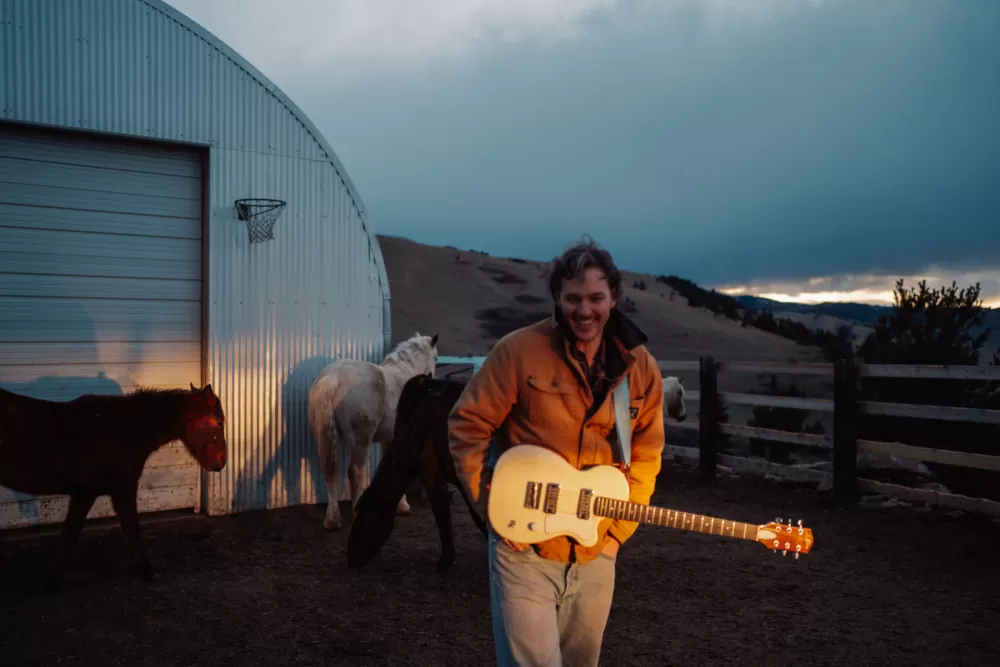
Houndmouth’s Frontman Talks Marriage, Happiness, and Why Sadness Isn’t a Requirement for Great Songs
In a breezy interview, Matt Myers opens up about how his recent marriage reshaped his songwriting, the themes behind the new album Lordy, and what it means to keep creating without dwelling on gloom.
It’s late August in Burlington, Vermont, and the heat has turned the sidewalks into a kind of sticky runway. Matt Myers, the lanky voice behind Houndmouth, is strolling down Main Street, pausing at a corner coffee stand before the band heads to Waterfront Park for an evening slot opening for The Head and the Heart. Between sips of cold brew, he leans back against the brick wall and starts talking about something that’s been humming under his ribs for the past two years: love.
“Getting married changed everything,” he says, a grin spreading across his face. “It’s not just about a ring or a ceremony. It’s the feeling that, for once, someone is really seeing you—and you’re seeing them back. That rocks my world.” The 38‑year‑old’s voice carries a relaxed confidence, the sort that only comes after a few good nights at home, away from the relentless tour‑bus grind.
Myers’ second marriage, and the two little daughters he shares from his first, have given him a stable rhythm that was missing from the early, chaotic days of Houndmouth. “I used to think you had to be sad to write something that mattered,” he admits. “Turns out you can be happy at home and still make songs that feel big.” The new record, Lordy, released on Dualtone Records as part of the label’s 25th‑anniversary celebrations, is a testament to that revelation.
Lordy isn’t a glossy love‑song collection; it’s more like a diary that flips between the everyday and the extraordinary. Songs flow from Myers’ “mirror moments,” where he acknowledges the salt‑and‑pepper hair, the faint lines earned from years on the road, and the quiet comfort of a kitchen table. “You don’t have to overthink it,” he says. “Just write, edit, and let the song sit where it belongs.”
>While the album’s themes are personal, its sonic backdrop still feels like the crossroads it’s always been: a blend of Midwest Americana, Southern blues, and that unmistakable indie‑rock twang that first put Houndmouth on the map. The band still calls New Albany, Indiana home—a stone‑throw from Louisville’s buzzing music scene—where Myers first scraped together gigs at places like Huber’s Winery, playing covers just to stay in the game.
That grind paid off when a quirky internet name generator gave them the moniker Houndmouth, and a chance slot at SXSW snagged the attention of Rough Trade Records. Fast‑forward a few years, and they were tearing up stages at Lollapalooza, Bonnaroo, and Newport Folk. Their 2015 breakthrough, Little Neon Limelight, was anchored by sing‑along anthems like “Sedona” and “Darlin’,” but Myers says the success felt more like “a rocket that never quite launched the way we imagined.”
Even after lineup changes—keyboardist Caleb Hickman joining in 2016—Myers remains the sole founding member still steering the ship. “I’m the only one left from the original crew,” he chuckles, “but that’s okay. It means the music has to keep evolving, and I get to keep telling the stories that matter to me without any fake drama.”
That storytelling ethic shines through tracks like “McKenzie” and “Miracle Mile” from the 2021 album Good for You, where the lyricism leans toward personal vignettes rather than grandiose narratives. “I never felt the need to invent elaborate myths,” he notes. “I just write what’s in front of me, raw and simple.”
When asked about the creative process now that happiness has settled in, Myers laughs, “You play for four hours and your fingers are toast‑ready. Then you try to drop in a new song and it falls flat. So I said, ‘Let’s just get the band together, play only our own songs, and not compromise.’ It’s liberating.”
Lordy, then, isn’t just another album; it’s a love letter to the idea that contentment and art can co‑exist. The record closes on a hopeful note, leaving listeners with a sense that even when the road is long, there’s always a place to come home—both literally and musically.
Editorial note: Nishadil may use AI assistance for news drafting and formatting. Readers can report issues from this page, and material corrections are reviewed under our editorial standards.


