Mastering Doubly Linked Lists: Deleting a Node at Any Position
- Nishadil
- September 28, 2026
- 0 Comments
- 6 minutes read
- 4 Views
- Save
- Follow Topic
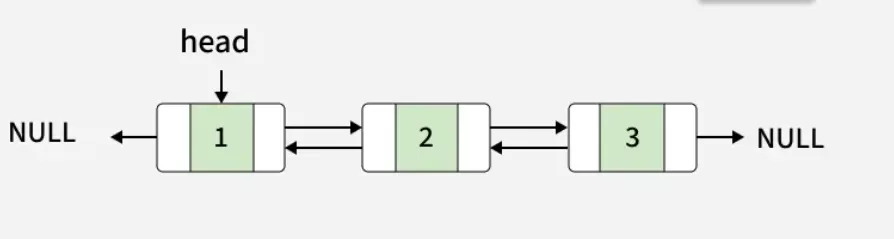
A Step-by-Step Guide to Safely Removing Elements from a Doubly Linked List by Position
Learn the essential logic and common pitfalls when deleting a node from a doubly linked list at a specified position. We cover everything from empty lists to head and intermediate node removals, ensuring robust list management.
Doubly linked lists, with their fascinating two-way pointers, offer a great deal of flexibility when it comes to navigating data. Unlike their singly linked counterparts, moving backward through the list is just as easy as moving forward. This bi-directional nature is a superpower, but it also means that operations like deleting a node at a given position require a little extra care and attention to detail. It’s not overly complex, mind you, but missing a single pointer adjustment can, well, break your entire list! So, let’s unpack how to perform this crucial operation with confidence.
Imagine you have a beautifully organized chain of data, each link aware of its neighbor both ahead and behind it. Now, someone asks you to snip out a specific link at a particular spot. Sounds simple enough, right? But what if that spot is the very first link? Or what if the chain is empty? These are the kinds of questions we need to address before diving into the actual removal process. Being thorough here prevents all sorts of headaches down the line.
First things first: error handling. This is always, always, our opening act in any robust data structure operation. We need to consider two primary 'showstopper' scenarios. What if the list is, in fact, entirely empty? There's nothing to delete, obviously. So, if our head pointer is null, we simply do nothing and perhaps return an error or a boolean indicating failure. Secondly, what if the position requested is out of bounds? If the given position `pos` is negative, or if it exceeds the current length of our list, it's an invalid request. Again, we should handle this gracefully, preventing any attempts to access non-existent memory.
Now, assuming our list isn't empty and the position is valid, let's tackle the specific cases for deletion. The most unique scenario involves removing the very first node, often referred to as the head. If `pos` is 0, we're targeting the head. Here's what needs to happen: the `head` pointer of our list must shift to point to the next node in the sequence. But wait, there’s more! If this new head node exists, its `prev` pointer, which used to point to the old head (the one we're deleting), must now be set to `null`. This cleanly detaches it from what came before, establishing it as the new beginning of the list. Oh, and if the list only had one node to begin with (the head itself), then after deletion, the list becomes completely empty, so `head` should then point to `null`.
What about deleting a node somewhere in the middle of the list, or even the very last node (the tail)? This is arguably the most common and interesting case. For this, we'll need to traverse the list until we find the node just before the one we intend to delete. Let's call this our `current` node. Once we've reached `current` at `pos - 1`, the node to be deleted is `current.next`.
Here’s where the magic, or rather, the careful pointer re-linking, happens. To remove `current.next` (let's call it `nodeToDelete`), we essentially bypass it. We need to tell `current` that its new `next` is now `nodeToDelete.next`. Simultaneously, we must update the `prev` pointer of `nodeToDelete.next` (if it exists!) to point back to `current`. Think of it like this: `current` now shakes hands directly with the node that used to be two steps away, completely ignoring `nodeToDelete` in the middle. The `nodeToDelete` itself is now isolated, no longer part of our linked list chain, and is eventually fair game for garbage collection in many languages. It’s a bit like performing surgery – precise cuts and careful reattachments ensure the system continues to function smoothly.
A quick word on complexity: In the worst-case scenario, if we're deleting a node towards the end of a list of `N` elements, we might have to traverse almost `N` nodes to find our target. This makes the time complexity O(N). However, if you know the position and it's always near the beginning, it could be much faster, say O(k) for position `k`. As for space complexity, we're really only using a few extra pointers for our traversal and manipulation, so it remains a very efficient O(1).
So, there you have it! Deleting a node from a doubly linked list at a given position, while requiring attention to detail with those two-way pointers and edge cases, is a fundamental skill for anyone working with data structures. Practice these steps, visualize the pointer changes, and you'll be managing doubly linked lists like a seasoned pro in no time.
- India
- News
- Technology
- TechnologyNews
- Algorithm
- MemoryManagement
- CImplementation
- JavaImplementation
- PythonImplementation
- DataStructure
- HeadPointer
- LinkedListOperations
- TraversalMethod
- DoublyLinkedList
- XThPosition
- ValidList
- PointerAdjustment
- NodeDeletion
- DeleteNode
- NextLink
- PreviousLink
- ProgrammingTutorial
- PointerManipulation
- DsaConcepts
Editorial note: Nishadil may use AI assistance for news drafting and formatting. Readers can report issues from this page, and material corrections are reviewed under our editorial standards.