Magnetic‑Sound Wave Chip Promises Computing Speed Ups of Up to 1,000×
- Nishadil
- October 22, 2026
- 0 Comments
- 3 minutes read
- 11 Views
- Save
- Follow Topic
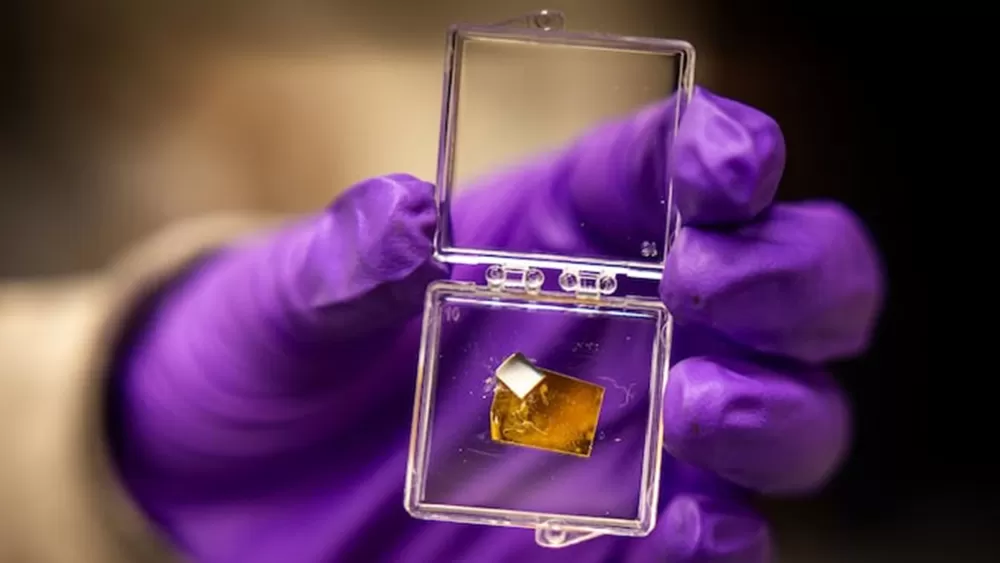
U.S. researchers unveil M3BOLT, a magnetic‑based transistor alternative that could revolutionize speed and power use
A team from the University of Michigan and UW‑Madison, backed by DARPA, has built a magnetic‑sound wave chip called M3BOLT that may make computers up to a thousand times faster while slashing energy consumption.
Imagine a computer that can think a thousand times faster than today’s laptops, yet sips power the way a smartwatch does. That’s the promise of a new chip dubbed M3BOLT, announced by researchers at the University of Michigan and the University of Wisconsin‑Madison.
The breakthrough isn’t about shrinking transistors any further – it’s about throwing the whole transistor idea out the window. Instead of flipping electronic switches on and off, M3BOLT uses a blend of magnetic waves (magnons) and ultra‑high‑frequency sound waves to carry and process information.
How does it work? The core of the device is a ferroelectric crystal known as lead‑magnesium‑niobate‑lead‑titanate (PMN‑PT). When an electric field nudges this crystal, its internal electric orientation shifts, which in turn nudges a thin film of iron‑gallium alloy attached to it. That alloy’s magnetic personality changes, spawning magnons that zip through the material with almost no resistance.
Those magnons can vibrate at terahertz frequencies – a thousand times faster than the gigahertz rhythms that dominate today’s processors. In theory, that means a single M3BOLT element could handle data at speeds hundreds of times greater than conventional silicon transistors.
But speed isn’t the only selling point. The magnetic state of the iron‑gallium layer can be set to represent a ‘1’ or a ‘0’, just like voltage levels do in today’s chips. Crucially, once set, the magnetic orientation stays put even when power is removed. In other words, the chip can both compute and retain memory without a constant power supply – a built‑in, non‑volatile memory.
Why does this matter for energy? Traditional transistors leak electrons even when they’re supposed to be off, wasting precious watts as heat. The research team, funded with up to $6 million from DARPA, says M3BOLT could cut that waste dramatically, potentially lowering the energy demand of massive data centers by a factor of a thousand.
“If we can harness magnetic waves for both logic and storage, the whole architecture of computing changes,” says Dr. Wei Lu, engineering professor at the University of Michigan. “Today’s supercomputers need whole power plants. Tomorrow’s could run on a fraction of that, maybe even on renewable micro‑grids.
Right now, the University of Wisconsin team is running extensive computer simulations to map out how the chip behaves under real‑world conditions and to spot any material defects that could derail performance. Meanwhile, the Michigan group is busy refining the laser‑pulse deposition process that creates the ultra‑thin iron‑gallium layer, trying to make the manufacturing steps repeatable and scalable.
It’s still early days – we’re talking lab prototypes, not consumer laptops. But the researchers are optimistic that within the next decade, M3BOLT‑style processors could find their way into low‑power IoT devices, autonomous drones, and eventually, the massive parallel machines that power AI and scientific research.
In the meantime, the excitement is palpable. A chip that talks in magnons, stores data without power, and slashes energy use could reshape everything from your smartphone to the world’s biggest supercomputers. And if the hype holds up, we might finally say goodbye to the looming transistor wall that’s been whispered about since 2037.
- UnitedStatesOfAmerica
- News
- Science
- ScienceNews
- EnergyEfficiency
- Processors
- UniversityOfMichigan
- Semiconductors
- Darpa
- ComputerChips
- InventionsAndMachines
- EnergyEfficientComputing
- Magnons
- UniversityOfWisconsinMadison
- LowPowerDevices
- Transistors
- ComputingTechnology
- MagneticChip
- MagneticWaves
- M3bolt
- TransistorAlternative
- IronGalliumAlloy
- TerahertzProcessors
Editorial note: Nishadil may use AI assistance for news drafting and formatting. Readers can report issues from this page, and material corrections are reviewed under our editorial standards.