Kumkum Mohod's Golden Arrow: Rewriting History at the Asian Games
- Nishadil
- October 03, 2026
- 0 Comments
- 3 minutes read
- 8 Views
- Save
- Follow Topic
Kumkum Mohod Shoots for the Stars: India's Teen Archer Claims Historic Individual Recurve Gold at Asian Games, Securing Olympic Berth
Seventeen-year-old Kumkum Mohod made history at the 2026 Aichi-Nagoya Asian Games, becoming the first Indian to win an individual recurve archery gold. Her thrilling shoot-off victory also secured a coveted spot for India at the LA 2028 Olympics, marking a monumental shift in the sport.
The air in Okazaki Chuo Sogo Park Multipurpose Square was thick with anticipation, a hushed reverence settling over the crowd as two archers prepared for a moment that would etch itself into history. On Saturday, October 2, 2026, a seventeen-year-old from India, Kumkum Mohod, stepped up to the line, her focus absolute, her spirit unwavering. What followed was not just a victory; it was a seismic shift in the world of archery, a moment where a young talent not only claimed gold but also rewrote the record books for her nation.
Kumkum wasn't just competing for a medal; she was carrying the hopes of a billion people, aiming to achieve something no Indian before her had managed: an individual recurve archery gold at the prestigious Asian Games. And oh, what a final it was! Pitted against the formidable Oh Yejin of the Republic of Korea, the match was an absolute nail-biter, a true test of nerves and skill. Both archers pushed each other to their limits, ultimately tying the score at a tense 5-5.
It all came down to a single arrow, a sudden-death shoot-off. The pressure, you can only imagine, was immense. Oh Yejin shot first, delivering a respectable 8. Then it was Kumkum's turn. With the weight of the world, or at least the weight of an entire nation's dreams, on her young shoulders, she drew back her bowstring. The arrow flew true, piercing the very center of the target – a perfect 10. Just like that, in one magnificent shot, history was made. She had done it!
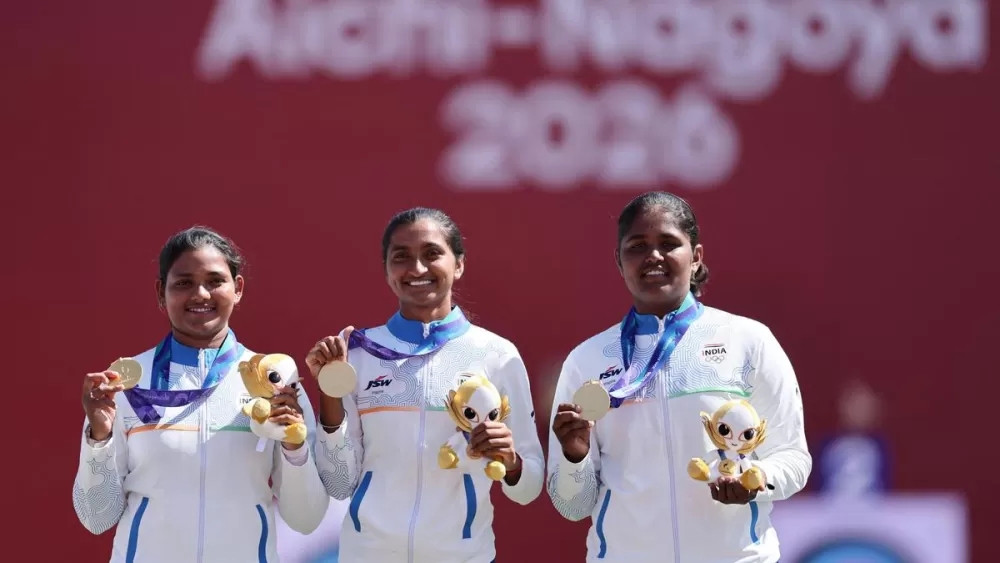
This wasn't just any gold medal; it was the gold medal. Kumkum Mohod became the first Indian to clinch an individual recurve archery gold at the Asian Games, a monumental feat that simultaneously secured an invaluable quota place for India in the women's recurve event at the LA 2028 Olympics. What an achievement for someone so young, securing her country a ticket to the biggest stage!
Her path to the final was equally impressive, a testament to her talent and grit. She had already navigated a treacherous field, dispatching reigning world champion and Olympic medallist Kang Chaeyoung of South Korea in the quarter-finals, then overcoming Zhu Jingyi from China in the semi-finals. These weren't easy victories; these were dominant performances against the best in the business.
And it wasn't just about Kumkum's individual brilliance. The entire Indian archery contingent truly shone in Aichi-Nagoya. They secured medals in all five recurve events, including another gold in the women's recurve team (with Ankita Bhakat and Kirti) and a silver in the mixed team event (alongside Dhiraj Bommadevara). Overall, India amassed an astounding nine medals (five gold, two silver, two bronze) across all archery disciplines, matching their impressive tally from Hangzhou 2023. It truly was their best-ever Asian Games campaign in the recurve discipline.
Perhaps the most significant aspect of Kumkum's victory, beyond the medals and Olympic spots, was the symbolic blow it dealt to the traditional powerhouses. South Korea, for the first time in the 48-year history of archery at the continental Games, saw their formidable recurve women's team return home gold-less. Kumkum Mohod's arrow didn't just hit the target; it struck at the very heart of an era of dominance, signaling a new chapter for Indian archery on the global stage. What an incredible moment for Indian sport, a true inspiration for generations to come!
Editorial note: Nishadil may use AI assistance for news drafting and formatting. Readers can report issues from this page, and material corrections are reviewed under our editorial standards.