Inside the Whale: How Production Designer Ramsey Avery Crafted ‘Whalefall’
- Nishadil
- October 22, 2026
- 0 Comments
- 5 minutes read
- 4 Views
- Save
- Follow Topic
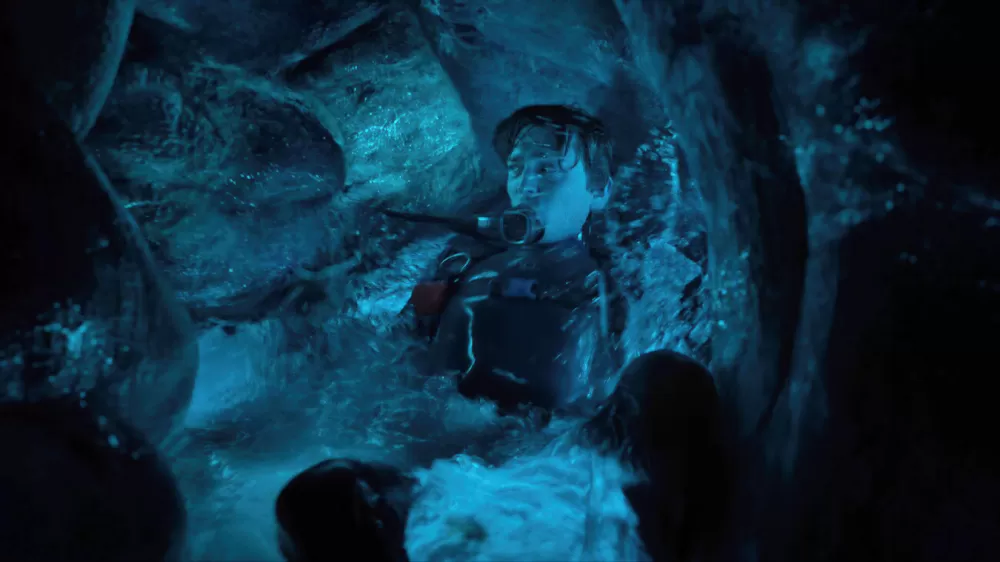
Ramsey Avery reveals the blend of practical sets and VFX that took audiences into a sperm whale’s belly
Production designer Ramsey Avery talks about the wildly inventive sets, camera rigs, and digital tricks that made the surreal world of “Whalefall” possible.
When you hear that a film’s hero is swallowed whole by a rogue sperm whale, you probably picture a CGI monster‑mouth and a quick cut to the ocean depths. In Whalefall, the experience feels a lot more… tangible. That’s because production designer Ramsey Avery, along with director Brian Duffield and DP Aaron Morton, decided to build an actual interior you could walk into.
Avery wasn’t a stranger to big‑budget weirdness. He’d already collaborated with Duffield on the haunted‑house thriller No Will Save You and spent time at Wētā’s workshops for The Rings of Power. Still, “building a whale’s stomach” was a whole other beast. “Everyone looked at the sketches and thought, ‘This is going to kill us,’” he recalls with a laugh, “but we were also kind of excited about the crazy challenge.”
The team ended up creating five distinct stomach sets, each with its own personality. Some were shipped across the Pacific from New Zealand’s Wētā Studios to Los Angeles sound‑stages; others were fabricated on‑site from a mishmash of silicone, latex, upholstery foam and, yes, even pool noodles. The idea was to give the interior a lived‑in, organic feel—something that would react to the actors, the cameras, and the whale’s imagined movements.
But building the sets was only half the story. The crew ran four separate camera tests, each one pushing the rigs a little farther. One set sat on a massive gimbal that could swing like a whale surfacing; another spun on a rig that resembled a giant washing‑machine drum; a third was calibrated for ultra‑fine, almost emotional tremors in close‑up shots. “Sometimes we’d have two cameras, a boom, and an actor all cramped together,” Avery says, “and we’d have to figure out how to capture the light without the LEDs getting in the way.”
Lighting was a puzzle of its own. Hundreds of LED strips were strung inside the stomach to mimic the eerie, bioluminescent glow you might imagine in such a dark place. Yet those lights couldn’t stay static; they had to shift as the set moved, reinforcing the feeling that the whale was alive.
Because the practical sets were constantly morphing, the usual workflow of scanning a static set for VFX didn’t cut it. Production VFX supervisor Guillaume Rocheron was brought in early, joining the camera‑test sessions to map out how the physical pieces would translate into a digital world. “We were all juggling other projects, working part‑time on this for maybe four weeks,” Avery admits, “but we needed a way to capture the set’s motion in real time.” The solution was a hybrid pipeline: the crew filmed the sets, then used high‑resolution scans at each stage of movement, feeding that data into the visual‑effects team to build a seamless, reactive CGI environment.
In the end, the stomach became a character in its own right. It wasn’t just a backdrop for Jay Gardiner’s (Austin Abrams) grief‑filled journey; it was a breathing, shifting entity that responded to his panic and to the whale’s majestic, unknowable presence. “The emotions have to come through the set,” Avery explains. “If the gut of the whale can’t convey tension, fear, or wonder, the story collapses.”
So next time you see a scene of a man tumbling through a whale’s innards, remember that a mountain of silicone, a handful of clever rigs, and countless late‑night camera tests made that surreal moment feel almost real. It’s a testament to what can happen when practical craftsmanship and digital wizardry decide to share a stomach.
Editorial note: Nishadil may use AI assistance for news drafting and formatting. Readers can report issues from this page, and material corrections are reviewed under our editorial standards.