India Rejects UN Criticism, Calls It ‘Selective Targeting’ Over Delhi Protest Police Action
- Nishadil
- October 22, 2026
- 0 Comments
- 3 minutes read
- 9 Views
- Save
- Follow Topic
India pushes back against UN experts’ remarks on police response to Delhi demonstrations
New Delhi – India’s foreign ministry dismissed UN human‑rights experts’ concerns about the police handling of recent protests, accusing the UN of politicising human‑rights issues and singling out the country.
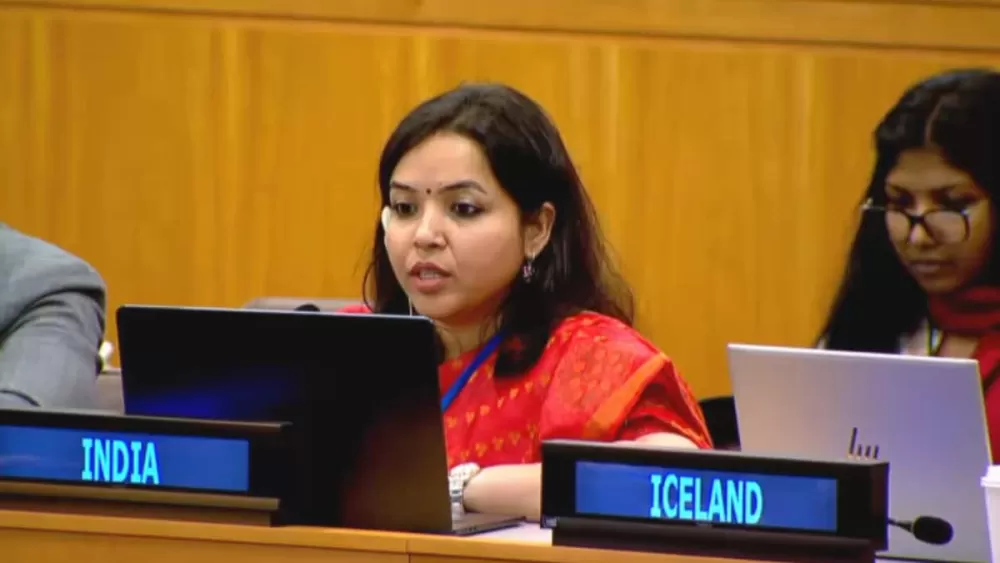
On Tuesday, India’s diplomatic team took the floor at the United Nations General Assembly’s Third Committee and made it unmistakably clear: the country will not stand for what it sees as a politically‑motivated critique of its internal security actions.
Barkha Tamrakar, deputy secretary in the Ministry of External Affairs, opened the statement by reminding fellow delegates that India’s Constitution guarantees fundamental freedoms, and that a network of independent bodies – the Supreme Court, the National Human Rights Commission, state commissions and a free press – serve as watchdogs against abuse.
She went on to say that dialogue, not finger‑pointing, should be the basis of any engagement with international human‑rights mechanisms. “Transparency and non‑selectivity are the cornerstones of cooperation,” Tamrakar said, adding that India is ready to examine “specific, well‑documented cases” through the usual legal channels.
The backdrop to this defence was a joint statement from more than twenty UN human‑rights experts, who had earlier warned that the police response to youth‑led rallies in Delhi was “repeatedly heavy‑handed.” Their report listed a string of alleged violations – mass detentions of over 7,000 people, confiscation of mobile phones, deletion of protest‑related content, and even claims of sexual violence and gender‑based abuse during detention.
According to the experts, the protests were sparked by government moves to overhaul the education system and a controversial voter‑roll clean‑up that, they said, affected roughly 130 million citizens, many of them from Muslim, Scheduled Caste and Scheduled Tribe communities. In their view, the use of the newly‑enacted Section 163 of the Bharatiya Nagarik Suraksha Sanhita (BNSS) to impose blanket bans on gatherings, suspend public transport and shut down the internet crossed the line from lawful regulation to “unlawful restriction of peaceful assembly.”
Tamrakar rejected those accusations as “unverified allegations” and “incomplete statistics.” She pointed out that India has already signed the International Convention for the Protection of All Persons from Enforced Disappearance, and that its law‑enforcement agencies operate under strict statutory limits. “We will not allow a handful of unsubstantiated claims to tarnish the reputation of the world’s largest democracy,” she declared.
Nonetheless, the Indian delegation did not shy away from acknowledging the need for accountability. It reaffirmed the role of the courts, the NHRC and state human‑rights commissions in investigating alleged enforced disappearances and other violations. The statement also welcomed any “genuine, evidence‑based” inquiries, provided they respect due process and avoid politicising the issue.
UN experts, for their part, called for an independent, impartial probe into police conduct, urging the Indian government to lift sweeping restrictions on assemblies, end the misuse of digital surveillance tools, and ensure reparations for victims of any wrongdoing.
The exchange highlighted a deeper friction between the UN’s human‑rights machinery and a nation that is increasingly wary of external scrutiny. While India insists its constitutional safeguards are robust, the UN panel maintains that the reported scale of detentions and alleged mistreatment cannot be ignored.
As the debate rolls on, both sides appear set on a path of cautious engagement – the UN pushing for more transparency and India defending its sovereignty while promising to address “well‑documented” grievances through established legal avenues.
Editorial note: Nishadil may use AI assistance for news drafting and formatting. Readers can report issues from this page, and material corrections are reviewed under our editorial standards.