How the Mecca Defense Agreement Between Turkey, Pakistan and Saudi Arabia Will Work
- Nishadil
- October 22, 2026
- 0 Comments
- 4 minutes read
- 5 Views
- Save
- Follow Topic
A new trilateral pact aims to lock the three regional powers into a mutual‑defense framework
Turkey, Pakistan and Saudi Arabia have signed the Mecca Joint Defense Agreement, a 16‑article pact that mirrors NATO’s Article 5 and promises joint military assistance and cooperation.
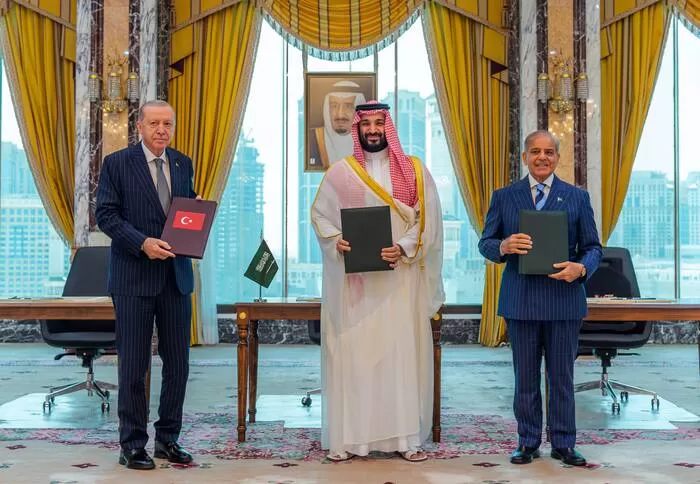
In August, under the shadow of the holy city’s minarets, Turkish President Recep Tayyip Erdogan, Saudi Crown Prince Mohammed bin Salman and Pakistani Prime Minister Shehbaz Sharif put pen to paper and signed what they are calling the Mecca Joint Defense Agreement. It’s a mouthful, but the idea is simple: an armed attack on any one of the three will be treated as an attack on all.
Think of it as a regional version of NATO’s Article 5, except it doesn’t come with a huge bureaucracy or a permanent command centre in Brussels. Instead, the pact leans on existing ties – Saudi‑Pakistan defence pacts from 2025, Turkey’s large NATO‑backed army and a fast‑growing defence industry – to create a quick‑response, three‑way safety net.
What does that actually look like on the ground? The agreement, which Turkish parliament is now being asked to ratify, spells out a 10‑year commitment that can only be unwound after a three‑month notice. It lays out 16 articles covering everything from the right to self‑defence under the U.N. Charter to joint training, intelligence sharing and even cooperation on weapons development.
In practice, the three capitals have already begun sketching out the details. During an emergency session in Riyadh earlier this month, they agreed to start implementing “collective defence commitments” right away – that means setting up rapid‑deployment plans for air‑defence systems, electronic‑warfare assets and other technical support. Turkey’s foreign minister, Hakan Fidan, hinted that Ankara is looking at helping Saudi Arabia shore up its air‑defence shield, while Pakistan is expected to contribute its two‑decades‑worth of experience fighting militants.
Don’t expect Turkish boots marching into Yemen, however. Both Ankara and Islamabad stress that the pact is defensive, not offensive. Turkey explicitly ruled out sending troops to fight the Houthis, and Pakistan’s foreign ministry brushed aside rumors that thousands of its soldiers were already on Saudi soil as “speculative.” The focus, they say, is to protect Saudi territory and, importantly, the holy sites of Islam.
One of the more curious features of the deal is the secretariat – it will sit in Saudi Arabia and be headed by retired Pakistani General Nauman Mahmood. The so‑called Strategic Political and Defense Committee, made up of the three countries’ foreign and defence ministers and chiefs of staff, will meet twice a year to keep the machinery humming.
For Pakistan, the pact builds on a long‑standing military relationship with Riyadh that dates back to the 1980s, when Pakistani officers first arrived to train Saudi forces. While Islamabad hasn’t yet sought a formal parliamentary vote on the agreement, officials say the government fully backs it and stands ready to provide “whatever military assistance Saudi Arabia needs to defend the kingdom and Islam’s holiest sites.”
Saudi Arabia’s public response has been fairly muted. After a visit from Pakistan’s army chief, Defence Minister Khalid bin Salman posted on X that the kingdom remains committed to “joint efforts to confront these attacks in accordance with the Mecca Agreement for Joint Defense.” The message was clear but measured – a nod to the new partnership without over‑promising.
So, what does the future hold? If Turkey’s parliament gives the green light, the agreement will become law, and any deployment of Turkish troops will need separate approval. Meanwhile, the 10‑year lock‑in means the three nations can start planning longer‑term projects like joint weapons production, technology transfers and deeper intelligence cooperation.
All told, the Mecca pact is an attempt by three regional heavyweights to take security into their own hands as U.S. engagement in the Middle East continues to wane. Whether it will deter Iran‑backed Houthi strikes or simply add another diplomatic layer to an already complex security environment remains to be seen.
Editorial note: Nishadil may use AI assistance for news drafting and formatting. Readers can report issues from this page, and material corrections are reviewed under our editorial standards.