Former Cornell Student Claims President Kotlikoff Dismissed Her Assault Allegations
- Nishadil
- October 21, 2026
- 0 Comments
- 3 minutes read
- 5 Views
- Save
- Follow Topic
Jane Doe says she felt “unsupported and disbelieved” by Cornell’s president after reporting a gang‑rape
A letter to Cornell’s faculty senate reveals that Jane Doe, who alleges she was gang‑raped at a fraternity house in 2024, felt the university president doubted her story, sparking calls for a no‑confidence vote.
In a heartfelt letter sent to Cornell’s faculty senate earlier this month, a former student identified only as Jane Doe described feeling "unsupported and disbelieved" by university president Michael Kotlikoff after she reported a gang‑rape she says occurred at the Chi Phi fraternity house in October 2024.
Doe, now 22 and no longer enrolled at Cornell, says she first went to campus police on November 8, 2024, to file a report. She alleges that a group of men drugged and assaulted her throughout the night of Oct. 19‑20. After the police report, a conversation took place between President Kotlikoff and the president of Doe’s sorority, Tri‑Delta, which Doe says left her feeling dismissed.
“President Kotlikoff’s initial response was along the lines of, ‘Why did she wait so long to report it?’” Doe wrote. “My sorority sister interpreted his question as an expression of doubt in the veracity of my story.” The wording, she argues, undermined her confidence in the administration’s willingness to handle her case with sensitivity and fairness.
Cornell’s spokesperson pushed back, saying the president’s question was directed at bystanders who had not used the university’s anonymous tip line, not at Doe herself. “The question was about why the incident was not reported earlier through official channels, not a challenge to Ms. Doe’s credibility,” the statement read.
Doe’s letter does not take a position on the faculty senate’s pending resolution of no‑confidence in Kotlikoff and other administrators, but she emphasizes that the senate should be fully aware of her experience before voting.
Beyond the university’s internal debates, the case has taken on a broader legal dimension. Doe has filed a civil lawsuit against the seven fraternity brothers named in her complaint, all of whom deny any wrongdoing. No criminal charges have been filed to date.
In a related development, Tompkins County legislators approved a 14‑2 vote to launch an independent review of the district attorney’s handling of the case. Prosecutor Matthew Van Houten, who previously defended the decision not to bring charges, said he would cooperate with the review, stressing a desire for transparency and improvement.
Governor Kathy Hochul has already appointed New York Attorney General Letitia James as a special prosecutor after expressing diminished confidence in Van Houten’s office. Meanwhile, Cornell has launched its own internal investigation into how the university responded to Doe’s allegations.
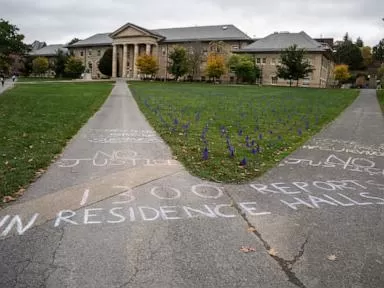
The campus has seen visible signs of unrest, with chalk messages like “1300 reports in residence halls” and “No Justice” scrawled on sidewalks near the Ag Quad. Students and activists say the outcry reflects a deeper frustration with how sexual‑assault cases are handled on campus.
As the faculty senate prepares to vote, Doe’s letter serves as a reminder that, for many survivors, the way an institution responds can be just as consequential as any legal outcome.
Editorial note: Nishadil may use AI assistance for news drafting and formatting. Readers can report issues from this page, and material corrections are reviewed under our editorial standards.