Europe's Refrigeration Under Attack: Weeks of Hacker Probes Preceded Widespread Chaos
- Nishadil
- November 08, 2026
- 0 Comments
- 5 minutes read
- 10 Views
- Save
- Follow Topic
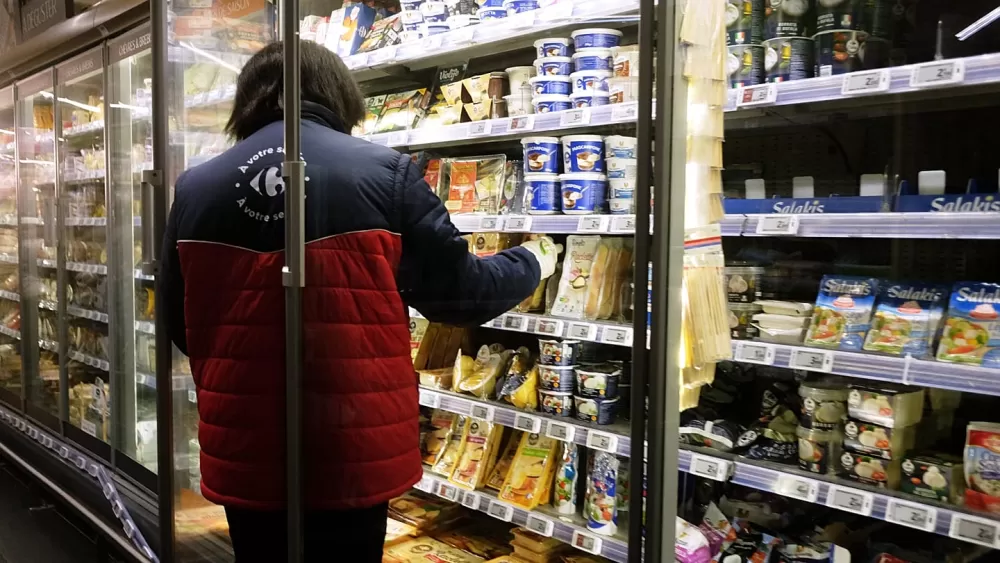
Cybersecurity Firm Uncovered Extensive Reconnaissance on European Fridge Systems Weeks Before Disruptive Cyberattacks
A cybersecurity firm detected sustained hacker reconnaissance targeting vulnerable refrigeration systems across Europe weeks before widespread cyberattacks hit supermarkets and blood banks, exposing critical infrastructure weaknesses.
Imagine walking into your local supermarket, only to find the freezer aisles a chaotic mess, milk curdling, fresh produce wilting – all because some unseen force decided to turn up the heat, quite literally. This wasn't a freak accident; it was a series of chilling cyberattacks that swept across Europe on November 2nd and 3rd, leaving a trail of spoiled goods and a very real sense of vulnerability. Nine European countries saw their supermarket refrigeration systems targeted, alongside vital blood banks in France. It was, frankly, a mess, all thanks to exploited weaknesses in manufacturer Danfoss's AK-SM refrigeration system manager.
But here’s the kicker, and perhaps the most unsettling part of this whole saga: these attacks didn't just happen out of the blue. Weeks before the digital sabotage began, a cybersecurity firm named Lupovis was watching, and they saw it coming. Their CEO, Xavier Bellekens, revealed that between October 20th and 30th, hackers were meticulously 'reconnoitering' Danfoss systems – essentially, casing the joint, probing for weaknesses. The activity, which peaked on October 26th, involved a staggering 276 attempts from 91 different threat actors. Lupovis, by the way, uses these clever 'honeypots' – decoy systems designed to attract and monitor hackers – to catch such nefarious activity in the act. They were literally watching the bad actors prepare.
The actual attacks were straightforward, yet devastating. Perpetrators exploited glaring cybersecurity vulnerabilities, specifically in Danfoss's AK-SM refrigeration system manager. Fridges and freezers were maliciously switched to defrost settings, with temperatures soaring, in some reported cases, to a scorching 50 degrees Celsius. Imagine the sheer waste, the food lost, the potential health risks. This wasn't some incredibly sophisticated, cutting-edge hack, mind you. George Nott, the Technology Editor at The Grocer, pointed out that the attacks leveraged 'relatively basic security weaknesses.' We're talking publicly accessible login pages, unpatched vulnerabilities, and, get this, incredibly weak passwords – like 'Supervisor' and '12345'. It beggars belief, doesn't it? Many of these crucial systems were directly exposed to the internet, rather than being safely tucked behind VPNs.
So, who exactly was behind this brazen act? That’s the million-dollar question, and frankly, it's still shrouded in a fair bit of mystery. Lupovis did trace some of the attacks back to 'bulletproof hosting' services, which, interestingly, have been previously linked to Russian groups. Xavier Bellekens of Lupovis noted, with a careful caveat, that while server location doesn't definitively pinpoint nationality, 'When we pull on the thread it does look like it could well be Russia.' He believes this was no amateur job, but rather a 'well-planned operation' by a 'state' actor, given the coordinated nature and its Europe-centric focus. However, others like George Nott are more cautious, reminding us that motives are unclear, and the culprits could range from state-sponsored entities to... well, teenagers with too much time on their hands. Even ENISA, the EU's cybersecurity agency, has wisely 'stopped short of explicitly calling the incidents a cyberattack' in some cases, opting for 'cyber incident' instead. The nuance is important, even if the impact was undeniable.
This whole ordeal serves as a stark, chilling wake-up call, doesn't it? Kumar Sokka, CEO of Acre Security, wisely warned that similar vulnerabilities plague countless other internet-connected infrastructures – think logistics, warehousing, healthcare, manufacturing, even data centers. Businesses, he argues, are often so fixated on their traditional IT security that they completely overlook the connected physical systems that keep their operations running. And just when you thought it couldn't get more complicated, Gianni Cuozzo, founder of Exein, throws AI into the mix. He cautions that artificial intelligence could supercharge the discovery of new vulnerabilities and accelerate attack development, making it incredibly tough for manufacturers to patch weaknesses fast enough. It also highlights a critical oversight: many organizations aren't applying existing regulations, like the EU's NIS2 Directive, to these often-forgotten physical systems.
The European refrigeration attacks of early November 2026, preceded by weeks of quiet, probing reconnaissance, have laid bare a critical weakness in our interconnected world. It's a testament to the idea that sometimes the simplest vulnerabilities can cause the most widespread havoc. As investigations continue and the 'who' remains elusive, one thing is crystal clear: the digital perimeter now extends far beyond our computers and networks. It’s in our supermarkets, our blood banks, and every 'smart' device that underpins our daily lives. Ignoring the security of these physical systems is no longer an option; it's an invitation for disaster.
- News
- Cybersecurity
- UnitedKingdom
- Europe
- Top
- TopNews
- Ukraine
- France
- Russia
- Ireland
- Iceland
- Denmark
- Sweden
- Germany
- Switzerland
- Belgium
- Italy
- Spain
- Poland
- Vulnerability
- CriticalInfrastructure
- Romania
- Greece
- Slovenia
- Cyberattacks
- Montenegro
- BosniaAndHerzegovina
- Cyprus
- Albania
- Malta
- Macedonia
- Moldova
- SanMarino
- Netherland
- Hungary
- Austria
- Norway
- Portugal
- Serbia
- Bulgaria
- CzechRepublic
- Latvia
- Lithuania
- Slovakia
- Andorra
- Kosovo
- Liechtenstein
- Finland
- Monaco
- Vatican
- Belarus
- Estonia
- Luxembourg
- Croatia
- SupplyChainSecurity
- Hacking
- StateSponsoredThreats
- Danfoss
- RefrigerationSystems
- EnisaEuCybersecurityAgency
- Nis2Directive
Editorial note: Nishadil may use AI assistance for news drafting and formatting. Readers can report issues from this page, and material corrections are reviewed under our editorial standards.