El Salvador Deploys Troops to Rescue Hostages Held by Haitian Gangs
- Nishadil
- October 22, 2026
- 0 Comments
- 3 minutes read
- 8 Views
- Save
- Follow Topic
Bukele orders military operation after four Salvadoran technicians are kidnapped in Haiti
President Nayib Bukele has launched a forceful rescue mission to free four Salvadoran aviation technicians seized by armed gangs in Port‑au‑Prince.
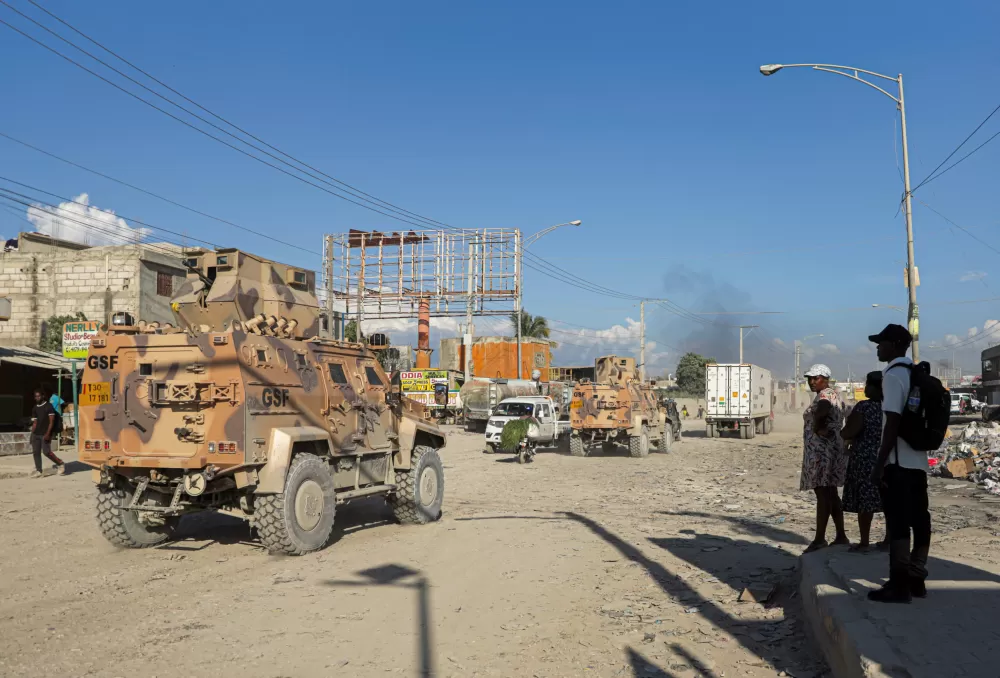
On Wednesday, El Salvador’s president, Nayib Bukele, announced a full‑scale military operation aimed at liberating four of his country’s aviation technicians who were snatched by Haitian gangs over the weekend. The men, who were part of a small medical‑evacuation crew, vanished after an armored vehicle they were traveling in was riddled with gunfire in the Santo district of Croix‑des‑Bouquets, near Port‑au‑Prince.
Bukele’s message was blunt and unmistakable. He warned gang leaders that if the hostages were not returned “alive and unharmed,” the response would be far more powerful than anything Haiti has yet seen. “Do not take our words as empty threats,” he told reporters, his tone mixing resolve with a hint of impatience.
The kidnapping comes just three days after the first major assault on a UN‑backed gang‑suppression convoy since that force began operating in the crime‑ridden island nation. The assault left the vehicle burning and sent shockwaves through the already fragile security environment, which is still reeling from the buildup of more than 2,000 multinational troops, including a sizable contingent from El Salvador.
Haiti’s own government has already labeled the abduction an “absolute priority.” A high‑level meeting at the prime minister’s office was convened to coordinate with the multinational force and to marshal whatever resources are needed to retrieve the Salvadoran personnel. Officials have not yet confirmed whether the hostages are still alive, but they insist that every effort is being made to locate them.
While Bukele emphasized that Salvadoran forces in Haiti are strictly “pilots and technical personnel” whose job is to conduct medical evacuations—not to engage in combat—the president’s declaration of a “more powerful operation” leaves open the question of how far Salvadoran troops might go beyond their original mandate.
The multinational gang‑suppression force, which includes troops from Chad, Jamaica, Guatemala and El Salvador, received a six‑month UN Security Council extension that will keep it in place until March 2027. In 2025, El Salvador initially sent over 5,500 security staff and 50 civilians to Haiti, and a new law passed in early October now lets the country expand its role beyond medical evacuations, authorizing both civilian and military deployments as needed.
Haiti is bracing for its first general election in more than a decade, a milestone that has emboldened gangs that now control roughly 70 % of Port‑au‑Prince. Groups such as Chèn Méchan, Kraze Barye (led by Vitelhomme Innocent) and 400 Mawozo (headed by Lanmo Sanjou) dominate the neighborhoods where the attack occurred. Both Innocent and Sanjou are already on U.N. and U.S. sanctions lists.
As the situation unfolds, residents have been urged to stay indoors and avoid the hot‑spots where armed factions are still active. The world watches to see whether Bukele’s promise of a “more powerful operation” will translate into a decisive rescue—or further escalation in a nation already bruised by years of gang violence that has displaced nearly 1.5 million people and claimed thousands of lives.
Editorial note: Nishadil may use AI assistance for news drafting and formatting. Readers can report issues from this page, and material corrections are reviewed under our editorial standards.