Deepwater Horizon’s Legacy: Gulf Marine Life Still Down Over 60% After 13 Years
- Nishadil
- October 20, 2026
- 0 Comments
- 5 minutes read
- 2 Views
- Save
- Follow Topic
New research shows a stark, lingering collapse of Gulf‑of‑Mexico marine populations a decade after BP’s 2010 oil spill
A recent PNAS study reveals that fish, crustaceans and squid in the Gulf’s “twilight zone” remain 60% below pre‑spill levels, with little sign of recovery.
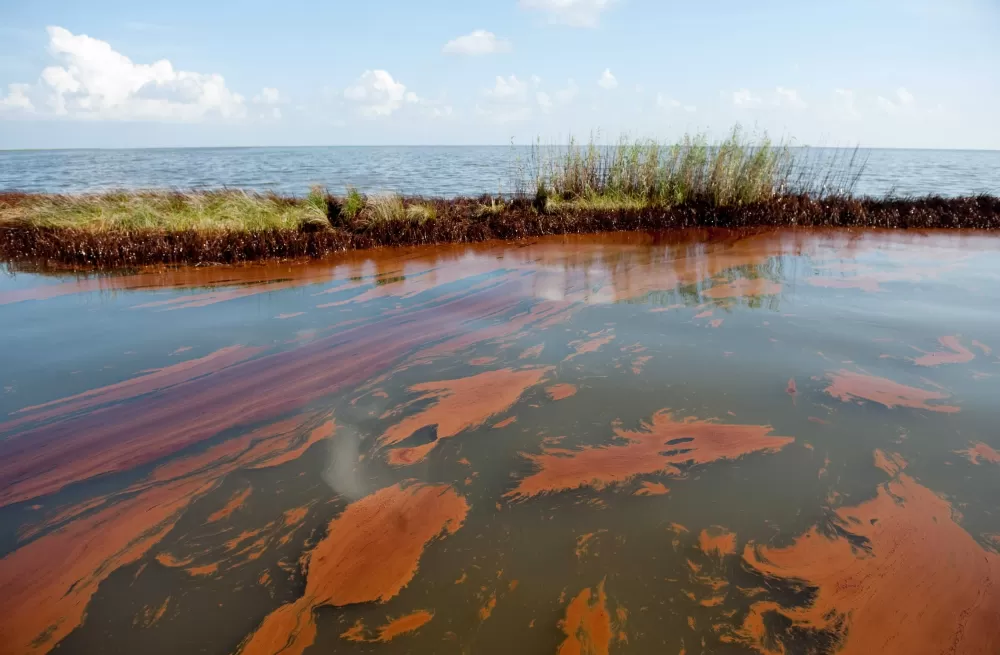
When the Deepwater Horizon rig blew up in April 2010, the Gulf of Mexico turned into a nightmarish scene of fire, oil, and loss. Eleven workers perished, and an estimated 134 million gallons of crude seeped into the water, darkening the horizon for months. Now, more than a decade later, scientists are still pulling up the grim numbers.
In a paper that hit the pages of Proceedings of the National Academy of Sciences this week, marine biologists report that the Gulf’s “twilight zone”—the swath of water that stretches from the sun‑lit surface down to roughly 5,000 feet—has seen a drop of roughly 60 % in overall animal abundance since the spill. Fish counts alone slumped 63.5 % between the year after the disaster and 2015. Shrimp and krill, the tiny crustaceans that form the backbone of the food web, fell 62 %, while larger cephalopods such as squid and octopus declined by almost 60 %.
Lead author Tracey Sutton, a biological oceanographer at Nova Southeastern University, explains that the region was barely studied before the catastrophe. “We basically had no baseline for this massive, vertically‑connected ecosystem,” she says. “The spill gave us a forced experiment, but the results are anything but encouraging.”
The team revisited the same offshore site three and a half years after the initial 2011 survey, using the same six net sets and acoustic sonar rigs. Their findings were stark: the amount of life caught in the nets was only a third to a quarter of what had been recorded before. Acoustic data painted the same picture, and genetic analyses showed a worrying loss of diversity—signs of inbreeding that can erode population resilience.
Why the decline? Sutton and her colleagues sifted through a laundry list of potential culprits—temperature shifts, oxygen levels, food availability—but none aligned with the timing of the drop. “The oil spill was the only variable that matched,” Sutton says. “It’s not a perfect proof, but it’s the most logical explanation.”
Even years later, the numbers haven’t bounced back. Sampling continued through 2023, and while there were faint upticks in 2022‑23, the changes were statistically insignificant and certainly not enough to signal a true recovery.
Beyond the headline figures, the study highlights the loss of keystone species. Krill, for instance, plummeted a staggering 72 %. Lanternfish—those glow‑in‑the‑dark, mid‑water dwellers—are now only about a third of their former abundance. Even the eerie dragonfish, with its luminous lure and razor‑sharp teeth, suffered steep declines. “These are foundational species,” Sutton emphasizes. “If the base of the food web shrinks, everything above it feels the squeeze.”
The spill’s aftermath wasn’t limited to crude oil alone. BP sprayed massive amounts of chemical dispersants to break up the slick, a move that researchers say may have exacerbated the problem. Isabel Romero, a chemical oceanographer at the University of South Carolina and co‑author of the study, notes that while oil is inherently toxic, dispersants fragment it into tiny droplets that can travel deeper, exposing mid‑water fauna that would otherwise avoid surface‑bound oil.
Former NSF director and environmental microbiologist Rita Colwell argues that future spill responses should lean on natural oil‑eating microbes rather than chemical dispersants, citing new research that shows promising degradation rates without the added toxicity.
BP’s spokesperson Paul Takahashi responded to the study, noting that the disaster “forever changed” the company and spurred a suite of safety reforms. Whether those measures will prevent a repeat scenario is a question still hanging in the Gulf’s humid air.
Independent scientists echo the study’s alarm. Kaitlin Frasier of the Scripps Institution of Oceanography, who was not involved in the research, says the findings expose a blind spot: “We often assume the deep ocean is out of sight, out of mind. This shows just how wrong that assumption can be.” A 2024 whale and dolphin survey by Frasier’s colleague found population drops as high as 83 % in the same region.
“It’s shocking how a single failure on a drilling rig can ripple across thousands of square kilometres for years,” says marine ecologist Boris Worm of Dalhousie University. He adds that the Gulf’s lingering scars should temper enthusiasm for new deep‑sea mining or further offshore drilling projects.
What does all this mean for the Gulf’s future? Sutton believes the answer lies in treating the ocean as a single, pulsating system rather than a series of isolated layers. “Predators dive deep, prey rise at night—everything’s connected,” she says. “If one part of that chain is broken, the whole rhythm suffers.”
For now, the Gulf’s twilight zone remains dimmed, its once‑vibrant chorus of life quieted by an accident that continues to echo through the water column. The hope is that understanding these hidden impacts will drive better safeguards, so the ocean’s hidden depths stay a place of wonder—not of lingering sorrow.
Editorial note: Nishadil may use AI assistance for news drafting and formatting. Readers can report issues from this page, and material corrections are reviewed under our editorial standards.