
CP Plus CarKam 4G Dashcam Review: The Connected Guard Your Car Deserves
- Nishadil
- November 07, 2026
- 0 Comments
- 6 minutes read
- 6 Views
- Save
- Follow Topic
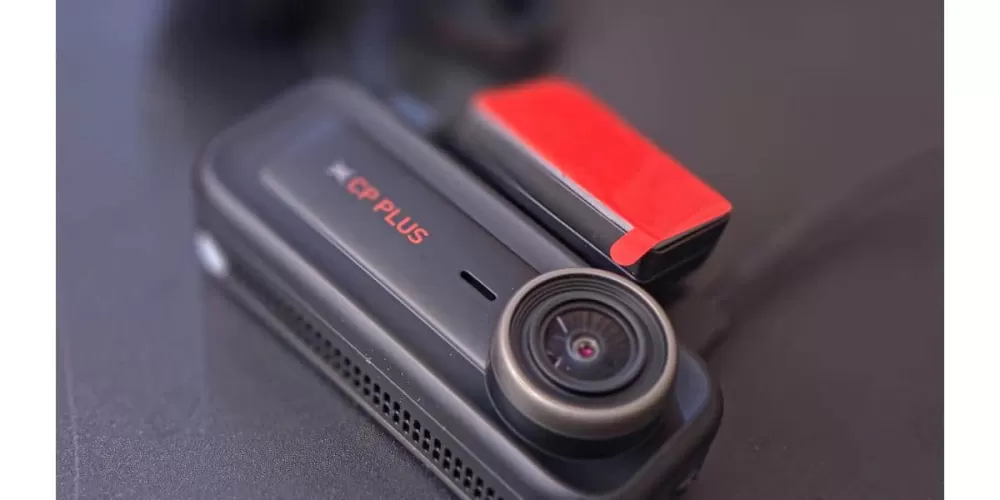
Is a 4G‑enabled dashcam worth the hype? We put CP Plus CarKam 4G through its paces.
The CP Plus CarKam 4G packs front‑and‑rear 1080p lenses, a SIM slot, GPS tracking and hard‑wire parking mode. Our road‑test checks whether the extra connectivity actually makes it smarter – or just more complex.
Stuck in a traffic jam, you hear the inevitable clash of horns, a sudden brake, and then—what? A dent, a heated argument, and each driver swearing they’re not at fault. Without video proof, it’s a he‑said‑she‑said battle. That’s why dashcams have moved from “nice‑to‑have” to “must‑have” for many Indian motorists.
Enter the CP Plus CarKam 4G (model CP‑KH27B). On paper it does more than just record the road: it sports front and rear 1080p cameras, a 4G SIM slot, GPS tracking and a hard‑wire kit that lets it keep an eye on the vehicle even after you turn the engine off. In short, it’s a dashcam that tries to act like a little security guard.
Design and installation
The main unit is modest in size—about 105 × 42 × 39 mm—and tucks neatly behind the rear‑view mirror. Its matte‑finished plastic case isn’t flashy, but that’s intentional; it stays out of the driver’s line of sight and doesn’t glare in the windshield. The rear camera is a separate stub that adheres to the back glass, and you’ll need to run a thin cable along the headliner to connect it to the front module. A bit of patience (or a professional installer) is advisable here.
Power can be fed via a USB‑C cable or, preferably, through the included hard‑wire kit that taps the car’s fuse box. This keeps the charging port free for your phone and gives the unit a cleaner look. The kit handles a wide voltage range—11.6 V to 28 V—so it works in regular cars, trucks and even 24 V commercial fleets. If you’re not comfortable with electrical work, let an accessories shop do the job; the result looks tidy, with no dangling wires.
Cameras and video quality
Both lenses record at 1920 × 1080 px, 25 fps, and store footage as MP4 files. The front camera uses a 1/2.9‑inch sensor, a 3 mm lens and a relatively wide f/1.5 aperture, which lets more light hit the sensor—handy for those dim Indian night‑roads. Its diagonal field of view is 136°, covering adjacent lanes and the side‑walk. The rear unit mirrors the sensor size, has a 3.35 mm lens, f/2.0 aperture and a 124° view—slightly narrower but sufficient to see what’s behind you.
HDR processing helps when you emerge from a tunnel into bright sunlight, smoothing out harsh contrasts. While 1080p/25 fps isn’t cutting‑edge by today’s standards, the footage is clear enough for most situations. Reading a fast‑moving number plate at a distance can be a stretch, but under normal traffic conditions the plates and road signs remain legible.
Connectivity and smart features
Here’s where the CarKam tries to stand out. We popped a Reliance Jio SIM into the slot (Jio’s coverage is pretty ubiquitous across Indian highways). Once the SIM is active, the device talks to the ezyLiv+ app on Android or iOS, letting you peek at live video, locate the car on a map and review past routes. The built‑in GPS is handy for parents monitoring a teen driver or fleet managers keeping tabs on their trucks.
The unit also creates its own Wi‑Fi hotspot for quick, on‑the‑spot pairing with your phone—no internet needed. CP Plus advertises compatibility with both 4G and 5G SIMs, but the hardware only talks to 4G LTE networks, so a 5G‑capable SIM will still operate at 4G speeds. Remember, you’ll need an active data plan, which adds a small recurring expense. A basic Jio data pack suffices for occasional checks; heavy live streaming will chew through more data.
Standard dashcam niceties are present: a G‑sensor that locks footage on impact, motion detection, and voice prompts. Nothing groundbreaking, but they work as expected.
Parking mode, storage and durability
Parking surveillance kicks in through the hard‑wire kit. It watches the ACC line, so when you turn off the ignition the camera flips into watch‑dog mode. Low‑voltage protection cuts power at 11.5 V (12 V system) or 23.5 V (24 V system) to safeguard the car battery.
Instead of a tiny lithium cell, CP Plus opted for a super‑capacitor. In the Indian heat that can soar well above 40 °C, a super‑capacitor tolerates temperature spikes better and lasts longer. The device’s operating range is –10 °C to 60 °C, which covers most of the year; still, parking in shade during the blistering summer is a good idea.
Storage is generous—a micro‑SD slot that accepts up to 1 TB (Class 10, U3). That means weeks of dual‑camera footage without swapping cards. The CarKam carries BIS, CE, FCC and RoHS certifications, lending it a degree of credibility.
Verdict
The CP Plus CarKam 4G isn’t trying to win a photography award. Its strength lies in staying connected and watching over your vehicle around the clock. The 4G link works reliably with a Jio SIM, GPS tracking adds peace of mind, and the hard‑wire parking mode protects the car when you’re away. Video quality is adequate for most Indian roads, and the super‑capacitor ensures the unit survives our harsh climate. If you’re after a straightforward dashcam, you could go cheaper; but if you want a dashcam that doubles as a modest telematics device, the CarKam 4G delivers.
Editorial note: Nishadil may use AI assistance for news drafting and formatting. Readers can report issues from this page, and material corrections are reviewed under our editorial standards.


