China vs. NASA: How Their Moon‑Landing Roadmaps Diverge
- Nishadil
- November 08, 2026
- 0 Comments
- 5 minutes read
- 6 Views
- Save
- Follow Topic
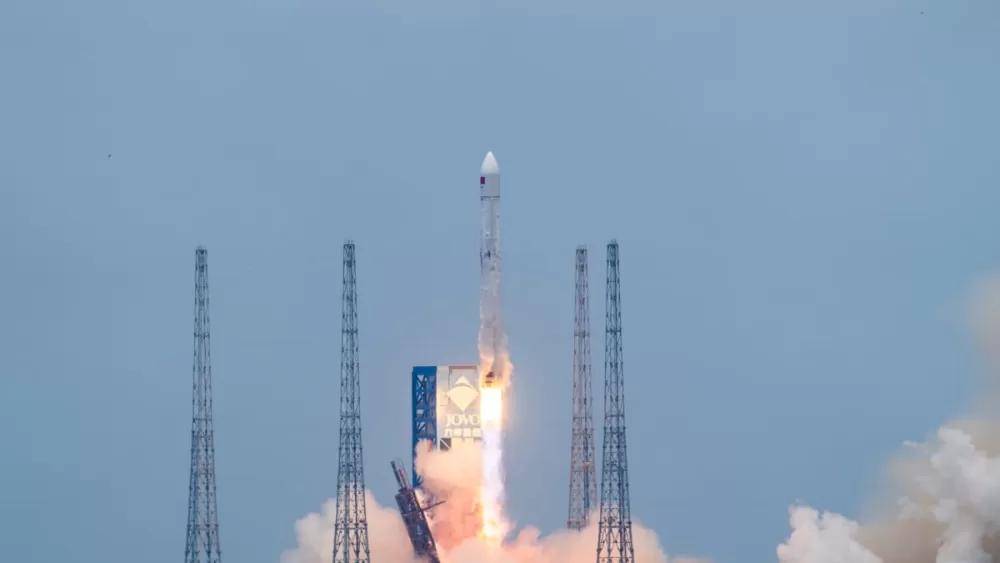
China’s robot‑first plan meets NASA’s crew‑test‑flight playbook in the new space race
Both superpowers aim for humans back on the Moon by the early 2030s, but China leans on uncrewed rehearsals while NASA sticks to a tried‑and‑true Apollo‑style crew‑test‑flight sequence.
When you hear "Moon landing by 2030," the first image that pops into most people’s heads is a sleek NASA rocket lifting off from Florida, astronauts waving from the hatch, and a flag unfurling on the lunar surface. Yet, if you flip the channel to Beijing, the script looks a bit different – almost like a backstage rehearsal that never shows the actors.
At the 7th Manned Space Symposium in Beijing on Oct. 31, Chinese officials pulled back the curtain on their roadmap. A slide shared by the independent tracker CNSpaceflight revealed a two‑step approach: first, a crewed orbital flight in 2027 using the Mengzhou capsule (the name translates to “Dream Vessel”), and then—no human stepping onto the regolith until after a series of robotic dry‑runs.
In 2028 the Lanyue lander—literally “Embracing the Moon”—will touch down on its own. A year later, in 2029, an uncrewed mission will replay the entire landing sequence: dock in lunar orbit, descend, launch back up, and dock again, all without a single person aboard. “For any crewed mission, we will try to fly it in an unmanned state first,” explained Wang Xiang, chief designer of China’s lunar exploration program, in an English‑language CCTV briefing.
That philosophy sits squarely on the opposite side of the table from NASA’s current Artemis plan. After a successful crewed fly‑by (Artemis II) in April, NASA is gearing up for the first lunar surface landing (Artemis III) in 2028. But before that, there’s a whole suite of crewed test flights. Astronauts will spend a couple of weeks in Earth orbit practicing the docking choreography with two commercial landers – one from Blue Origin, the other from SpaceX – before any boots hit the dust.
“It’s not entrepreneurial thinking or tech‑industry pixie dust,” NASA Administrator Jared Isaacman said at a press conference on Oct. 23. “It’s a playbook this agency knows really well – the same playbook that went from Apollo 7 splashdown to Apollo 11 in just nine months.” In other words, NASA is replaying the Apollo era: multiple crewed test flights, frequent launches, and incremental learning.
China’s approach, by contrast, feels more like a military‑styled drill. The program is tightly controlled, with little public fanfare, and leans heavily on robotics to prove the hardware works before ever letting a cosmonaut inside. The logic is simple: if you can land, launch, and dock a robot flawlessly, you’ve essentially de‑risked the mission for humans.
Still, the two roadmaps share a surprising amount of structure. Both plans involve two Long March‑10 rockets lifting off separately – one ferrying the crew capsule, the other the lander – and then meeting up in lunar orbit. In each case, two of the three astronauts (or taikonauts) will descend to the surface while the third stays aboard the orbiting vehicle. NASA’s Orion carries four crew members, but only two will ever set foot on the Moon, mirroring China’s three‑person crew design.
Where the pathways diverge sharply is in the role of private industry. NASA has bet on two competing commercial landers. Blue Origin’s “Blue Moon” will dock with Orion in lunar orbit, letting the crew hop aboard for a short stay. SpaceX, meanwhile, is taking a more daring route: an uncrewed Starship will attempt a soft landing on the Moon by the end of 2027, and later may serve as a crew transport after being upgraded.
China, on the other hand, is developing a single, government‑built lander. No private rivalries there—just one design, one set of tests, and, presumably, one clear line of authority.
Both sides also plan to harvest science data during the robotic rehearsals. China’s 2029 dry run will measure surface temperature extremes and dust dynamics, data that could help refine suit designs and landing gear. NASA’s uncrewed Starship and Blue Moon will similarly gather environmental information, feeding back into the Artemis schedule.
In the end, the two strategies reflect deep‑seated cultural differences. China’s program is secretive, risk‑averse, and technologically self‑reliant, preferring machines to “prove the concept.” NASA’s effort is transparent, iterative, and embraces a kind of calculated bravado, trusting human pilots to test the limits. Whether one approach will reach the Moon first, or whether both will succeed on schedule, remains to be seen—but the rivalry is already pushing the entire industry forward.
One thing is certain: the next decade will be a thrilling chapter in humanity’s return to the Moon, with each superpower playing a distinct, yet oddly complementary, part in the story.
Editorial note: Nishadil may use AI assistance for news drafting and formatting. Readers can report issues from this page, and material corrections are reviewed under our editorial standards.