China’s Moon Plan Mirrors NASA’s—But Skips the Crew‑ed Test Flights
- Nishadil
- November 08, 2026
- 0 Comments
- 4 minutes read
- 2 Views
- Save
- Follow Topic
New space race reveals two very different approaches to getting humans back to the Moon
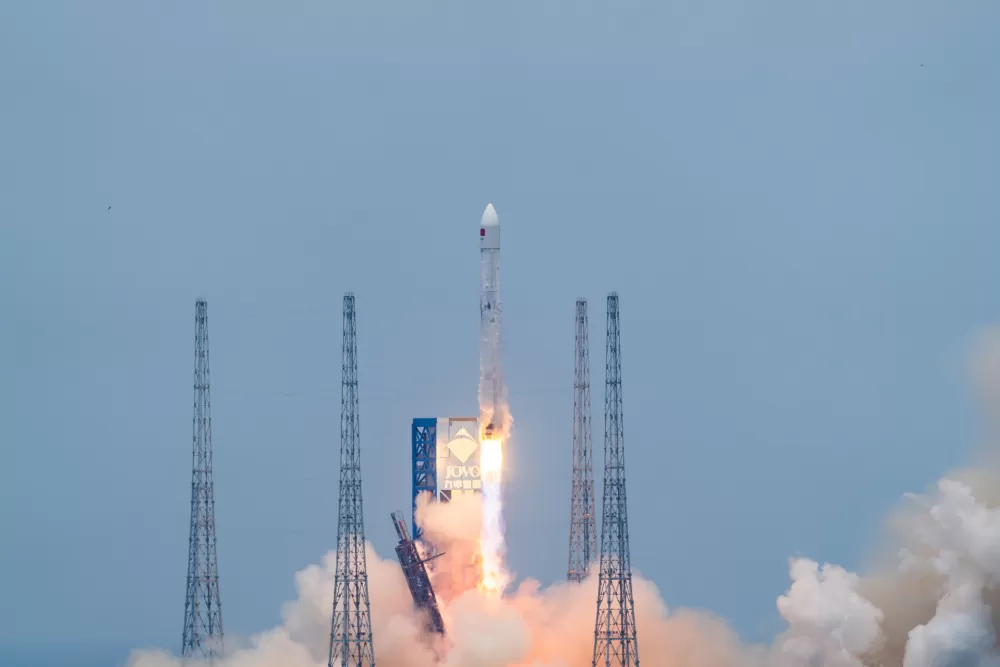
China aims to land astronauts on the Moon by 2030, but unlike NASA it will forgo crewed test flights, relying instead on a series of uncrewed rehearsals.
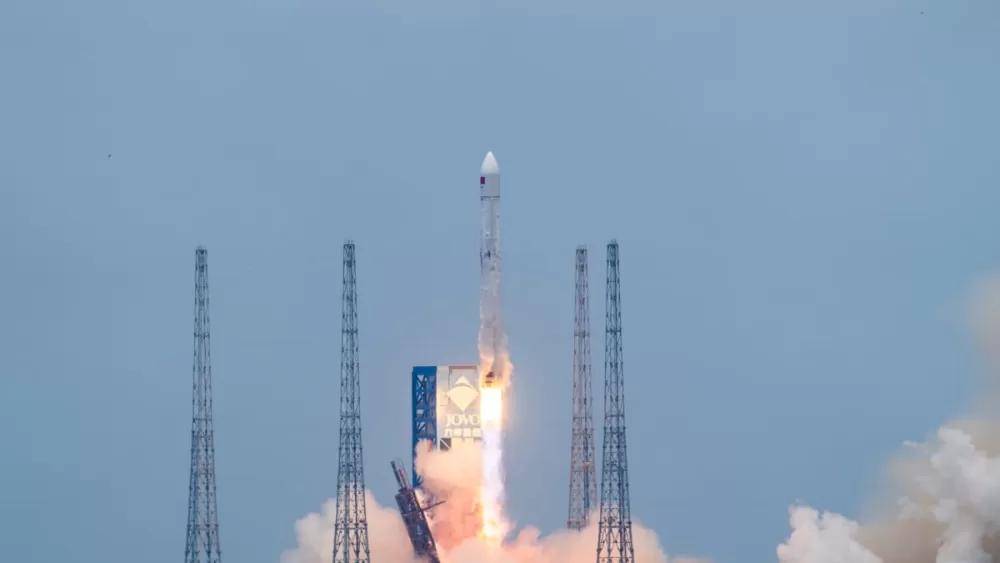
At a packed conference in Beijing on Oct. 31, Chinese space officials unveiled a lunar roadmap that looks suspiciously familiar to NASA’s Artemis schedule—except for one striking twist. While NASA is counting on human test flights to prove its hardware, China says it will let robots do the heavy lifting first.
According to a slide posted by the independent tracker CNSpaceflight, the Chinese program will launch the crew‑capable Mengzhou capsule in 2027, sending a pair of astronauts into Earth orbit. The next year, a lander called Lanyue will touch down on the Moon all by itself, and in 2029 an uncrewed mission will rehearse every single step of a crewed landing—from docking in lunar orbit to the final touchdown and return.
“For any crewed mission, we will try to fly it in an unmanned state first,” explained Wang Xiang, chief designer of the lunar exploration effort, in English captions of a CCTV broadcast. The sentiment reflects a broader institutional culture: a tight‑lipped, military‑run agency that places its trust in machines to prove a design works before any human ever steps inside.
NASA, by contrast, is leaning heavily on the old Apollo playbook. After Artemis II flung four astronauts around the Moon in April, Artemis III will send a four‑person crew to lunar orbit next year, where they’ll practice docking Orion with two commercial landers—one from Blue Origin and one from SpaceX. Those tests are deliberately crewed, a decision NASA says shortens the timeline for a safe human landing.
“It’s not entrepreneurial thinking or tech‑industry pixie dust,” NASA Administrator Jared Isaacman told reporters on Oct. 23. “It’s a playbook this agency knows really well—the same one that took us from Apollo 7 splashdown to Apollo 11 in nine months.”
In practice the two roadmaps share a lot of hardware similarity. Both rely on separate launch vehicles—China’s new Long March‑10 rockets, NASA’s SLS and commercial boosters—to loft a capsule and a lander, which will rendezvous in lunar orbit. Two of the three Chinese astronauts will ride the lander down to the surface, mirroring the Apollo strategy of sending a small crew to the Moon while the fourth stays aboard the command module.
Where the plans truly diverge is the role of robotics. SpaceX is racing to land an uncrewed Starship on the Moon by the end of 2027, and Blue Origin has its own demo slated after Artemis III. NASA will keep both landers in the running, choosing the one that proves most reliable for the first crewed touchdown. China, on the other hand, is building a single lander and hopes its series of robotic rehearsals will iron out any kinks before any taikonaut—China’s term for astronaut—ever leaves the capsule.
The Chinese side is confident. Their 2029 rehearsal will include everything: a lunar‑orbit docking, a soft landing, a brief stay on the surface, a liftoff, and a final dock back with the orbiting capsule. The mission will also collect science data—surface temperature, dust behavior, you name it—to prove the lander can survive the harsh environment.
Isaacman warned that the competition is now “much closer than it ever needed to be.” China already has the rockets, the capsule, and a “credible two‑launch architecture” that could put people on the Moon within three years. Meanwhile, NASA’s timetable has slipped repeatedly; Artemis III is now about three months behind its original target, and the agency openly admits that enthusiasm can’t bend the laws of physics.
In the end, both programs are racing toward the same horizon—a sustainable human presence on the Moon—but they’re getting there on different tracks. One relies on the confidence that a robot can faithfully simulate a human mission; the other leans on the age‑old belief that only a crew can truly test a spacecraft. The next few years will tell which philosophy wins the race.
Editorial note: Nishadil may use AI assistance for news drafting and formatting. Readers can report issues from this page, and material corrections are reviewed under our editorial standards.