Brain Scans May Help Spot Alzheimer’s Risk Before Memory Loss Begins
- Nishadil
- November 07, 2026
- 0 Comments
- 2 minutes read
- 12 Views
- Save
- Follow Topic
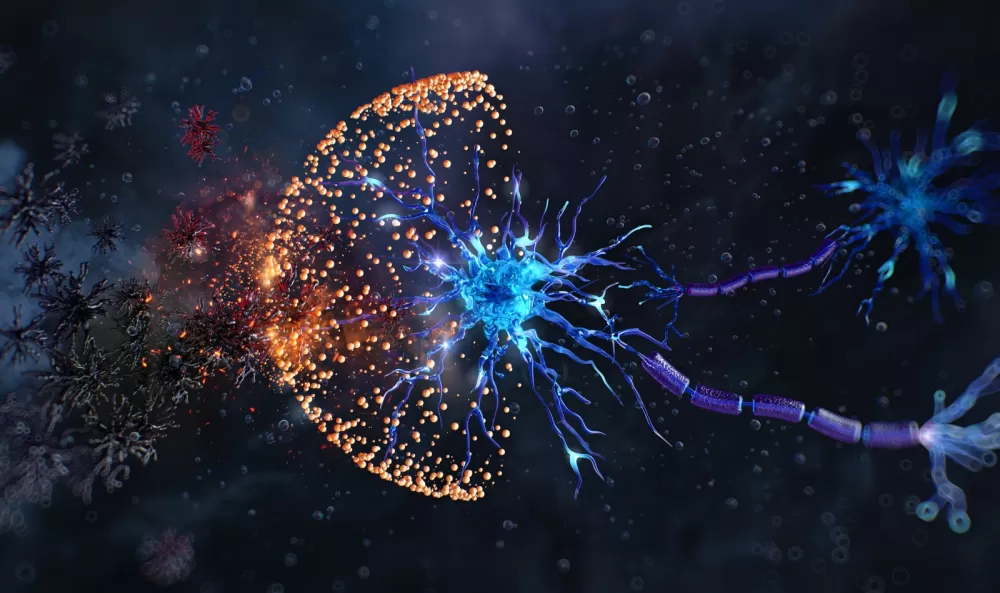
New brain‑scan technique could flag Alzheimer’s years before symptoms appear
Researchers used fMRI and a machine‑learning model to compare “SuperAgers” with Alzheimer’s patients, finding patterns that predict faster cognitive decline even when memory seems fine.
Imagine getting a heads‑up about Alzheimer’s long before you ever forget a name or misplace your keys. That’s the promise of a new study that looks at brain activity in people who are still sharp as a tack, as well as in those already diagnosed with the disease.
Stanford’s Kanhao “Alex” Zhao and his team trained a machine‑learning system—dubbed the Alzheimer’s Resilience‑Vulnerability Connectome, or ARC—to spot subtle differences in how various brain regions talk to each other. Instead of the usual comparison between patients and “average” older adults, they chose a different benchmark: “SuperAgers,” folks over 75 who keep their memory and thinking on par with people decades younger.
Using resting‑state functional magnetic resonance imaging (fMRI) data from 180 SuperAgers and 110 Alzheimer’s patients, ARC learned to place each brain somewhere on a spectrum—from resilient, SuperAger‑like patterns to vulnerable, Alzheimer’s‑like patterns. The researchers then ran the model on a separate group of 818 older adults who showed no cognitive complaints at all.
What they found was a little unsettling but also hopeful: participants whose brain‑connectivity resembled the Alzheimer’s end of the spectrum tended to decline faster over the next five to fifteen years. They also accumulated more amyloid‑beta plaques and were more likely to cross the clinical threshold for Alzheimer’s.
Dr. Elena Gross, a neuroscientist who runs Swiss biotech firm KetoSwiss, says the study flips the usual script. “Instead of just looking at disease versus normal aging, they examined the two extremes—Alzheimer’s patients and SuperAgers,” she told Newsweek. “That lets us see that even among people who seem cognitively healthy, there are hidden differences that forecast very different outcomes.”
The key takeaway? Brain‑connectivity patterns may become a new kind of biomarker, complementing the classic amyloid and tau measurements. If doctors can identify high‑risk individuals while their memory is still intact, there might be a wider window for preventative therapies—something the field has been chasing for decades.
Of course, the findings are still early. Larger studies and more diverse populations will be needed to confirm that ARC can reliably flag risk across the board. Still, the notion that a simple scan could give us a warning years before the first memory slip is enough to spark optimism among scientists, clinicians, and families alike.
Editorial note: Nishadil may use AI assistance for news drafting and formatting. Readers can report issues from this page, and material corrections are reviewed under our editorial standards.