
Arab Parties Throw Their Weight Behind Gadi Eisenkot in the Aftermath of Israel’s 2026 Election
- Nishadil
- November 06, 2026
- 0 Comments
- 2 minutes read
- 14 Views
- Save
- Follow Topic
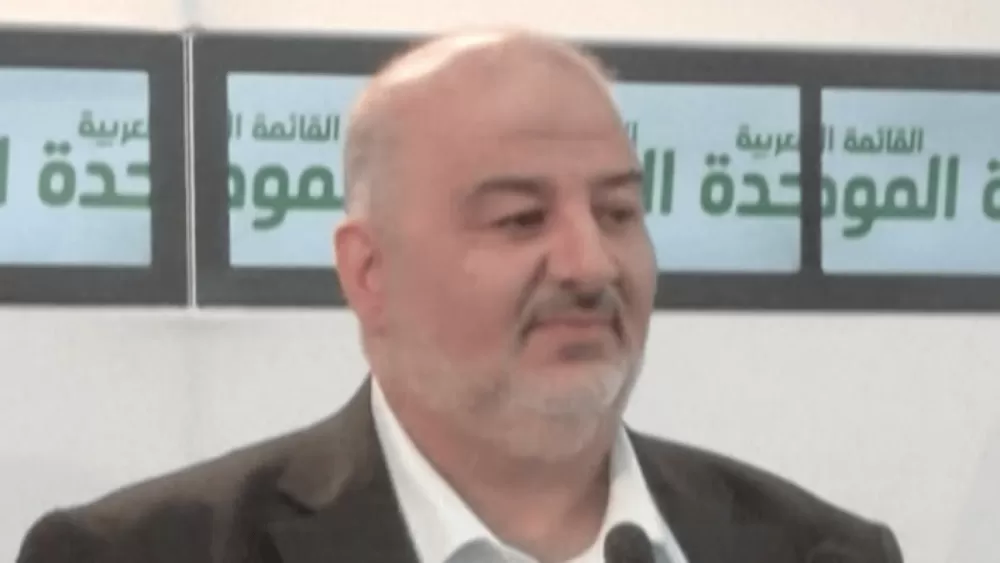
Ra’am and the Democrats endorse Eisenkot as he seeks to assemble a new governing coalition
In a surprising turn, Israel’s Arab‑majority Ra’am party and the centrist Democrats have pledged support to former defence minister Gadi Eisenkot, aiming to shape the next government after a tight 2026 vote.
When the votes were finally tallied after Israel’s March 2026 election, the picture was anything but clear‑cut. Benjamin Netanyahu’s Likud remained the biggest bloc, but it fell short of the 61 seats needed to command a majority on its own. Meanwhile, Arab‑majority lists, most notably Ra’am, turned in a record turnout, sending a strong signal that their political clout could no longer be brushed aside.
Against that backdrop, a surprising alliance began to take shape. Gadi Eisenkot – the former defence minister known for his pragmatic, security‑first approach – received an unexpected endorsement from two groups that traditionally sit on opposite sides of Israel’s political spectrum: the Arab‑majority Ra’am and the centrist Democratic Party. Both parties issued joint statements saying they would back Eisenkot’s bid to form a coalition, provided he respects minority rights and adopts a more inclusive agenda.
Netanyahu, never one to miss an opportunity to score political points, immediately launched a blistering critique of the Arab parties. He accused them of “undermining the Jewish character of the state” and warned voters that any coalition with Ra’am would be a step toward a “demographic disaster.” His remarks, delivered in a televised address, seemed designed to rally his base and paint Eisenkot’s potential partners as a threat.
Eisenkot, for his part, kept his tone measured. In a brief press conference, he thanked Ra’am and the Democrats for their willingness to engage, emphasizing that “Israel’s future depends on bringing every community to the table.” He hinted at policy concessions – such as greater investment in Arab municipalities and a review of certain security statutes – that could ease the long‑standing tensions between the state and its Arab citizens.
The move has stirred a mixture of hope and scepticism across the country. Some analysts see the partnership as a pragmatic response to a fragmented Knesset, where no single bloc can govern alone. Others warn that deep ideological divides – especially over the Israeli‑Palestinian conflict – could render any coalition fragile at best.
What is clear, however, is that the 2026 election has forced Israeli politics into uncharted territory. The rise of Arab parties, the erosion of Netanyahu’s once‑unassailable dominance, and the emergence of new coalition possibilities all point toward a more complex, perhaps more representative, parliamentary landscape. Whether Eisenkot can translate these tentative alliances into a stable government remains to be seen, but the very fact that Arab parties are now openly negotiating for power marks a historic shift.
Editorial note: Nishadil may use AI assistance for news drafting and formatting. Readers can report issues from this page, and material corrections are reviewed under our editorial standards.


