
Andhra Pradesh Election Freeze: 100 Urban Bodies Put on Hold After Supreme Court Intervention
- Nishadil
- October 22, 2026
- 0 Comments
- 4 minutes read
- 6 Views
- Save
- Follow Topic
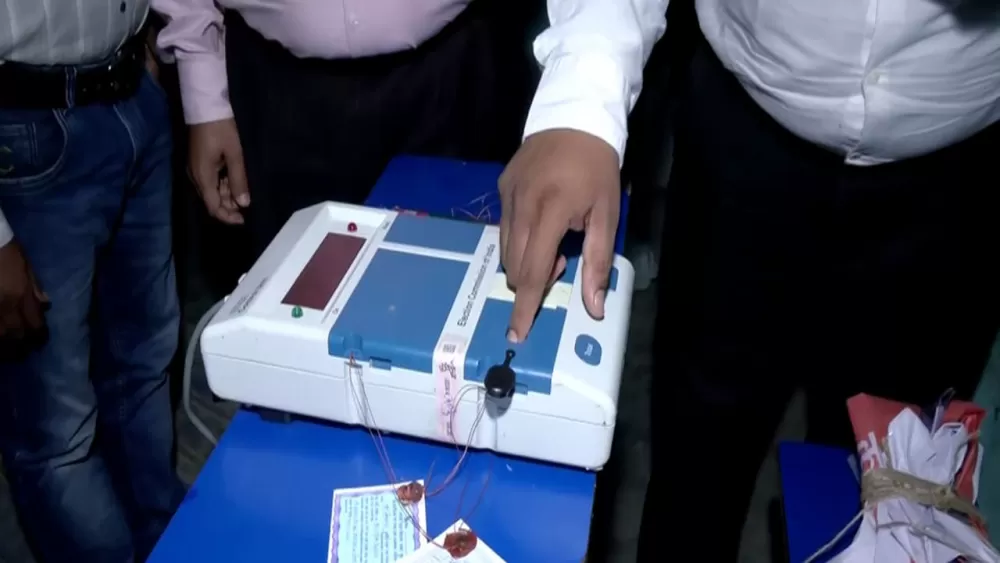
SEC halts polls for 100 urban local bodies pending nomination deadline decision
The Andhra Pradesh State Election Commission has suspended elections across 100 municipal corporations and panchayats following a Supreme Court order to review nomination extensions amid alleged law‑and‑order disruptions.
In a sudden turn of events, the Andhra Pradesh State Election Commission (APSEC) announced that the voting process for all 100 urban local bodies – comprising 13 municipal corporations and 87 municipalities or nagar panchayats – is being put on an immediate pause. The move comes directly in response to a directive from the Supreme Court of India, which asked the commission to look into whether candidates had been unfairly barred from filing their nominations.
"The Supreme Court, in its order dated 16 October 2026, has instructed the State Election Commission to defer the publication of the final list of candidates until 25 October 2026," the commission’s order read. "Further, the commission must consider all representations, including documentary and electronic evidence, from petitioners and candidates, and decide whether to extend the nomination deadline where law‑and‑order situations have impeded filing. This decision must be communicated no later than 22 October 2026."
What does that mean on the ground? Basically, if a candidate says they couldn’t submit their paperwork because, say, a protest turned violent or a police checkpoint blocked the nomination centre, the commission now has a legal mandate to weigh that claim. If it finds merit, it must push the deadline back by at least 48 hours – a small window, but enough to let those candidates get their paperwork in order.
Until that review is completed, APSEC has ordered a blanket suspension of any further electoral activity in the affected urban bodies. The decision is “effective immediately,” meaning polling booths will stay closed, counting won’t begin, and the whole schedule is essentially on hold.
While the legal machinery churns, political parties are already weighing in. Palla Srinivasa Rao, president of the Telugu Desam Party (TDP) in the state, said his party would respect the Supreme Court’s pronouncement. “We have the utmost respect for the Court,” Rao told ANI. “The decision on extending dates lies solely with the State Election Commission, not with the government. We will abide by whatever is ordered.”
Rao also reminded listeners that the ruling YSR Congress Party (YSRCP) had, from the outset, approached the courts seeking a postponement of the local‑body elections. Those pleas were turned down, he noted, and now the YSRCP is asking for an extension of nomination dates – a shift that, in his view, underscores the complexity of the situation.
The Supreme Court’s involvement was sparked by a petition that alleged several candidates were unable to file nominations because of on‑the‑ground disturbances. On 16 October, the very first day of nomination filing, reports emerged of violence in districts such as Punganur, Rayachoti, Kadapa, and Tirupati. In Kadapa, a candidate’s documents were allegedly snatched and torn; in Tirupati, candidates claimed they were physically assaulted and barred from reaching nomination centres. Nine candidates from Tirupati even submitted affidavits supporting these allegations.
Following those incidents, the apex court instructed APSEC to obtain reports from district collectors, election authorities, and senior police officials before making a call on the deadline extensions. The commission is expected to issue its final order on 22 October, after reviewing the evidence.
For ordinary voters, the pause translates into a delay in the restoration of local governance structures. Municipal corporations and nagar panchayats are responsible for everything from sanitation to street lighting, and a prolonged vacancy can hamper service delivery. Yet, many observers argue that a fair and transparent election—free from intimidation—should take precedence over a hurried timetable.
From a broader perspective, this episode highlights the delicate balance between law‑and‑order considerations and democratic processes in India’s fast‑growing states. The Supreme Court’s willingness to intervene shows a judicial commitment to safeguarding electoral fairness, while the State Election Commission’s swift compliance underscores its role as a neutral arbiter.
As the clock ticks toward the 22 October deadline, all eyes will be on the commission’s final decision. Will it grant a modest 48‑hour extension, or will it opt for a longer reprieve to ensure every eligible candidate gets a fair shot? Whatever the outcome, the pause serves as a reminder that the machinery of democracy sometimes needs to step back, assess, and then move forward with renewed legitimacy.
Editorial note: Nishadil may use AI assistance for news drafting and formatting. Readers can report issues from this page, and material corrections are reviewed under our editorial standards.


