‘Alien‑cortical’ mice: When human neurons meet rodent brains
- Nishadil
- November 08, 2026
- 0 Comments
- 3 minutes read
- 5 Views
- Save
- Follow Topic
Stanford scientists graft human brain organoids into cortex‑deficient mice, sparking scientific hope and ethical debate
Researchers at Stanford implanted lab‑grown human brain cells into mice lacking a cerebral cortex. The hybrid animals performed better in memory tests, but the work raises fresh moral questions.
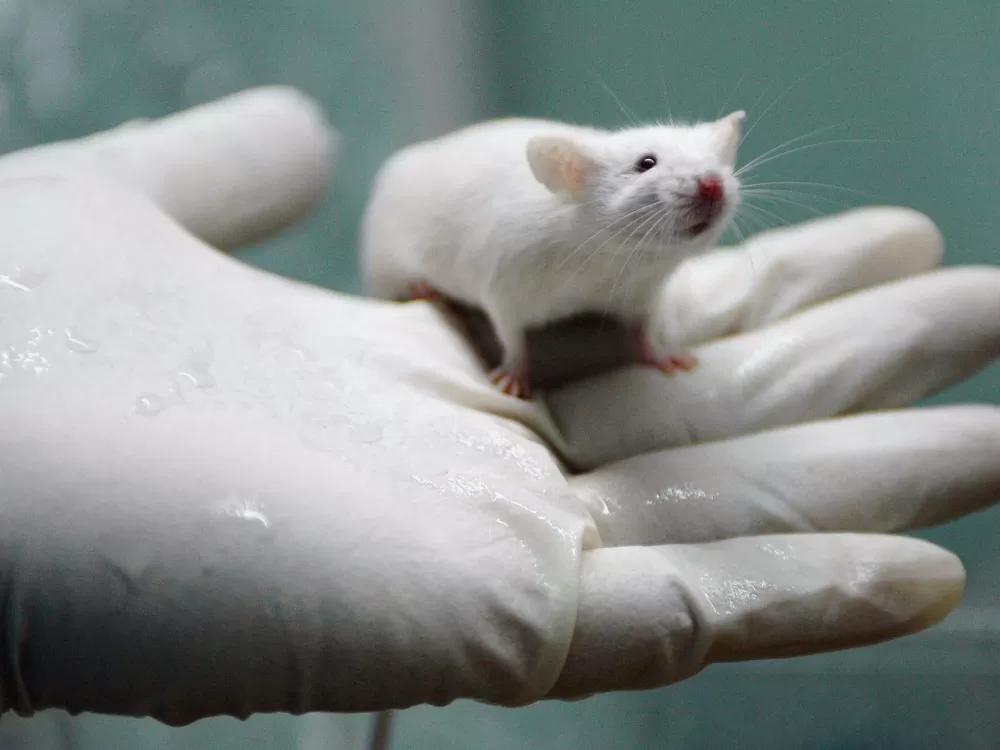
In a modest‑sized lab at Stanford University, a handful of tiny mice are doing something that sounds like science‑fiction. Inside their skulls, alongside the usual murine neurons, are clusters of human brain cells that have been nurtured in a dish for weeks.
The mice were engineered from birth to be missing most of their cerebral cortex and the adjacent hippocampus – the regions that normally give mammals the ability to move, learn and remember. When the pups were just two days old, scientists injected them with human “organoids”, tiny, three‑dimensional bundles of about a hundred thousand cells each, derived from healthy donors’ stem cells.
In total, roughly 14 million mouse neurons were removed and replaced with around 4 million human ones. It’s not a full‑on brain transplant – the animals certainly don’t think like people – but the experiment, published in Nature, shows that the human tissue can survive, integrate with blood vessels and even expand to occupy most of the empty space.
After three months the grafted tissue had grown five‑fold, filling more than 90 percent of the cortical cavity. The mice moved, squeaked and explored their environment much like ordinary lab mice, despite half of their brain volume now being human‑derived. In a simple maze, the hybrid mice navigated more successfully than their cortex‑deficient siblings, hinting that the graft contributed to cognition.
Perhaps the most surprising finding was the emergence of von Economo neurons – rare, elongated cells usually seen only in highly social mammals such as humans, apes, whales and elephants. Their appearance in a mouse brain had never been reported before and could open new doors for studying social‑cognitive circuits.
Beyond curiosity, the work may help tackle stubborn brain disorders. Conditions like schizophrenia, dementia or cerebral palsy are notoriously difficult to model in rodents because the mouse brain simply doesn’t recapitulate the human cellular architecture. By giving mice a patch of genuine human tissue, researchers hope to observe disease‑related changes in a living brain context.
Indeed, when the hybrid mice were exposed to low‑oxygen conditions – a model for the birth‑related hypoxia that can trigger cerebral palsy in infants – they showed the expected brain injury, gait disturbances and coordination problems. This suggests the model could become a useful platform for testing therapies.
Yet the promise comes tangled with ethical knots. As organoid technology advances, philosophers and regulators worry about the possibility of sentient or conscious cell clusters. The Stanford team halted their experiment at six months, before the human cells could form extensive connections with the mouse brain or display any signs of awareness.
John Evans, a sociology professor at UC San Diego who was not involved in the study, argues that while the current mice may not cross any moral red line, the same approach could soon be applied to larger, more cognitively complex animals. He urges a clear, precautionary boundary – at least for now – to stay within rodents and avoid creating neuro‑hybrids that blur the line between species.
In short, the “alien‑cortical” mice are a proof‑of‑concept: human neurons can grow inside an animal brain, influence behavior, and possibly illuminate disease mechanisms. Whether the scientific gains outweigh the moral concerns will be debated in labs, courts and public forums for years to come.
Editorial note: Nishadil may use AI assistance for news drafting and formatting. Readers can report issues from this page, and material corrections are reviewed under our editorial standards.