Alberta Voters Choose Unity Over Separation in Decisive Referendum
- Nishadil
- October 21, 2026
- 0 Comments
- 3 minutes read
- 2 Views
- Save
- Follow Topic

Alberta rejects move toward independence, delivering a win for Prime Minister Mark Carney
A fresh count shows about 76 % of Albertans favor staying in Canada, while roughly a quarter backed a path to a future separation vote, marking a clear triumph for national unity.
When the ballot boxes were finally opened in Alberta, the message was unmistakable: most Albertans want to stay in Canada. Early figures released by Elections Alberta on Tuesday indicated that roughly 76 % of the more than 1.5 million votes counted favoured remaining in the federation, leaving about 24 % in favour of launching a process that could eventually lead to a secession vote.
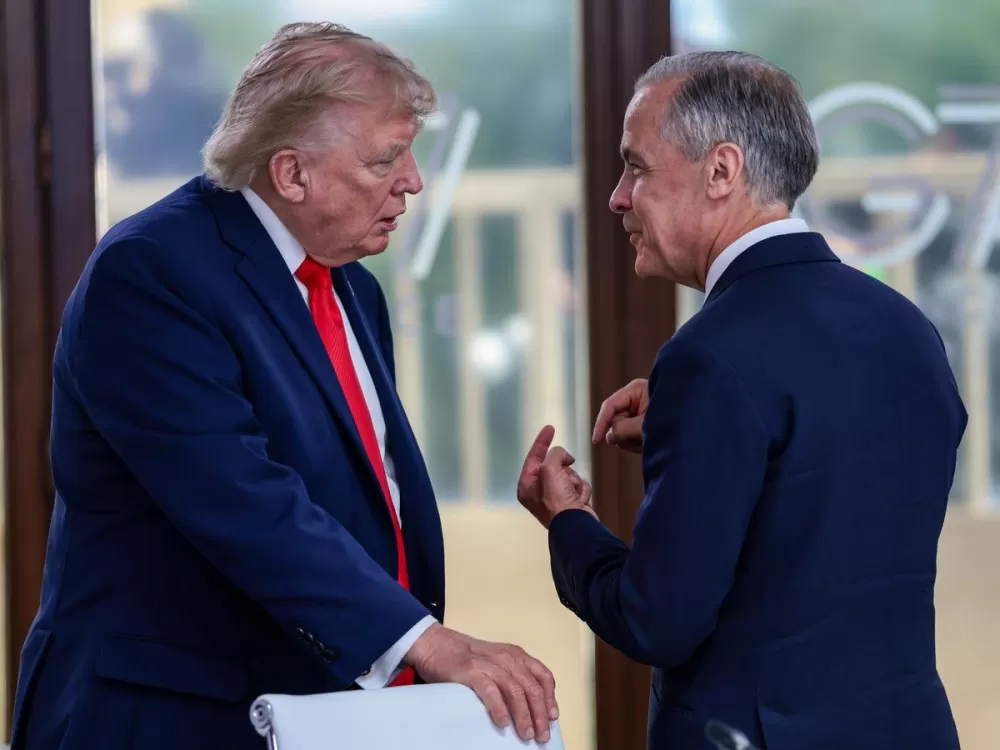
The referendum itself wasn’t a straight‑up “yes or no” on independence. Instead, a ‘yes’ would have set the stage for a later, more concrete vote on breaking away. Still, the outcome gave Prime Minister Mark Carney a solid boost for his ongoing push to tighten the country’s unity at a time when external pressures—from a U.S. trade spat to talk of annexation—have been simmering.
“Albertans made a clear choice,” Carney said in a brief statement, his tone both relieved and resolute. “They chose unity, to build together, and to take care of each other. Above all, Albertans chose Canada.” He went on to argue that the result would let the nation move forward on diversifying trade, expanding infrastructure, and cementing Canada’s standing as a global energy powerhouse – with Alberta at the heart of that effort.
Premier Danielle Smith, who called the referendum amid growing pressure from separatist factions within her United Conservative Party (UCP), welcomed the early numbers. “Albertans have voted for a stronger Alberta in a united Canada,” she posted on social media, adding that a formal address would be delivered that evening to outline the province’s next steps.
Separatist leaders, however, refused to read the results as a final defeat. “We don’t have the final results yet, but it’s safe to say at least a quarter of Albertans feel Alberta isn’t being treated fairly,” said Keith Wilson, a spokesman for the movement. The sentiment echoes a long‑standing grievance that the province – home to the world’s fourth‑largest proven oil reserves – has been short‑changed by Ottawa.
Former deputy premier Thomas Lukaszuk, who headed the “Forever Canadian” campaign, echoed Carney’s optimism: “We are a solid country that’s united from coast to coast to coast.” Yet, the separatist camp sees a new foothold. Jeff Rath of the Alberta Prosperity Project admitted that while the numbers fell short of his hoped‑for 30 % threshold, the conversation on independence will continue to shape provincial politics.
Local voices added colour to the numbers. Dustin Degenhardt, a voter from Wainwright, described the feeling that “Alberta has essentially been treated as a colony,” lamenting what he sees as a pattern of extraction by the federal government. Conversely, Edmonton resident Dave Malka, 59, scoffed at what he called a “referendum on a referendum,” arguing that funds would be better spent on healthcare, especially amid the looming threat of U.S. President Donald Trump’s trade war and his occasional hints at turning Canada into a 51st state.
Despite the clear tilt toward staying, the separatist cause is unlikely to vanish overnight. Its leaders stress that the movement has shifted from a fringe idea to a political force that will keep pressing for better treatment of Alberta within the federation.
For now, the message from the polls is simple: the majority of Albertans prefer to work within Canada’s borders, giving Prime Minister Carney and Premier Smith a clear mandate to pursue policies aimed at economic diversification and national cohesion.
Editorial note: Nishadil may use AI assistance for news drafting and formatting. Readers can report issues from this page, and material corrections are reviewed under our editorial standards.