A Troubling Mystery: Why Are Argentina's Whale Calves Falling Silent?
- Nishadil
- September 25, 2026
- 0 Comments
- 4 minutes read
- 4 Views
- Save
- Follow Topic
Scientists Scramble to Unravel the Alarming Deaths of Southern Right Whale Calves on Argentina's Coast
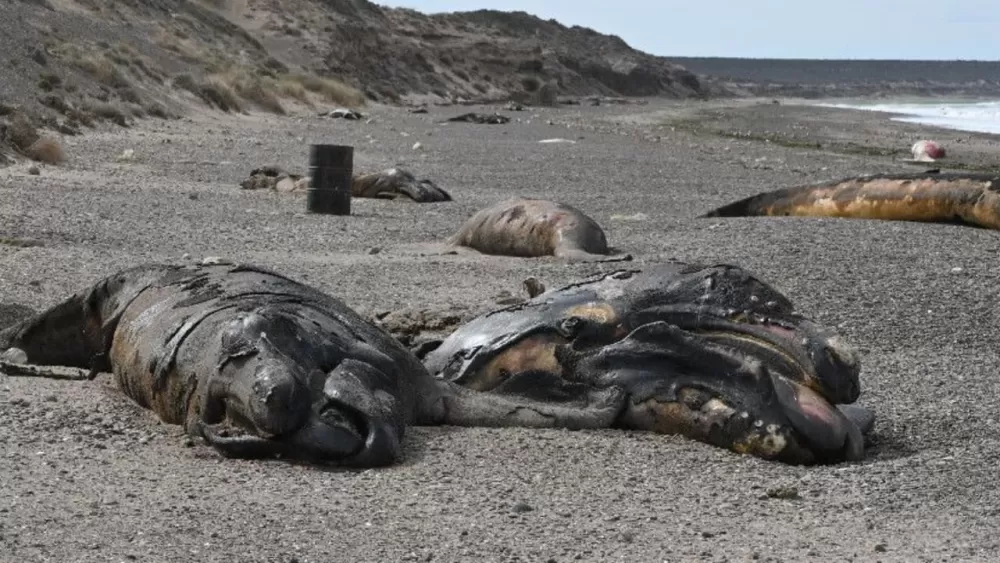
A wave of unexplained deaths among Southern Right Whale calves along Argentina's Patagonian coast has sparked urgent investigations by scientists, who fear a devastating impact on the vulnerable population. The primary suspect? Microscopic toxins hidden in the ocean.
There’s a silent sorrow washing up on the golden shores of Argentina’s Patagonian coast, a place usually synonymous with the magnificent return of Southern Right Whales. But lately, the joy of their arrival is shadowed by a deeply troubling mystery: a significant and heartbreaking number of whale calves are dying. It’s a somber puzzle that has scientists, conservationists, and really, anyone who cares about these majestic creatures, scrambling for answers.
Imagine, if you will, the bustling nursery grounds off places like Península Valdés – an absolutely vital haven for these whales. Mothers journey thousands of miles to these calm, shallow waters to give birth and nurture their young. It's meant to be a sanctuary, a place of new life. Yet, increasingly, instead of thriving, tiny whale bodies are being found, stark reminders of a problem lurking beneath the waves. This isn't just a few isolated incidents; it’s a pattern, and it’s deeply alarming for a species still recovering from historical whaling.
So, what on earth could be causing such widespread mortality among the most vulnerable members of the pod? Marine biologists and oceanographers from various Argentine institutions, often collaborating with international partners, are truly working tirelessly. They’re collecting samples, conducting necropsies, and analyzing oceanographic data, trying to piece together the clues that the ocean is, perhaps reluctantly, giving up. It’s detective work on a grand, ecological scale, and the stakes couldn't be higher.
One of the leading hypotheses, and a recurring concern in this region, points to something quite insidious: harmful algal blooms, often known chillingly as 'red tides.' These aren't just pretty, colorful patches in the water; certain types of microscopic algae can produce incredibly potent toxins. When these toxins accumulate in the food chain – perhaps consumed by the tiny krill and copepods that whales filter feed on – they can become lethal. For a massive animal like a whale, particularly a calf with a developing system, ingesting these neurotoxins can lead to paralysis, disorientation, and ultimately, an inability to feed or even breathe properly.
It's a particularly cruel twist, really, if their very sustenance is poisoning them. Scientists are meticulously testing for these specific toxins in the tissues of the deceased calves, as well as monitoring water samples for the presence of the culprit algae. The challenge, of course, is that ocean dynamics are incredibly complex, and these blooms can be transient, making precise identification and causation tricky. Is it just natural cycles? Or are there deeper, human-influenced changes to ocean temperatures and nutrient runoff exacerbating these toxic events?
While harmful algal blooms are a strong suspect, researchers aren't putting all their eggs in one basket. They're also considering other possibilities, though perhaps less likely to cause such a specific pattern in calves. Things like emerging diseases, unusual environmental stressors linked to climate change, or even human interactions, though direct entanglement or vessel strikes are generally more visible. For the calves, however, it’s often about what the mother passes on, or what directly impacts their very first fragile months.
The urgency to understand these deaths is palpable. Southern Right Whales, while slowly recovering, are still considered endangered or vulnerable. Every single calf represents hope for the future of the species. Losing so many young ones is a profound blow to population growth and genetic diversity. The investigations are ongoing, a race against time and a troubling, unseen enemy. It’s a stark reminder that even in the vastness of the ocean, delicate balances can be disrupted, and when they are, the consequences can be truly heartbreaking for its magnificent inhabitants.
- India
- News
- Environment
- EnvironmentNews
- MarineConservation
- BacterialInfection
- WhaleResearch
- WhaleConservation
- MarineMystery
- MarineWildlife
- RedTide
- WhaleDeaths
- HarmfulAlgalBlooms
- SouthernRightWhales
- PeninsulaValdes
- WhaleCalves
- WhaleMortalityMystery
- PuertoMadrynWhaleDeaths
- DeadWhalesArgentina
- WhaleCalvesDyingInArgentina
- SouthernRightWhaleCalves
- WhaleDeathsChubut
- ArgentinaCoast
Editorial note: Nishadil may use AI assistance for news drafting and formatting. Readers can report issues from this page, and material corrections are reviewed under our editorial standards.