A Question of Principle: Where Do Our Representatives Truly Stand?
- Nishadil
- October 06, 2026
- 0 Comments
- 3 minutes read
- 9 Views
- Save
- Follow Topic
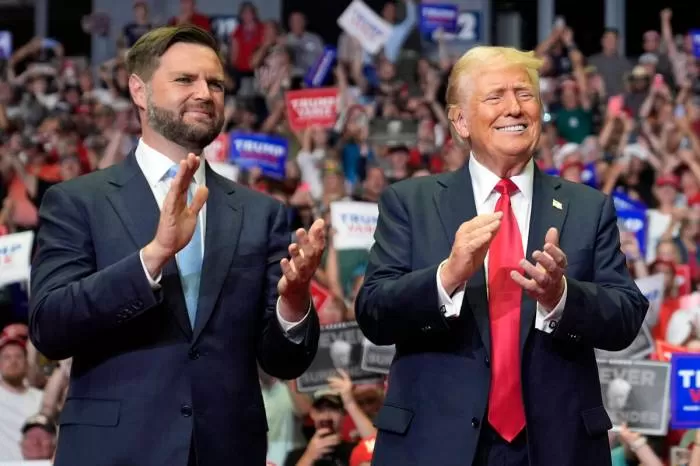
Reflecting on Republican Actions and the Weight of Constitutional Duty
This article explores the concerns raised about recent Republican actions, from foreign policy decisions to domestic executive orders and party loyalty, prompting a critical look at their adherence to constitutional duties.
It feels like we've been navigating some pretty turbulent political waters lately, doesn't it? As citizens, we often look to our elected officials, especially those in positions of power, to uphold the very foundations of our nation. But sometimes, when you take a step back and really observe, you start to notice patterns that can be, well, quite frankly, a little unsettling. It raises some serious questions about where certain loyalties lie and what that means for the future of our republic.
Take, for instance, the period when the nation seemed to hold its breath as President Donald Trump's administration made a significant move that could have easily escalated into outright war with Iran. It was a high-stakes moment, and one would naturally expect robust oversight from Congress. Yet, from where I stood, it seemed that the majority Republican Congress, despite its constitutional mandate, largely chose not to fully engage in managing or scrutinizing that weighty decision. It felt like a crucial moment for checks and balances, and it just… didn't quite materialize in the way many of us might have hoped.
Then, closer to home, there was the controversy surrounding the Postal Service. We saw an executive order issued by Mr. Trump that many, myself included, felt had deeply concerning implications for mail ballots and the overall integrity of our election process. Critics even called it unconstitutional, citing interference with a vital public service. What was particularly telling, though, was the response—or lack thereof—from within the party. Not a single Republican-leaning state, not one, joined the multi-state lawsuit that emerged to challenge that very order. It really makes you wonder about unity within the party versus upholding broader constitutional principles, doesn't it?
Perhaps the most striking moment, in my view, came during a recent GOP midterm convention. We heard reports, widely circulated, that elected officials, individuals who had sworn an oath to the United States Constitution, instead made pledges of what was described as "absolute loyalty" to Mr. Trump. Now, call me old-fashioned, but an oath to the Constitution should, by definition, be absolute. When that appears to be supplanted by loyalty to an individual, it signals a profound shift, one that I believe deserves our utmost attention.
When you connect these dots—the perceived sidestepping of congressional oversight on critical foreign policy, the muted response from Republican states to an executive order impacting fundamental democratic processes, and the public pledges of loyalty to an individual over the Constitution—it paints a rather concerning picture. In my honest opinion, this consistent pattern of what looks like an abdication of fundamental constitutional duties makes me question whether the Republican Party, as it currently stands, is truly equipped or even willing to safeguard our republic when it truly counts. It's a sobering thought, and one that I believe demands deeper reflection from all of us.
Editorial note: Nishadil may use AI assistance for news drafting and formatting. Readers can report issues from this page, and material corrections are reviewed under our editorial standards.