A Call for Collective Action: Jaishankar Champions Stronger Multilateralism Amidst Global Strain
- Nishadil
- September 22, 2026
- 0 Comments
- 3 minutes read
- 6 Views
- Save
- Follow Topic
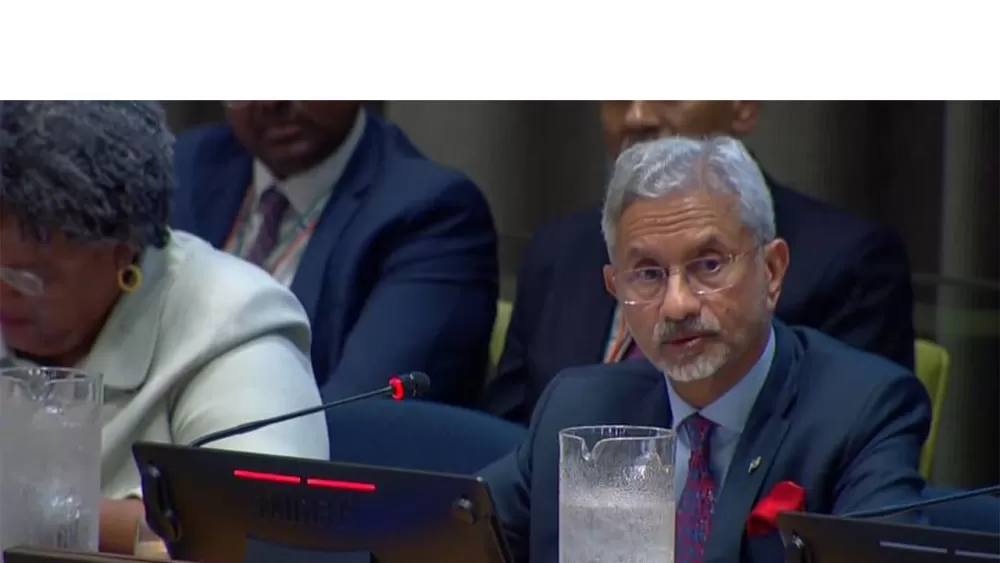
India's EAM S. Jaishankar Urges Reformed Global Order at UNGA High-Level Week
India's External Affairs Minister S. Jaishankar emphasized the urgent need for a more robust and inclusive multilateral system during the 81st UNGA, advocating for collective action to navigate pressing global challenges.
The world, it seems, is undeniably in a state of flux, navigating through a particularly turbulent period marked by escalating geopolitical tensions, widespread conflicts, and a myriad of complex global challenges. It was against this backdrop that India's External Affairs Minister, S. Jaishankar, took center stage at the 81st United Nations General Assembly (UNGA) High-Level Week in New York, delivering a clear and compelling message: the global order is under immense stress, and only a truly strengthened, reformed multilateralism can chart a path forward.
During his address and subsequent engagements at the 'Partners for Multilateralism Summit,' Jaishankar didn't mince words. He painted a picture of an international system struggling to keep pace with contemporary realities, calling for institutions that are not just more participative but genuinely reflective of today's diverse world. After all, the very fabric of global peace and security, he argued, hinges on our collective ability to adapt and cooperate more effectively.
His diplomatic agenda was certainly packed, underscoring India's proactive stance on global issues. A key highlight was his meeting with Swiss Foreign Minister Ignazio Cassis, where discussions naturally gravitated towards the timely entry into force of the India-European Free Trade Association (EFTA) Trade and Economic Partnership Agreement. This isn't just about commerce; it's about forging stronger economic ties as a foundation for broader stability.
But Jaishankar's vision extended far beyond traditional power blocs. He held significant talks with David Adeang, the President of Nauru, highlighting India's commitment to engaging with nations of all sizes and demonstrating a truly inclusive approach to global dialogue. This, one might argue, is precisely the kind of broadened engagement that defines effective multilateralism.
Another notable first was the Visegrád Group (V4)-India Foreign Ministers' Meeting. Here, with Juraj Blanár, Slovakia's Foreign Minister, and representatives from Poland, Hungary, and the Czech Republic, the discussions delved into a range of critical subjects. From the ongoing situation in Ukraine and the intricate dynamics of the Gulf region to the deeply felt implications of the 'four F crisis'—fuel, food, fertiliser, and finance—it was clear that a unified approach is paramount. Such dialogues are vital for understanding diverse perspectives and coordinating responses to shared challenges.
Across all these high-level interactions, the core themes remained constant: the urgent need for climate action, navigating the complexities of emerging technologies, ensuring adequate development finance, vigorously countering terrorism, fortifying supply chains, building disaster resilience, and enhancing pandemic preparedness. He consistently emphasized the critical importance of upholding international law, rules, and norms – the very bedrock of a stable global order. Jaishankar's message was unequivocal: in an increasingly interconnected yet fractured world, robust multilateralism isn't just an option; it's an absolute necessity.
Editorial note: Nishadil may use AI assistance for news drafting and formatting. Readers can report issues from this page, and material corrections are reviewed under our editorial standards.