A 90‑km‑deep Rock from Papua New Guinea Reveals a Surprising Heat Switch in Earth’s Subduction Zones
- Nishadil
- October 22, 2026
- 0 Comments
- 3 minutes read
- 12 Views
- Save
- Follow Topic
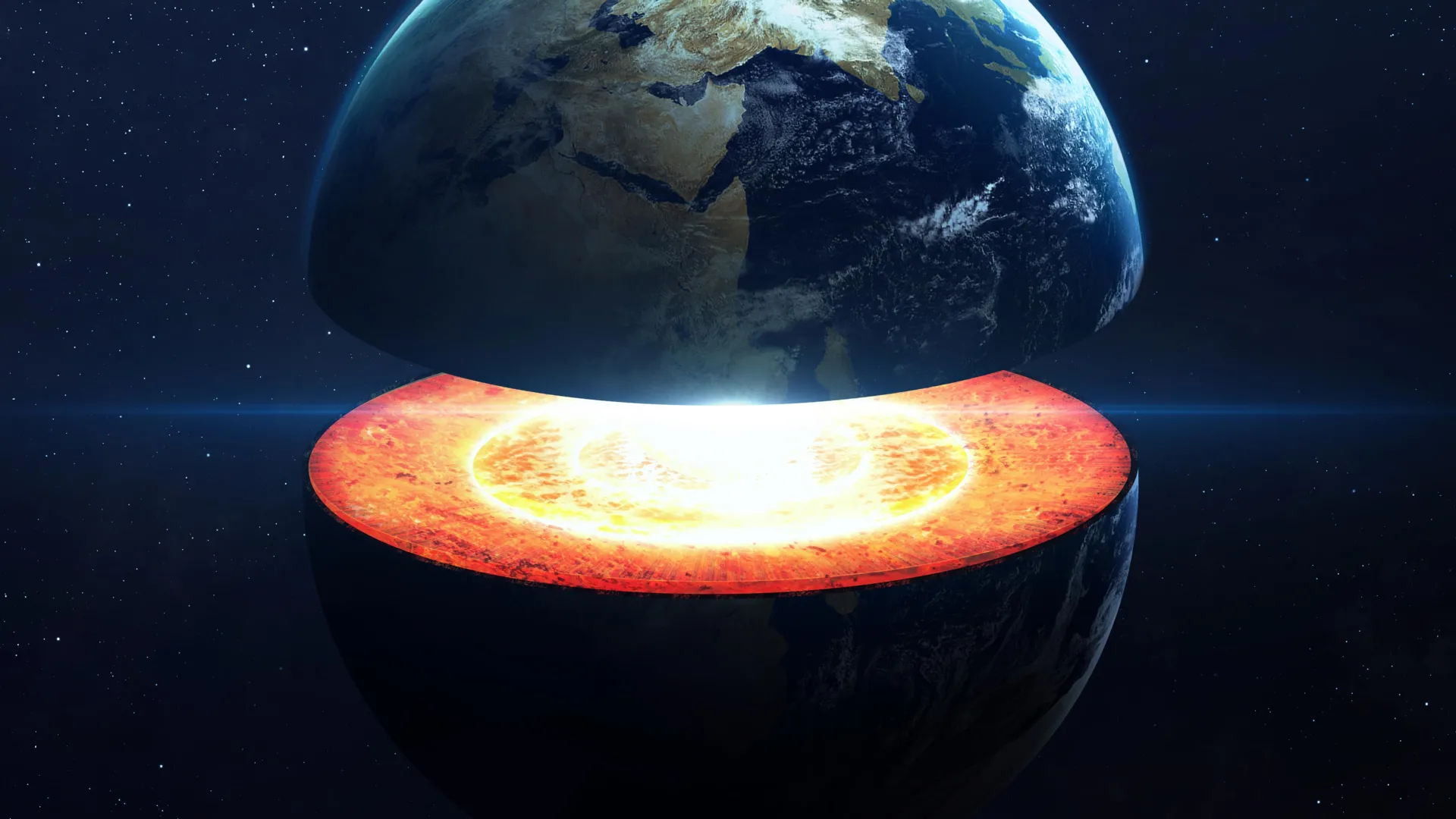
Deep‑buried rock uncovers unexpected temperature shift beneath the planet
An international team led by the University of Göttingen studied a eclogite rock that fell 90 km into the mantle under Papua New Guinea, finding a sudden slowdown in warming that upends current thermal models of subduction.
When geologists first lifted a dark, glossy slab of eclogite out of a remote Papua New Guinea outcrop, they expected another textbook example of a rock formed deep beneath a subduction zone. What they got instead was a kind of geological diary, scribbled in minerals, that tells a story we never imagined.
Using a suite of high‑resolution microscopes and micro‑probe analyses, researchers from the University of Göttingen traced tiny coesite inclusions—tiny crystals that only survive under crushing pressures—to reconstruct the rock’s journey. The evidence showed the stone plunged more than 90 kilometers (about 56 miles) into the Earth about four million years ago.
What’s puzzling is the temperature record. At roughly 45 km depth, the rock had already been heated to around 700 °C (1,292 °F). By the time it reached 90 km, the temperature was only about 800 °C (1,472 °F). In other words, the warming rate halved as the slab sank further, a pattern that runs counter to the steady‑increase curve our models predict for subducting plates.
“Finding a clear hot‑to‑cold transition in a single sample was a real surprise,” says Dr. Jan Schönig, lead author and geoscientist at Göttingen. “Our thermal models assume a more or less smooth gradient, but this rock shows a distinct kink—something we’ve never captured before.”
The team explored a handful of explanations. One is that frictional heating along the plate interface could be far more intense at shallower levels, injecting extra warmth before the slab settles into a cooler, more stable regime deeper down. Another possibility is that the subduction zone was still in its infancy when the rock entered, meaning the surrounding mantle hadn’t yet had time to establish the colder temperatures we typically see in older trenches.
Why does this matter? Subduction zones are the engines of some of Earth’s most dramatic phenomena—massive earthquakes, towering volcanoes, and the long‑term carbon cycle that helps keep our climate in check. A better grasp of how heat moves (or doesn’t move) through these zones could sharpen forecasts of volcanic eruptions, improve seismic hazard assessments, and even refine our understanding of how carbon is shuttled deep into the mantle.
Beyond the immediate implications, the discovery opens a new window onto the ancient behavior of plate tectonics. By hunting for more of these “thermal breadcrumbs,” scientists hope to map how subduction has changed over millions of years, offering clues to the evolving dynamics of our planet.
The research, published in Nature Geoscience, was funded by the German Research Foundation (DFG) and involved collaborators from several international institutions.
Editorial note: Nishadil may use AI assistance for news drafting and formatting. Readers can report issues from this page, and material corrections are reviewed under our editorial standards.