Your Selfie Could Reveal Your Health: AI Estimates Biological Age and Cancer Risk
- Nishadil
- October 23, 2026
- 0 Comments
- 3 minutes read
- 8 Views
- Save
- Follow Topic
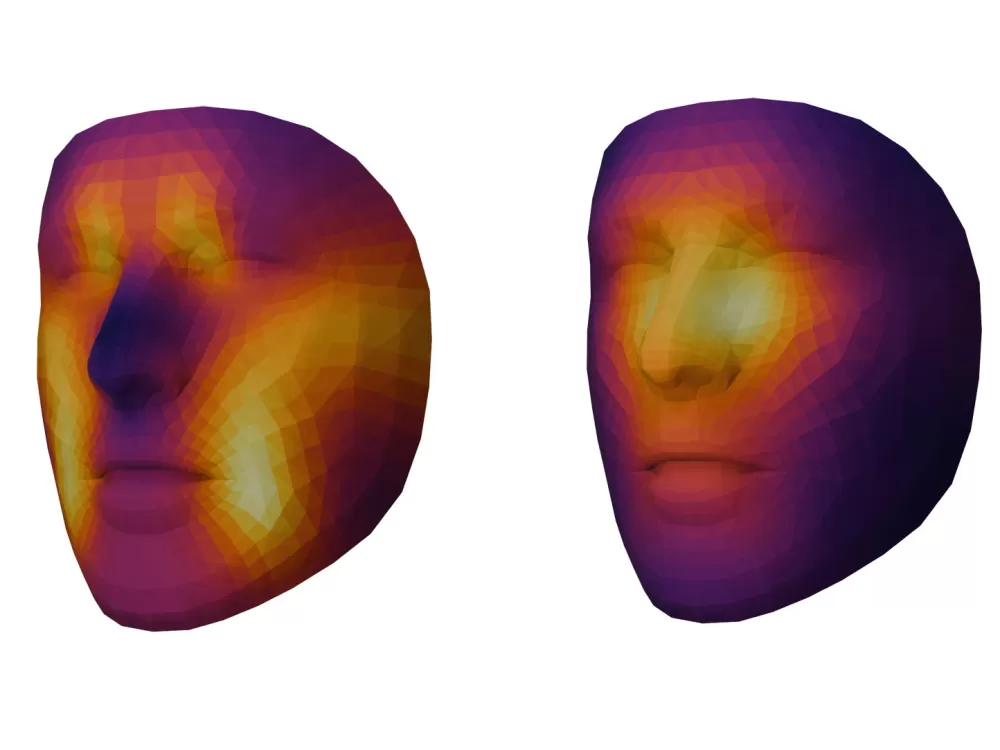
AI reads health signals from a single facial photo
A new AI model called FAHR‑Face can infer a person’s biological age and even estimate cancer mortality risk from just one selfie, offering a low‑cost health snapshot.
Imagine snapping a quick selfie and, in return, getting a glimpse of your body’s hidden wear‑and‑tear. That’s basically what researchers reported in a recent issue of The Lancet Digital Health. They built an artificial‑intelligence system, whimsically named FAHR‑Face (Foundation Artificial Intelligence for Health Recognition), that learns from facial pictures and then tries to guess how old you really are – biologically, not just by the calendar.
The model didn’t start from scratch. Over 40 million facial images fed into its neural nets, teaching it to spot subtle patterns most of us would never notice. After that massive training phase, the scientists split the job into two parts. The first part looks at the whole face and spits out a “biological age” score. The second part zeroes in on a different problem: predicting how likely a cancer patient is to survive the next three months, based purely on a photo.
It sounds like sci‑fi, but the numbers are surprisingly concrete. The team tested the cancer‑risk model on about 43 000 patients, then ran a tighter validation on 3 820 of them. Of the 122 people the AI flagged as highest‑risk, more than half – 52 % – passed away within 90 days. By contrast, among the 975 patients it called low‑risk, only 2 % died in the same period. Those odds are striking, especially when you consider that a single picture was all the algorithm needed.
Why does this matter? For one, the barrier to entry is almost nonexistent. No fancy blood work, no expensive scanners – just a phone camera that most of us already own. In theory, anyone could upload a selfie and get a quick health snapshot, something that could be especially useful in low‑resource settings.
That said, the science is still early days. The AI is great at spotting statistical correlations, but it doesn’t explain the biology behind them. We don’t yet know which physiological processes are driving the facial cues, nor whether the same patterns hold for diseases beyond cancer. There’s also a dark side to consider: could such tech be repurposed for surveillance, or used to discriminate?
In the study, the FAHR‑Face predictions held up even after the researchers adjusted for standard clinical factors, suggesting the selfie adds something extra. Still, it’s not clear how much value it brings compared with established medical tests. More head‑to‑head comparisons will be needed before doctors start prescribing selfies as a diagnostic tool.
If you’re curious (and the researchers are letting the public try), you can sign up on their project website. The protocol asks you to upload three to ten pictures – you can do it once or take a series over a few days. The system then returns a biological‑age estimate for each shot and an overall score. They promise to delete the photos after a short period and keep any personal data anonymised.
So, next time you’re scrolling through your phone, remember that a simple selfie might someday be more than a vanity shot. It could become a tiny, instant health check – though we’re still figuring out exactly how reliable that check really is.
Editorial note: Nishadil may use AI assistance for news drafting and formatting. Readers can report issues from this page, and material corrections are reviewed under our editorial standards.