
Unlocking the Abyss: China's Groundbreaking 3,500-Meter Deep-Sea Actuator Test
- Nishadil
- April 16, 2026
- 0 Comments
- 3 minutes read
- 32 Views
- Save
- Follow Topic
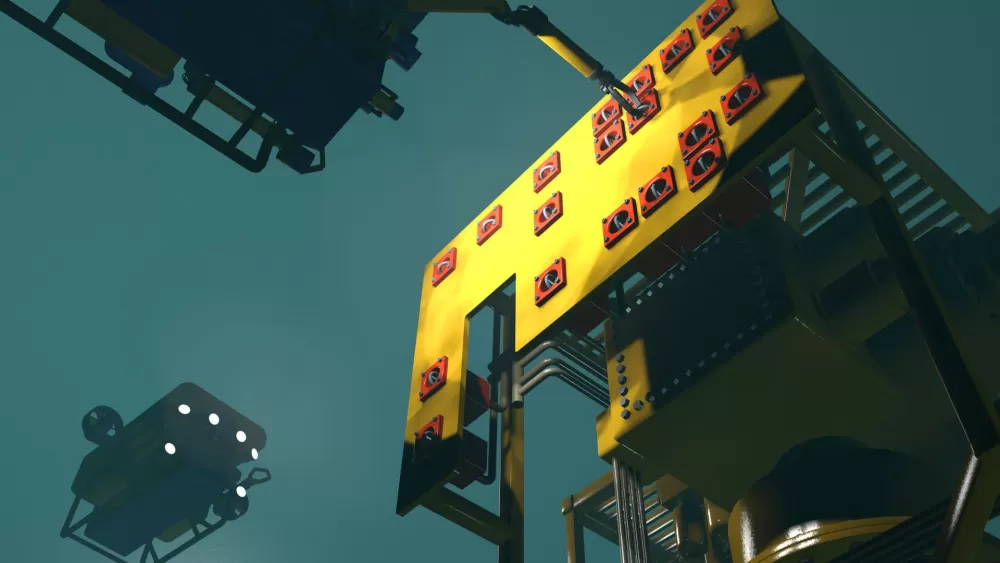
China Pushes the Limits: A Key Breakthrough in Deep-Ocean Robotics Achieves Mind-Boggling Depths
China has achieved a remarkable feat in deep-sea engineering, successfully testing a critical actuator at an incredible 3,500 meters underwater. This marks a significant leap forward in their ability to operate machinery in the ocean's most extreme environments.
There's something inherently captivating about the deep ocean, isn't there? It's this vast, mysterious frontier right here on our planet, yet it remains largely unexplored, holding secrets we can only begin to imagine. And to truly explore it, to understand its geology, its unique life forms, or even its potential resources, we need some seriously tough technology. Well, it seems China just took a giant, absolutely monumental stride in that direction, successfully testing a crucial deep-sea actuator at an astonishing 3,500 meters below the surface.
Now, you might be wondering, what exactly is a 'deep-sea actuator'? Think of it as the muscle, or perhaps the sophisticated joint, of underwater machinery. These devices are absolutely vital for controlling movement, opening and closing valves, manipulating tools, or even adjusting robotic arms on submersibles and other deep-sea equipment. They're the workhorses that make everything happen, allowing robots to perform complex tasks in environments that would crush most conventional machinery.
And 3,500 meters? Let's just put that into perspective for a moment. That's roughly 11,500 feet, which is deeper than some of the highest mountains on Earth are tall. Imagine the sheer, crushing pressure at that depth – it's immense, equivalent to hundreds of atmospheres, like having an elephant standing on every square inch of a matchbox. The temperatures are near freezing, and corrosion is a constant, relentless enemy. For any piece of equipment, let alone a precision-moving part like an actuator, to function reliably under such brutal conditions is, frankly, a monumental engineering achievement.
This isn't just a technical detail for engineers; it's a huge deal for the future of deep-sea exploration and resource utilization. With an actuator capable of enduring these extremes, China can now develop more sophisticated, more reliable, and ultimately more capable underwater vehicles and systems. This opens doors to a whole host of possibilities, from detailed scientific research into previously inaccessible hydrothermal vents to the exploration and eventual extraction of valuable deep-sea minerals or even new energy sources. It could also bolster their capabilities in maintaining underwater infrastructure or even, dare I say, in maritime defense applications.
It really underscores China's persistent and ambitious drive to lead in advanced marine technology. We've seen them make significant investments in deep-sea submersibles and platforms over the past few years, and this actuator test fits perfectly into that overarching strategy. It's about developing the foundational components, the nitty-gritty parts, that allow for greater autonomy and operational depth in the vast, dark unknown of the ocean floor.
So, what does this mean moving forward? Well, it suggests that China is not just aiming to visit the deep sea, but to truly work within it, with greater precision and for longer durations. This successful test is more than just a data point; it's a tangible demonstration of their growing mastery over one of Earth's most challenging environments, bringing us all a little closer to understanding the mysteries that lie thousands of meters beneath the waves. It’s a testament to human ingenuity, pushing boundaries one robust component at a time.
- UnitedStatesOfAmerica
- News
- Top
- TopNews
- MarineScience
- UnderwaterTechnology
- ChinaInnovation
- DeepSeaExploration
- MarineRobotics
- DeepSeaTechnology
- UnderwaterRobotics
- OceanEngineering
- ElectroHydrostaticActuator
- EhaSystem
- SubseaEngineering
- ChinaDeepSeaMission
- ActuatorTest
- SubseaEquipment
- ExtremeDepthOperations
Editorial note: Nishadil may use AI assistance for news drafting and formatting. Readers can report issues from this page, and material corrections are reviewed under our editorial standards.













