
Redefining On-the-Go Productivity: Why Your Next Travel Computer Might Not Be a Laptop
- Nishadil
- April 16, 2026
- 0 Comments
- 3 minutes read
- 38 Views
- Save
- Follow Topic
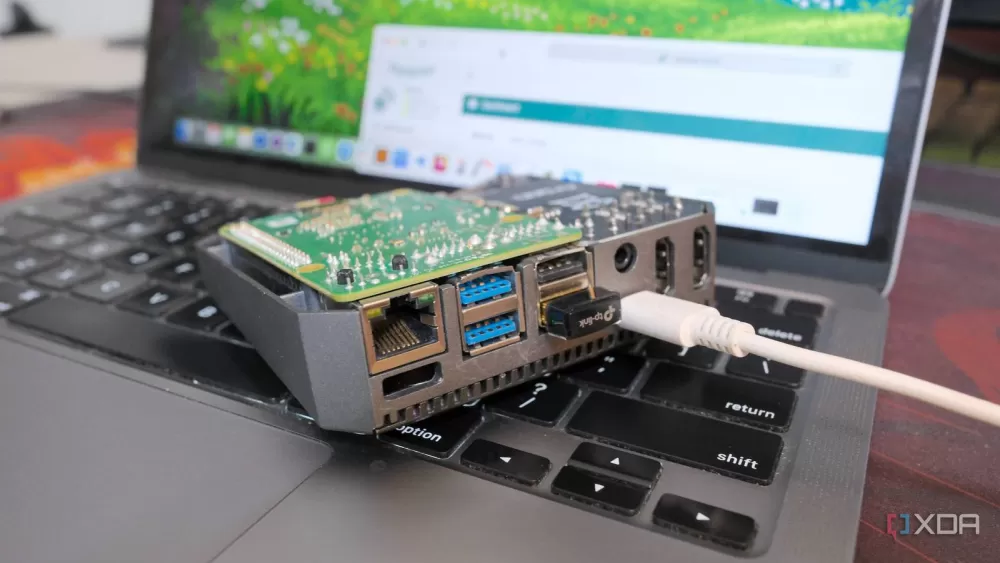
Goodbye, Bulky Laptops! The Raspberry Pi 5 is Making a Strong Case for Ultra-Portable Travel Computing
Forget lugging around a heavy laptop. The powerful Raspberry Pi 5 is revolutionizing how we think about travel computing, offering a compact, affordable, and surprisingly capable alternative for your adventures.
Oh, the perennial dilemma of the modern traveler: do I really need to haul my hefty laptop along for this trip? It’s a question many of us have pondered, often reluctantly accepting the inevitable shoulder strain and precious baggage space sacrificed for a device we might only use for a few essential tasks. Well, what if I told you that the game has fundamentally changed? What if the era of the mandatory travel laptop is, for many, genuinely coming to an end?
Enter the Raspberry Pi 5. Now, for those unfamiliar, this isn’t just some niche hobbyist board anymore. This latest iteration is a truly formidable piece of kit, packed with enough punch to seriously challenge our preconceived notions of what constitutes a "proper" computer. It's almost mind-boggling, actually, how much power they’ve managed to cram into such a tiny, credit-card-sized device. We’re talking about a significant leap in processing power, graphical capabilities, and overall efficiency compared to its predecessors. It's truly a marvel of modern engineering.
So, what does this mean for the road warrior or the casual vacationer? It means freedom. Imagine ditching that expensive, clunky laptop at home and instead tucking a Raspberry Pi 5 – which costs a fraction of the price, by the way – into your bag. You simply carry it, along with maybe a small portable keyboard and mouse, and then leverage whatever screen is available at your destination. A hotel TV? A friend's spare monitor? Even a tiny portable display you already own? Bingo. You’ve got yourself a fully functional desktop environment, ready for action.
But can it really handle daily tasks? Absolutely. For the vast majority of what people do on their laptops while traveling – think web browsing, email, light document editing, catching up on streaming services, or even some coding – the Pi 5 excels. Running a modern Linux desktop environment, it offers a surprisingly smooth and responsive experience. It’s perfect for those who need to stay connected, get some work done remotely, or simply enjoy their digital life without the baggage (both literal and metaphorical) of a traditional laptop.
Now, let's be realistic for a moment: it's not going to replace a high-end gaming rig or a workstation for heavy video editing. That’s just not its wheelhouse, and honestly, we shouldn't expect it to be. However, for a solid 80-90% of travel computing needs, it's more than sufficient. The beauty lies in its versatility and adaptability. Need to write a report? Check. Want to browse the web from your hotel room? Check. Feeling inspired to tinker with some code on the beach? Double check. The possibilities, frankly, are pretty exciting.
Ultimately, the Raspberry Pi 5 isn't just a gadget; it's a testament to how far technology has come and a powerful statement that true computing power no longer needs to be synonymous with bulk and expense. It invites us to rethink our digital lives on the go, encouraging a lighter, more flexible, and arguably more intelligent approach to staying productive and entertained while exploring the world. Maybe, just maybe, it’s time to leave that laptop behind for good.
Editorial note: Nishadil may use AI assistance for news drafting and formatting. Readers can report issues from this page, and material corrections are reviewed under our editorial standards.


