
The Sunken Giant: A 2,000-Year-Old Roman Merchant Ship Emerges from the Deep
- Nishadil
- April 16, 2026
- 0 Comments
- 3 minutes read
- 44 Views
- Save
- Follow Topic
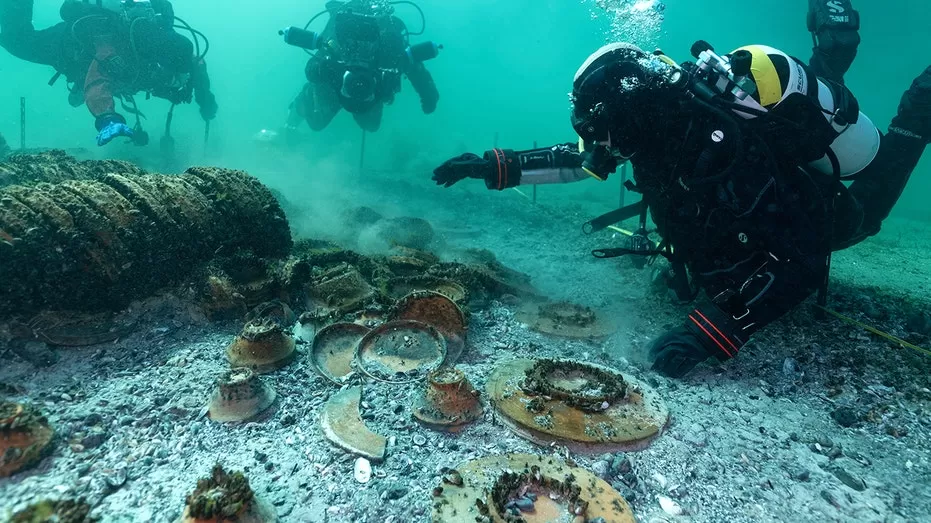
Remarkable Discovery: 2,000-Year-Old Roman Shipwreck Found in Greek Waters with Cargo Still Clustered
Divers have made an extraordinary find off the coast of Greece: a 2,000-year-old Roman merchant ship, one of the largest ever discovered, its vast cargo of amphorae still remarkably intact and resting where it sank millennia ago.
Imagine, if you will, a bustling Roman port, two millennia ago. Ships laden with goods from across the empire would set sail, their precious cargo destined for distant shores. Sometimes, though, the sea claimed its own. And sometimes, just sometimes, those lost vessels offer us an incredible window into a forgotten world. This is precisely what's happened off the picturesque Greek island of Kefalonia, in the serene Ionian Sea, where a profound secret lay hidden for two millennia, only now revealing its immense treasures.
Archaeologists, working with the University of Patras, have brought to light one of the Mediterranean's most significant underwater finds: a colossal Roman merchant ship, remarkably preserved, its entire cargo still resting precisely where it settled on the seabed after its fateful sinking. We're talking about a vessel dating back to the late 1st century BC or early 1st century AD – a true ancient marvel. It's not just a sunken ship; it's a massive time capsule, providing an unparalleled glimpse into Roman seafaring and trade routes.
But here's the kicker: the sheer scale of it. This isn't just a few scattered artifacts; we're talking about over 6,000 amphorae, those distinctive ancient jars, all clustered together, largely intact, creating a veritable underwater mountain of pottery. Discovered using advanced sonar technology, the vessel itself is mostly buried beneath the seabed, but the enormous mound of cargo, stretching over an impressive 30 meters (nearly 100 feet) in length, clearly outlines the ship's massive footprint. This makes it one of the four largest Roman shipwrecks ever found in the entire Mediterranean basin.
What kind of goods would fill such a monumental ship? Well, the amphorae, as common as they were in the ancient world, held the staples of life and commerce: wine, olive oil, and perhaps other valuable provisions. This particular discovery paints a vivid picture of the Roman Empire's vast economic reach and the sophisticated, albeit perilous, logistics involved in transporting goods across its vast territories. Each jar tells a silent story of trade, consumption, and the daily lives of people living two thousand years ago.
For now, the site remains a protected area, a testament to its immense archaeological value. Future expeditions, including potential excavations if feasible, are planned to further explore the ship's construction and to precisely identify the contents of these myriad amphorae. It's an ongoing journey of discovery, reminding us that even after centuries, the depths of our oceans continue to hold astonishing secrets, waiting patiently to reveal their ancient whispers to a curious world. What else might we find, you wonder, as we continue to peer into these watery historical archives?
Editorial note: Nishadil may use AI assistance for news drafting and formatting. Readers can report issues from this page, and material corrections are reviewed under our editorial standards.










