Trump’s Wild Claims About Ukraine, Starlink and Drones: A Dangerous Mix of Misinformation and Politics
- Nishadil
- October 23, 2026
- 0 Comments
- 4 minutes read
- 13 Views
- Save
- Follow Topic

The former president’s oddball rhetoric on Ukraine, Putin and satellite internet threatens both allies and America’s credibility
Donald Trump’s recent comments linking Starlink, drones and Russia’s war in Ukraine are fact‑free, undermine U.S. support for Kyiv and risk fueling misinformation ahead of the election.
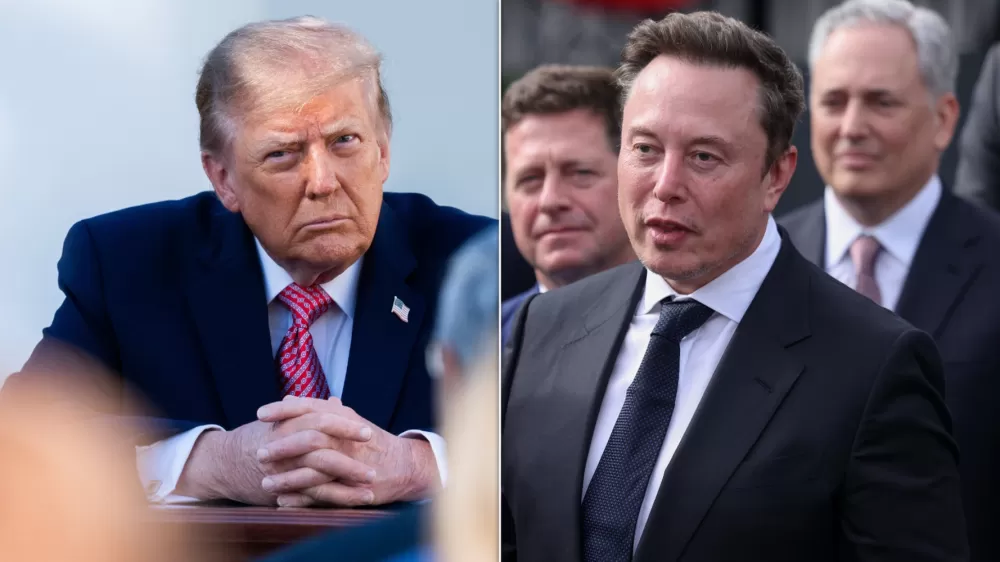
When Donald Trump recently suggested that the war in Ukraine could have been avoided if the United States had supplied Starlink satellite internet to Russia instead of Ukraine, many of his supporters cheered while experts cringed. The claim, a baffling mash‑up of geopolitics and tech‑gossip, ignored years of documented aid, ignored the fact that Starlink is a private, U.S.-based service, and—most importantly—missed the point entirely.
It isn’t the first time the former president has tangled two very different stories together. In a recent rally, he riffed on the notion that "Starlink drones" are somehow steering the battlefield for President Vladimir Putin. He hinted that these imagined drones, powered by the same satellites that keep Ukrainian villages online, are being weaponised against the West. The idea sounds like a plot from a low‑budget sci‑fi film, yet it was delivered with the same swagger Trump uses when talking about the wall.
What makes the statement especially hazardous is its timing. The Ukraine conflict is still raging, civilian casualties mount, and Western countries are scrambling to keep Kyiv supplied with everything from artillery shells to broadband. By sprinkling baseless claims about satellite‑driven drones, Trump not only muddies the public’s understanding of the war, he also sows doubt about the very tools that have helped Ukrainian forces stay connected and coordinated on the front lines.
In reality, SpaceX’s Starlink has been a lifeline for Ukraine. Since early 2022, the constellation of low‑Earth‑orbit satellites has delivered reliable internet to hospitals, schools and military command centres that would otherwise have been cut off by Russian jamming. No credible evidence shows that the same service is being used by Russia to launch drones, nor that it could be weaponised in the way Trump described. The accusation flies in the face of open‑source intelligence and the statements of both SpaceX and NATO officials.
Beyond the factual errors, the rhetoric taps into a deeper, more insidious strategy: turning a complex foreign‑policy crisis into a partisan talking point. By portraying Ukraine as the beneficiary of “wasted” technology and hinting that the U.S. should have been more generous to Russia, Trump reframes a clear case of aggression as a diplomatic misstep he could have fixed. It’s a classic move—shifting blame to a prior administration while offering a “solution” that sounds plausible to voters who are already tired of endless news about distant wars.
Such commentary does more than misinform; it endangers lives. Ukrainian soldiers depend on secure communications to call in artillery, coordinate evacuations and, yes, share video footage that proves war crimes are happening. If the public starts believing that these same tools are somehow feeding the enemy, the political appetite for continuing aid could wane, leaving Kyiv isolated at a critical juncture.
And there’s a domestic angle, too. Trump’s statements come as the 2024 election looms, and his team has been mining foreign‑policy grievances to energise their base. By painting the Ukraine aid effort as a “gift to Putin” and linking it to a high‑tech conspiracy, the former president hopes to tap into a broader anti‑establishment narrative that blames the “deep state” for everything from inflation to supply‑chain woes.
What’s missing from the sound bite is nuance. The United States does not “own” Starlink, nor does it dictate how SpaceX’s customers use the service. Moreover, the U.S. government has taken concrete steps—through the State Department, the Department of Defense and congressional appropriations—to ensure that aid, including satellite internet, reaches only the Ukrainian side of the conflict.
In short, Trump’s latest foray into Ukraine‑Russia drama is less about geopolitics and more about politics. It mixes a genuine technology that has saved lives with a fantasy about Russian drones, all while trying to score points in a campaign that thrives on controversy. The result is a dangerous cocktail of misinformation that could erode the very alliances the United States depends on.
For voters and policymakers alike, the lesson is simple: demand facts, not fiction. Satellite internet isn’t a secret weapon of Putin, and Ukraine’s fight is not a “gift” to Russia. It’s a real, brutal war where real people need real support—something that no meme or rally‑slogan can replace.
Editorial note: Nishadil may use AI assistance for news drafting and formatting. Readers can report issues from this page, and material corrections are reviewed under our editorial standards.