Space Race Shake-Up: Amazon Pivots to SpaceX After ULA's Unexpected Snag
- Nishadil
- November 25, 2026
- 0 Comments
- 4 minutes read
- 15 Views
- Save
- Follow Topic
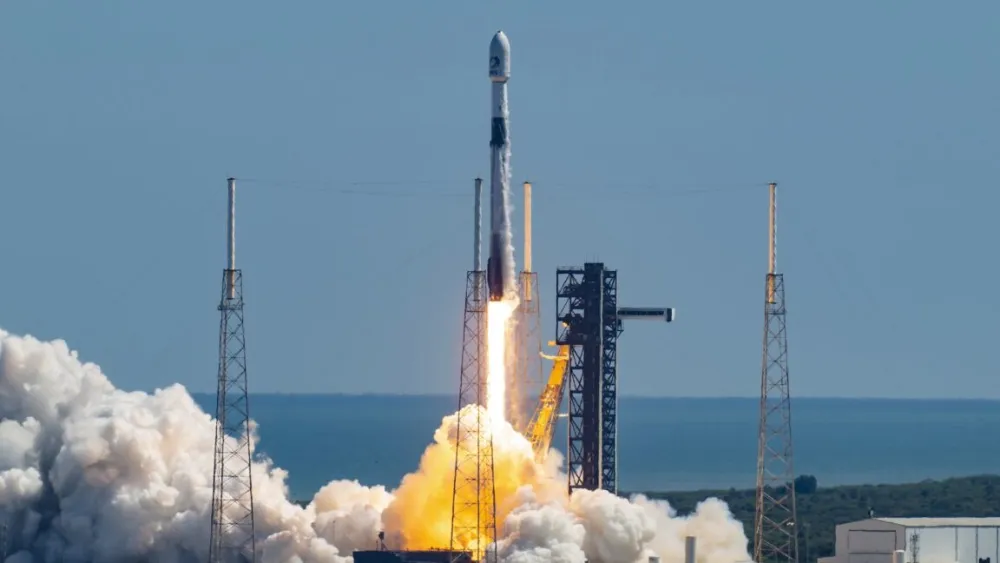
ULA's Vulcan Setback Drives Amazon to Accelerate SpaceX Launches for Project Kuiper
Following an unexplained malfunction grounding ULA's Vulcan rocket, Amazon is reportedly shifting its Project Kuiper satellite deployment, significantly increasing launches with rival SpaceX. This strategic pivot highlights the intense pressures and competitive dynamics in the commercial space sector, forcing Amazon to prioritize reliability over traditional rivalries.
Well, this certainly throws a wrench into things, doesn't it? Just days after an unexplained malfunction grounded a critical United Launch Alliance (ULA) Vulcan rocket, Amazon appears to be making a swift, decisive move. It seems the e-commerce giant is now dramatically ramping up its satellite launch schedule with rival SpaceX, a significant shift that really underscores the high-stakes, competitive nature of the commercial space industry.
For Amazon, these launches aren't just for show; they're absolutely vital for Project Kuiper, their ambitious endeavor to deploy a massive constellation of thousands of internet-beaming satellites. This network is designed to bring broadband access to underserved areas globally, a monumental task requiring consistent, reliable access to space. Any delay, even a minor one, can ripple through their entire deployment timeline and strategy, which, frankly, nobody wants when you're talking about billions of dollars and a global vision.
The trouble began on November 16, 2026, when ULA's Vulcan rocket experienced an 'unexplained' malfunction right there at Cape Canaveral, Florida. This incident, occurring on a Sunday, essentially brought ULA's launch capabilities to a screeching halt, at least temporarily. It left a big question mark hanging over their readiness and reliability, especially for a customer like Amazon that's on such a tight schedule and has so much riding on every single launch.
Coincidentally, or perhaps ironically, that very same weekend saw SpaceX, led by the ever-vocal Elon Musk, pushing forward with its own ambitious Starship mission from its Starbase development site in Texas. The contrast couldn't be starker: one major player encountering an unexpected roadblock, while another pressed ahead with its cutting-edge, albeit still developmental, heavy-lift rocket. It's a snapshot of the intense, moment-by-moment competition defining modern spaceflight.
Reports surfacing around November 24, 2026, confirmed what many in the industry were already speculating: Amazon was indeed accelerating its launch agreements with SpaceX. This isn't just a logistical change; it’s a seismic shift in strategy. Remember, Jeff Bezos, Amazon's founder, also owns Blue Origin, a direct competitor to SpaceX. So, for Amazon to lean so heavily on Elon Musk's company for such critical missions? That's a powerful statement about necessity trumping rivalry, at least for now, and it certainly adds a layer of intrigue to the whole scenario.
Todd Harrison, a Senior Fellow at the American Enterprise Institute, articulated the situation rather succinctly, saying, 'The commercial space sector is all about speed and reliability. When one avenue falters, companies have to find alternatives, and quickly.' He's spot on, you know. Johan Denoyer, a service architect at DigiNews IT Watch, chimed in, highlighting the sheer demand: 'There simply isn't enough launch capacity to go around, particularly for these mega-constellations. Diversification isn't just smart; it's essential for survival in this game.'
Of course, ULA isn't the only option outside of SpaceX. There's also Europe's Ariane 6, which could potentially offer some capacity from Kourou, French Guiana, once it fully ramps up. But getting a new rocket truly operational and reliable takes time, a commodity Amazon doesn't have in abundance right now. The pressure on all launch providers to deliver, and deliver flawlessly, has never been higher, making these strategic choices all the more critical.
Ultimately, this whole episode serves as a stark reminder of the incredible complexities and unforeseen challenges inherent in space exploration and commercialization. It’s a dynamic, cutthroat environment where a single hiccup can force a major player like Amazon to reconsider its entire playbook, even if that means doing business with a rival. The race to dominate low-Earth orbit is heating up, and it’s truly fascinating to watch these strategic shifts unfold in real-time.
Editorial note: Nishadil may use AI assistance for news drafting and formatting. Readers can report issues from this page, and material corrections are reviewed under our editorial standards.